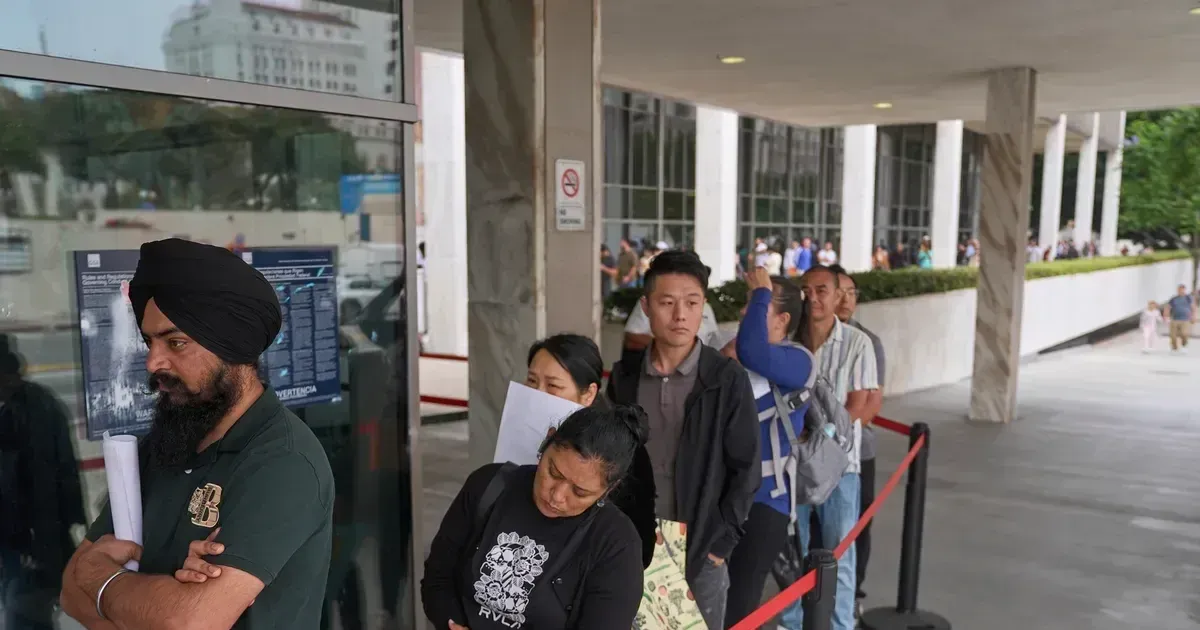
Texas restaurants are turning immigration processing delays into an economic emergency. The labor shortage shows how enforcement politics can collide with business needs. On April 17, 2026, Texas restaurant owners and political leaders formed a coalition to demand immediate federal work permits to counteract a deepening immigration backlog that threatens the hospitality industry. Labor shortages have reached a critical threshold, forcing dining establishments to reduce hours or shutter operations entirely. This coalition, comprising an unusual alliance of conservative politicians and business magnates, argues that the current enforcement-heavy approach lacks the necessary legal pathways to maintain the state economy. Labor scarcity is driving up wages at a rate that many family-owned businesses cannot sustain. Restaurant operators across the Lone Star State report that worker fear has effectively emptied kitchens that once relied on mixed-status households. Rising costs for raw ingredients already squeeze margins, but the inability to find reliable staff presents an existential threat to the $11 billion hospitality sector. While state leadership often emphasizes border security, this industry group suggests that the lack of legal work authorization for those already present in the country is the primary driver of the current crisis.
Economic data from local chambers of commerce indicate that job openings in the food service sector remain 30% higher than pre-2024 levels. Recruitment efforts have largely failed, as domestic workers show little interest in the demanding environment of commercial kitchens. Small business owners are now begging the federal government to decouple labor needs from the broader, more disputed debate over border crossings and asylum seekers.
Texas Restaurant Owners Seek Work Permit Reform
Republican leaders in several Texas municipalities have joined the call for what they describe as common-sense work permits. These officials argue that allowing immigrants to work legally would increase tax revenue and reduce the burden on local social services. Industry representatives maintain that the current system ignores the reality of the labor market, where demand for service workers far outstrips the supply of authorized personnel.
National Public Radio recently conducted an analysis of U.S. Citizenship and Immigration Services records, revealing a large logjam of applications that has left millions of individuals in legal limbo. These applicants, many of whom have lived in the United States for years, are now at heightened risk of deportation because their paperwork remains unprocessed in a bureaucratic mess. Systemic delays have turned what should be a routine administrative process into a trap for families attempting to follow the law.
Wait times for simple work authorization renewals now frequently exceed eighteen months.
Federal processing centers are reportedly overwhelmed by a surge in filings and a lack of specialized staff to handle complex cases. Immigrants who were once told to wait their turn now find that the line has stopped moving altogether. This stagnation creates a vacuum where unauthorized labor becomes the only option for survival, even as the risk of workplace raids increases. Analysts at U.S. Citizenship and Immigration Services have not provided a timeline for clearing the current multimillion-case backlog.
Bureaucratic Delays Trap Millions in Legal Limbo
Legal experts suggest the backlog is not only a product of inefficiency but also a reflection of shifting policy priorities that favor enforcement over processing. Families who have spent thousands of dollars on filing fees find themselves unable to obtain the very documents that would allow them to contribute to the economy. The threat of deportation looms over individuals who are otherwise qualified for legal status, simply because a clerk has not yet stamped their application.
Conditions for those eventually deported have become a central concern for human rights organizations monitoring the effects of U.S. policy. Reports from El Salvador indicate that migrants returned from the United States are often funneled directly into the country’s expanded prison system. Many of these individuals are held incommunicado, with their families and lawyers unable to establish contact for months or years. International monitors have documented cases where returnees are treated as criminal suspects immediately upon their arrival at the airport.
"Migrants deported from the U.S. routinely disappear into El Salvador's prisons the moment they land or in the weeks that follow," according to investigators from various human rights organizations.
Salvadoran authorities have defended these practices as part of a broader crackdown on gang activity, yet critics argue that many deportees have no criminal history. The fear of ending up in a high-security facility like the Terrorism Confinement Center (CECOT) has led many Salvadorans in the U.S. to go into hiding. Such a dynamic further depletes the labor pool in cities like Houston and Dallas, where the Salvadoran diaspora is sizable.
Salvadoran Deportees Face Prison and Disappearance
Internal enforcement strategies have moved beyond physical barriers at the southern border to focus on administrative and legal obstruction. While public attention often centers on the construction of fences, the real impacts of the current crackdown are felt in the fine print of federal regulations. Changes to the way asylum claims are judged and the narrowing of eligibility for Temporary Protected Status have created a climate of uncertainty that affects every sector of the American economy.
Perspective offered by Newsweek contributors suggests that the current immigration fight is less about border security and more about a fundamental disagreement over the role of immigrants in society. Legal hurdles are being used as a tool to restrict the population, regardless of the economic consequences. The resulting labor shortages in Texas and other states are the direct byproduct of a policy that prioritizes exclusion over integration. Federal authorities have largely ignored the pleas from the business community for a more balanced approach.
Production costs in the agricultural and service sectors are rising as a result of these policy choices. Consumers are starting to see the effects in the form of higher prices at the grocery store and in restaurants. Economists warn that if the labor shortage is not addressed through legislative reform or administrative action, the long-term growth of the Texas economy will be hampered. The current trajectory suggests a period of sustained inflation driven by the scarcity of workers.
Local law enforcement agencies have also expressed concern that the crackdown makes communities less safe. When immigrants fear that any contact with the police could lead to deportation or disappearance in a foreign prison, they are less likely to report crimes or cooperate with investigations. This breakdown in trust between the public and the state creates opportunities for criminal elements to operate with impunity. Despite these warnings, federal policy remains focused on increasing the rate of removals and tightening the requirements for legal residency.
Restaurant Labor Shortage Tests Immigration Policy
Can a nation maintain its economic supremacy while simultaneously sabotaging the very labor force that keeps its service and agricultural sectors afloat? The current crisis in Texas exposes a glaring contradiction between the rhetoric of the rule of law and the reality of a dysfunctional bureaucracy. The evidence shows a government that demands people follow the rules while it simultaneously breaks the machinery used to process those rules. It is a cynical strategy that uses administrative incompetence as a de facto deportation policy, leaving businesses to wither in the name of political theater.
Texas restaurant owners are finding that ideological purity does not wash dishes or staff a kitchen. The alliance between these business interests and the GOP, while politically convenient in the past, is now fracturing under the weight of economic reality. If the federal government continues to use the immigration backlog as a weapon, it will not just be the immigrants who suffer. The entire hospitality industry is being sacrificed on the altar of border optics, and the bill is coming due at every dinner table in America. It is not governance. It is a slow-motion economic suicide.
Efficiency has been traded for obstruction. The result is a broken system that satisfies no one and endangers the regional economy. Federal leaders must decide if they want a functioning country or a fortified ruin.