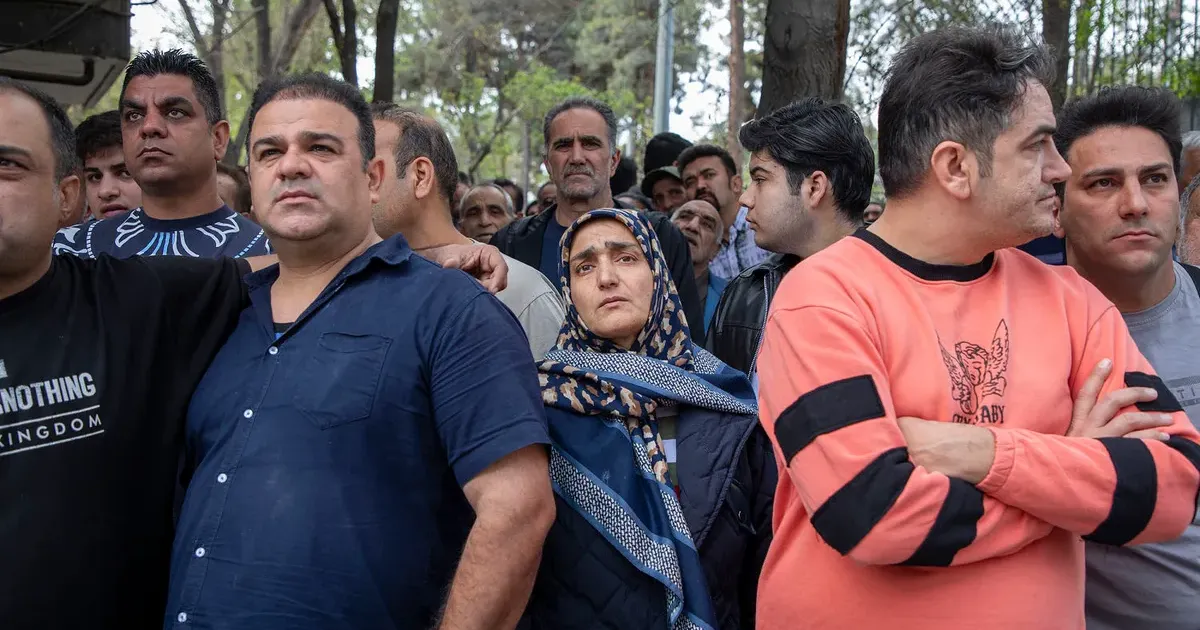
A month of US and Israeli airstrikes has turned Iran's military crisis into a civilian and economic emergency. The campaign is now being measured through economic pressure as much as battlefield damage. Strikes that began around military and nuclear-linked infrastructure have also damaged power, transport and communications systems that ordinary people rely on. The result is a war measured not only in targets hit, but in markets closed, hospitals strained and families displaced from Tehran and other cities. The coalition argues that the campaign is necessary to reduce Iran's strategic threat. Iranian civilians are living with the cost of that theory. Power interruptions, food shortages, fuel scarcity and restricted communications have made everyday life harder in a country already weakened by sanctions, inflation and political repression.
Tehran Under Pressure
Strikes on bridges, rail links, command facilities and logistics nodes have narrowed the line between military infrastructure and civilian survival. A road used by the Revolutionary Guard can also carry food. A communications hub used by the state can also connect families to doctors, banks and relatives. That dual-use reality is where the humanitarian impact grows. Thousands of residents have reportedly left urban areas for smaller towns or mountain communities. Those receiving areas are not built to absorb large numbers of displaced people. Food distribution, fuel access and medical care become harder when the population moves faster than local systems can respond.
The Iranian state has also used the war to tighten information control. Internet restrictions make it difficult to verify casualties, organize aid or document damage. That helps the government manage the narrative, but it leaves civilians with fewer tools for survival.
Global Market Shock
The economic impact extends beyond Iran. Oil prices and tanker insurance costs have risen as traders price in the risk of Persian Gulf disruption. Threats around the Strait of Hormuz, missile survivability and related regional strikes feed the same market anxiety. Higher energy costs move through the world economy quickly. Airlines, shipping firms, fertilizer producers, manufacturers and consumers all absorb some part of the increase. Even countries far from the battlefield can feel the war through fuel prices, food costs and delayed goods. Markets also dislike uncertainty about duration. A short strike campaign can be priced as a shock. A month-long conflict with no clear end becomes a structural risk. Investors then move toward gold, government bonds and defensive assets, while transport and manufacturing shares come under pressure.
Strategic Assumptions
The coalition's strategy appears to rest on the belief that sustained pressure can degrade Iran's military options and force better terms. That assumption is contested. External attack can weaken a state, but it can also strengthen hardliners, suppress dissent and make compromise look like surrender. Inside Iran, opposition networks are caught in a brutal bind. Many dissidents oppose the regime, but they also live under the bombs. A campaign that damages the state can still damage the society that would have to produce any democratic alternative. That is the central moral and strategic problem of the air war.
Regime-change pressure through economic pain rarely follows a tidy model. Populations under attack may blame their rulers, but they may also blame the foreign powers dropping the bombs. Both reactions can exist at once, which makes policy predictions dangerous.
The humanitarian issue is not separate from strategy; it is one of the ways strategy is judged. If the campaign leaves hospitals without reliable power, families without fuel and local authorities unable to move food, the coalition will face a legitimacy problem even if its target lists look precise. Civilian suffering can become the evidence opponents use to argue that the operation is punitive rather than protective. The economic damage also narrows Iran's political future. A shattered transport system and emergency currency market strengthen actors who control fuel, permits, checkpoints and smuggling channels. Those networks tend to favor security institutions and black-market brokers, not civilian reformers. A campaign designed to weaken the state can therefore leave the most coercive parts of the state with more leverage over daily survival.
That is why the endgame cannot be measured only by destroyed launchers or damaged facilities. The harder question is what political arrangement becomes possible after the strikes stop. If the answer is only a poorer, more securitized Iran surrounded by nervous energy markets, the military campaign may prove tactically successful and strategically incomplete. Allied politics will become harder as the campaign lengthens. European governments may support pressure on Iran while still fearing refugee flows, energy inflation and legal challenges over civilian harm. Gulf states may want Iran weakened but not destabilized so badly that missiles, militias or smuggling networks spill across their own borders. The coalition therefore needs more than military coordination. It needs a political explanation that can survive higher fuel prices, difficult casualty reports and questions about what happens if Iran absorbs punishment without changing course. Without that explanation, public support can erode faster than target lists are completed. The communications blackout makes that judgment harder. When phones, banks and local media fail, civilians lose the tools that normally prove damage, request help and preserve a factual record for later accountability. That uncertainty is itself a cost. Businesses, families and allied governments make defensive decisions when they cannot see a credible political landing zone.
Cost of the Campaign
The analysis is that precision bombing can be tactically accurate and strategically blunt at the same time. Destroying a facility does not automatically create a political outcome. Damaging an economy does not guarantee public revolt. It may instead produce scarcity, black markets, displacement and a more securitized state.
The global cost is also part of the campaign's ledger. If the war raises energy prices, disrupts shipping and fuels inflation, the burden spreads to households that have no role in the conflict. That does not settle the security argument, but it does make the price of the strategy harder to hide.
The longer the campaign continues, the more its success will be judged by political results rather than target lists. On that measure, the endgame remains unclear.
Humanitarian access will become one of the clearest measures of that endgame. If aid groups cannot move medicine, fuel and water-treatment supplies safely, the campaign's indirect toll will rise even where bombs are not falling. That cost will feed back into diplomacy because governments supporting the strikes will face more questions about proportionality and postwar responsibility.
Iran's economy also cannot be separated from regional stability. A broken banking system, damaged transport network and desperate black market create incentives for smuggling and armed patronage. Those systems rarely disappear when the shooting slows. They become part of the political landscape the next negotiation has to manage.