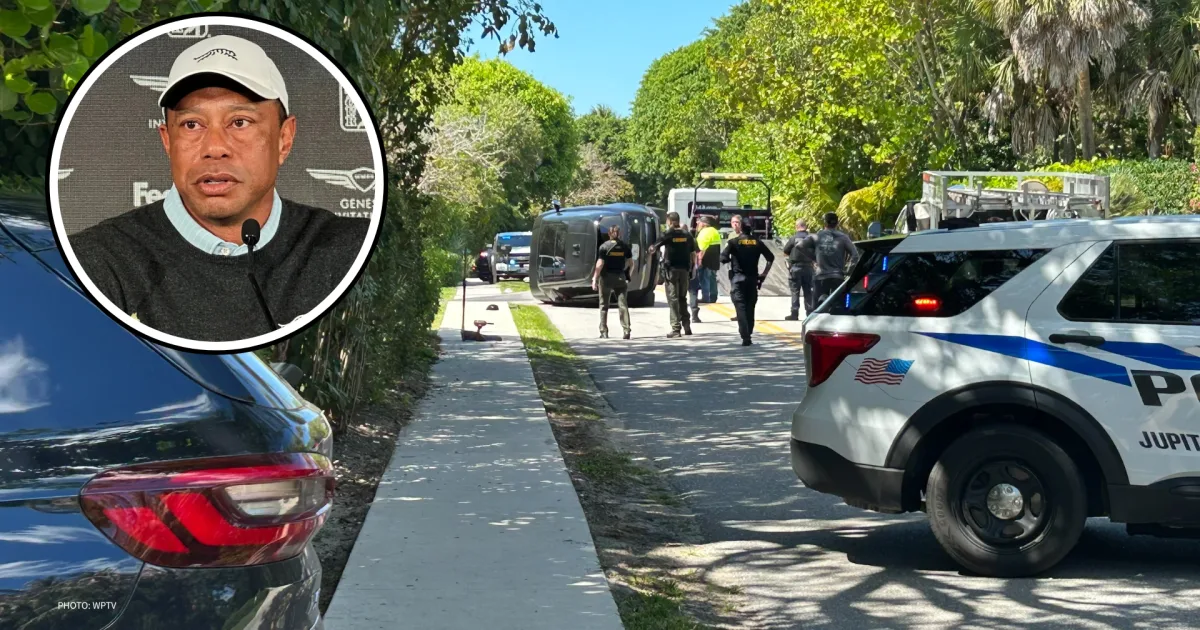
Tiger Woods is facing another legal crisis after a March 27 crash near Jupiter Island, Florida. Authorities said the golfer was arrested on suspicion of driving under the influence after a rollover involving his SUV and a truck trailer. Public reporting said no injuries were reported, a breath test did not detect alcohol, and investigators focused on possible drug or medication impairment after Woods declined a urine test.
The case now turns on Florida's implied-consent rules, crash evidence and the observations of responding deputies. Woods was charged in connection with DUI with property damage and refusal to submit to a lawful test, according to reports citing local authorities. Those details matter because the absence of an alcohol reading does not end a DUI investigation if officers allege impairment by another substance.
The golf legend has been charged with DUI, property damage and refusal to submit to a lawful test, authorities said.
The arrest drew heavy attention because Woods has a long public history of injuries, vehicle crashes and a prior 2017 DUI case involving prescription medication. That history does not prove the facts of the new case. It does explain why the latest incident immediately became more than a local traffic matter.
Martin County Details Jupiter Island Crash
Reports from Florida said the crash happened near Woods's home on Jupiter Island after his vehicle came into contact with a truck trailer and overturned. Deputies said he showed signs that prompted a DUI investigation. The vehicle was damaged, and the crash scene required documentation by law enforcement. Authorities later released booking information, and media outlets requested video, audio and other public records.
The factual sequence is important. This was not reported as a simple stationary-property crash. It involved a roadway incident with another vehicle or trailer and could have produced more serious consequences. No one being injured was fortunate, not proof that the risk was minor.
Investigators will rely on body-camera footage, field-sobriety observations, crash reconstruction, witness accounts and any available medical or toxicology-related records that courts allow. Without a chemical result showing alcohol impairment, prosecutors may lean more heavily on officer testimony and the refusal issue. Woods's attorneys will likely challenge the strength of those observations and the basis for the requested test.
Legal Implications of Refusing a Test
Florida's implied-consent law can create consequences when a driver refuses a lawful chemical test after a DUI arrest. In Woods's case, public reports have emphasized refusal of a urine test, not a failed breath test. That distinction matters. A negative alcohol breath test does not rule out impairment by medication or drugs, and a urine refusal can become part of the legal fight over what officers reasonably suspected.
Refusal cases can carry administrative penalties separate from the criminal case. Prosecutors may also argue that refusal shows consciousness of guilt, while defense attorneys may argue that the test request was improper, unnecessary or unsupported by probable cause. The outcome will depend on the exact timing, warnings, officer observations and Florida procedure.
The property-damage element raises the stakes beyond a routine traffic stop. A DUI case involving damage can be treated more seriously because the alleged impairment is tied to a crash rather than only driving behavior. The court may also consider restitution, license consequences, treatment evaluation and probation conditions if the case results in a conviction or plea.
Public Record and Career Fallout
Public interest is high because Woods remains one of the most recognizable athletes in the world. The arrest affects more than his legal calendar. It raises questions about tournament plans, sponsor posture, golf leadership roles and his broader public image after years of physical setbacks. The PGA Tour and golf institutions will be cautious because the facts are still moving through the legal process.
Media attention also creates a risk of overstatement. A booking photo is not proof of guilt. Prior incidents are not evidence that every new allegation is true. At the same time, the pattern of vehicle-related crises around Woods is impossible to ignore. The public safety question is legitimate because cars, medication, fatigue and impairment can produce consequences far beyond the driver's own life.
The next phase will likely involve court filings, public-record releases and potential attempts to obtain medical information relevant to the impairment question. That process should be judged on documents and testimony, not on mythology around Woods as a comeback figure or fallen icon.
The Public Safety Question
Fame becomes corrosive when it turns repeated danger into another chapter of a redemption story. The arrest of Tiger Woods should not be treated as celebrity spectacle first and public safety second. A crash, a DUI investigation and a refusal dispute are not branding problems. They are warnings about what happens when a famous person with a history of serious vehicle incidents is again accused of being impaired behind the wheel.
Refusing a lawful test, if the court finds the request was proper, is not a neutral detail. It is a tactical choice with consequences. The public should stop viewing these incidents only through the lens of comeback and start seeing the road risk plainly. A large SUV on a narrow Florida road can become a deadly instrument in seconds. Woods is entitled to a defense, but entitlement to due process is not entitlement to public amnesia. The real failure would be another cycle in which the legal system, sports industry and fan culture treat accountability as an obstacle to the next inspirational montage.