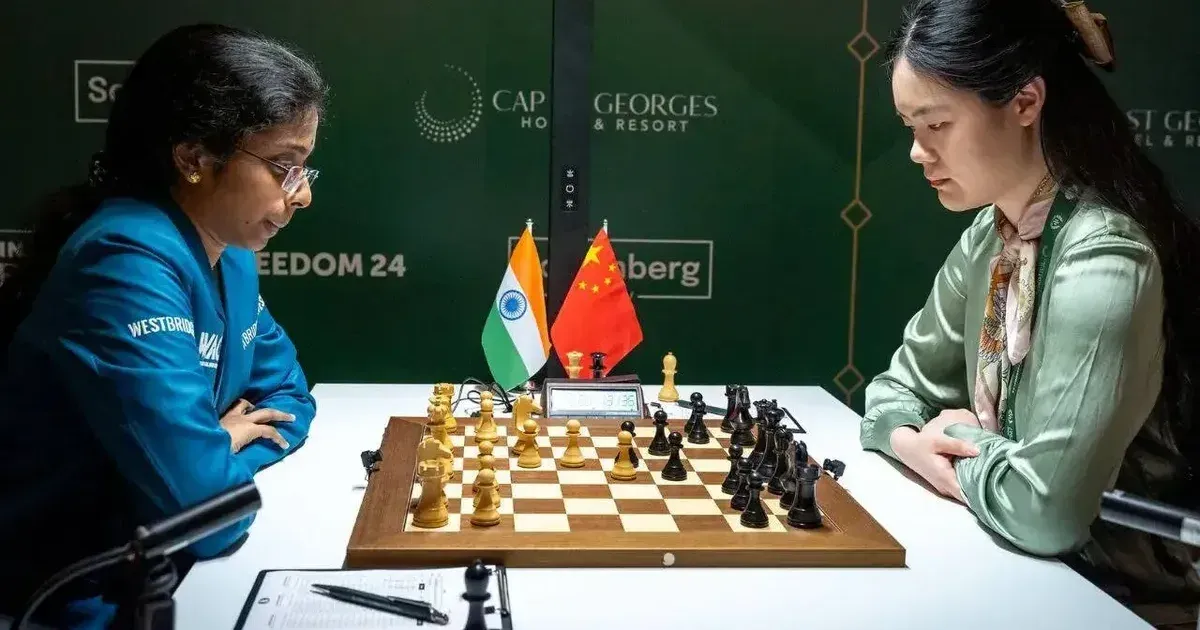
R. Vaishali secured the 2026 Women’s Candidates title through a definitive final-round performance that shifted the hierarchy of international chess. The victory was completed on April 15, 2026, when she defeated Kateryna Lagno and pushed her final score to 8.5/14. International observers watched as Divya Deshmukh held Bibisara Assaubayeva to a draw, a result that effectively removed the final obstacles for the Indian grandmaster. Records indicate her win makes her the official challenger for the reigning champion, Ju Wenjun.
Financial rewards for such a feat are structured to encourage aggression and precision throughout the two-week tournament. Standard base pay for the tournament winner sits at €28,000. Organizers add €2,200 for every half-point earned during the 14 rounds of grueling play. Calculations put her total earnings above the €40,000 mark before additional performance bonuses are applied.
Final Round Victory Over Kateryna Lagno
Preparation for the final round against Kateryna Lagno required a mix of psychological resilience and technical precision. Lagno, a veteran of several world-level events, sought to disrupt the rhythm of the younger Indian player. Pressure built as the clocks ticked down, but Vaishali maintained a solid structural advantage throughout the middle game. One critical error from Lagno allowed a breakthrough that ended the contest. The result ensured that no other player could catch Vaishali in the standings.
R. Vaishali created history by winning the 2026 Women’s Candidates, earning the right to challenge China’s reigning champion Ju Wenjun for the Women’s World Chess Championship crown.
Expert analysis of the game suggests that Vaishali’s endgame technique has improved sharply over the last 12 months. She converted a small positional edge into a winning lead without allowing counterplay. Such a performance demonstrates a level of maturity that often eludes players in high-stakes final rounds. Final scores show a clear gap between the leader and the chasing pack. Crowds at the venue acknowledged the victory with sustained applause as the final handshake occurred.
The result also matters beyond a single tournament table. Vaishali's run gives India another elite women's contender at a time when the country's chess system is producing depth across age groups and formats. That makes the coming title match a sporting event and a signal of a wider competitive shift.
Ju Wenjun will still enter with championship experience, opening preparation and match-play resilience. Vaishali enters with momentum, but the next phase will test whether her Candidates form can survive the slower pressure of a long head-to-head match.
Her path also gives the championship cycle a clearer storyline for newer chess audiences. A challenger from India facing a long-serving Chinese champion brings national interest, sponsorship pressure and a contrast between rising momentum and established match experience.
The Candidates result also changes the expectations around Indian women's chess. Vaishali is no longer only part of a rising national wave; she is now the player carrying that wave into a world championship cycle. That brings a different kind of pressure from a tournament leaderboard.
For organizers and sponsors, the matchup is useful because it has a clean sporting contrast. Ju Wenjun offers experience, title defense and match discipline. Vaishali offers momentum, preparation energy and a fan base that has grown quickly with India's broader chess surge.
The next stage will also test support systems around the challenger. Seconds, opening files, rest schedules and media discipline can matter as much as a single novelty on the board. That preparation burden is now part of Vaishali's victory, and it will shape how her team manages the months ahead.
Title Match Pressure Starts Now
Vaishali now has to test her Candidates momentum against Ju Wenjun's match-play experience. History suggests that the transition from a tournament winner to a match-play challenger is the most difficult leap in professional chess. Ju Wenjun brings deep classical preparation and psychological resilience. While Vaishali has shown brilliance in Toronto, a one-on-one match over several weeks is a different beast that consumes the unprepared.
The financial disparity between the Candidates and the World Championship remains a glaring issue for the sport’s growth. €40,000 is a respectable sum, yet it pales in comparison to the millions flowing through secondary sports. If chess wants to be treated like a premier global commodity, the prize funds must reflect the intellectual tax paid by the competitors. India’s corporate giants must step up to bridge this gap, or the talent will eventually migrate to more lucrative fields. Modern chess is as much about the bank balance as it is about the board. Vaishali holds the momentum, but momentum is a fragile currency against Chinese institutional memory. She must evolve beyond the tactical skirmishes that won her the Candidates. Failure to adapt could produce a short match against a champion skilled at neutralizing aggressive players. Preparation for that different competitive test has already begun.