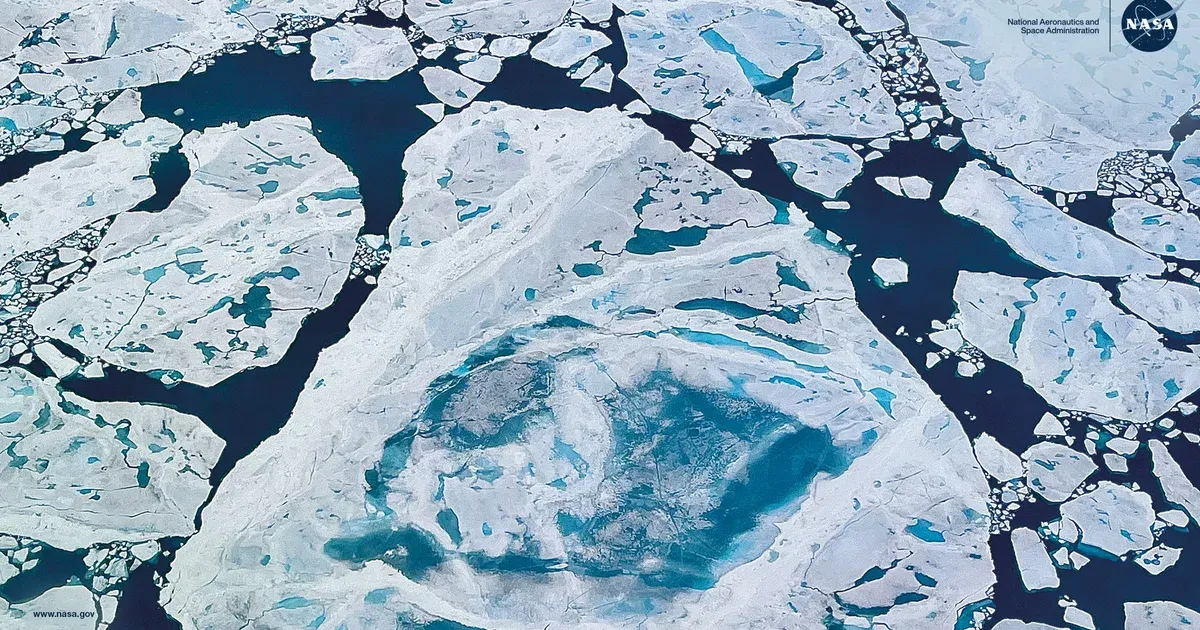
Arctic ice loss and suffocating mangroves are now placing polar disruption and coastal stress inside the same climate picture. The habitat shift drew sharper attention on March 11, 2026.
Arctic Ice Loss Opens a New Map
Arctic regions face a critical ice shortage as temperatures climb. Satellite data released this Wednesday by U.S. agencies confirms a grim trajectory. Arctic sea ice is currently on track to break last year's record for the smallest winter peak ever recorded. Scientists at the National Snow and Ice Data Center observed that the frozen cover, which usually acts as a cooling shield for the planet, has failed to thicken sharply during the darkest months of the year. This shift transforms the region into a magnet for geopolitical maneuvering. Rising temperatures have turned the once impenetrable North into a potential corridor for trade and military expansion. Russia and China are currently looking toward the Northern Sea Route as a shortcut for global shipping. Smaller ice footprints mean longer seasons for vessels to traverse these waters without the expensive assistance of heavy icebreakers. NATO forces have responded by increasing their presence in the high north, while scientists link polar ice loss with coastal oxygen stress. Tensions are rising as the ice recedes. Oceanic changes extend far beyond the polar reaches. Researchers at the University of Gothenburg recently turned their attention south, focusing on the brackish fringes where land meets sea. Their study of 23 global mangrove areas reveals a hidden crisis. These trees are effectively gasping for air.
Mangroves Start Running Out of Oxygen
As sea temperatures climb, the dissolved oxygen levels in these tidal nurseries plummet. Low oxygen, or hypoxia, now threatens the very species that rely on mangroves for protection during their early life cycles. Mangroves serve as the lungs and nurseries of the coast. When water warms, its ability to hold oxygen decreases. This physiological stress forces fish and crustaceans to either move to cooler, deeper waters or perish.
The University of Gothenburg team measured carbon dioxide and oxygen levels across these 23 sites, finding that the balance required to sustain life is tilting dangerously toward carbon saturation. Fish populations that support local economies in Southeast Asia and the Caribbean are particularly vulnerable to these chemical shifts. Heat waves act as sudden, violent filters for biodiversity. During extreme temperature spikes in North America, researchers documented a massacre of the sessile and the young. Billions of mussels literally cooked in their shells on the rocks during low tide.
Insect larvae within fruit did not survive the solar radiation. Yet, a study published in Nature Ecology & Evolution noted that a subset of species found ways to exploit the chaos. Some predators and scavengers found an abundance of easy meals among the casualties of the heat. Observations from the 2021 heat dome showed that baby birds often plummeted to their deaths from overheating nests. They were essentially jumping to escape the heat, only to die on the forest floor.
Heat Waves Pick Biological Winners
Survival depended on mobility and physiological tolerance. Species with broader thermal ranges or those capable of seeking deep shade managed to maintain their populations. These events suggest that the future of many habitats will not be empty, but rather occupied by a different, more resilient set of inhabitants. Coastal ecosystems bear the brunt of these rapid oscillations. Mussels act as a foundation species, providing structure and shelter for hundreds of other organisms.
Their mass mortality creates a vacuum in the intertidal zone. When billions of these organisms die simultaneously, the entire food web collapses. Scavengers thrive for a few weeks, but the long-term stability of the shore is compromised without the mussel beds to anchor the system. Death has become a predictable feature of the summer solstice. Commercial fishing interests are beginning to feel the pressure of the mangrove oxygen crisis.
Juvenile snapper, grouper, and shrimp rely on the complex root systems of mangroves to hide from larger predators. If the water within these roots becomes hypoxic, the nursery function ceases to exist. Coastal communities that depend on these species for protein and income face a dwindling resource.
Why Static Conservation Is Already Dead
Why do we keep mourning the loss of the old world when the new one is already being born, whether we like it or not? Policymakers and environmentalists spend billions trying to freeze the map of 1950, yet the Arctic is shouting that those days are gone. The reality is that the planet is not dying, it is simply evicting us and the species we find aesthetically pleasing. We see a catastrophe in a billion dead mussels, but nature sees an opening for a more heat-tolerant crustacean. The arrogance of modern conservation lies in the belief that we can dictate which species survive the coming century.
If we want to survive this transition, we must stop viewing the environment as a static museum. The suffocating mangroves and the melting Arctic are not just symptoms of a fever. They are the gears of a massive, indifferent machine resetting itself. We should stop subsidizing coastal developments that are destined to become underwater reefs and start preparing for the geopolitical reality of an ice-free North. The future belongs to the scavengers and the thermal outliers.
Our sentimental attachment to the biodiversity of the past is a luxury we can no longer afford as the oxygen levels drop and the ice turns to ink.