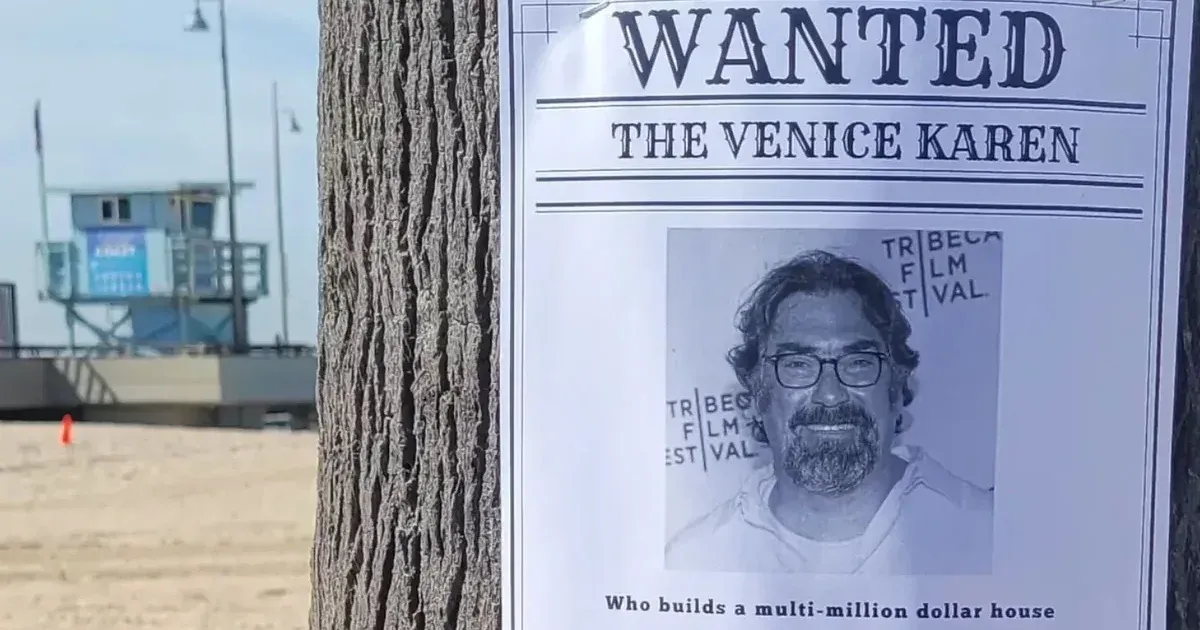
Venice Beach Residents Face Rising Vigilante Sentiment
While the online narrative suggests a community united against a singular threat, the legal pushback focuses on the involvement of an influential Hollywood producer who allegedly funded the distribution of the posters. Critics of the campaign argue that the situation illustrates a growing trend where wealthy residents use their financial resources to bypass traditional law enforcement channels. By April 14, 2026, such actions had created a tiered system of justice where those with professional production resources can frame neighborhood disputes as matters of urgent public safety. The statement from the legal team characterizes the conflict as a targeted effort by affluent newcomers to purge the neighborhood of individuals they deem undesirable.
Community tensions in Venice Beach have reached a boiling point as property values continue to rise alongside a visible increase in the unhoused population. Groups like the Venice Stakeholders Association have frequently sparred with civil rights organizations over the use of public space. The appearance of the Wanted posters is a departure from standard advocacy into the area of private investigative tactics. Residents report seeing individuals in plain clothes filming the streets and recording the movements of specific people for several weeks before the flyers appeared. Many of these residents believe the posters were necessary to draw attention to a perceived lack of police response.
Skepticism regarding the effectiveness of the Los Angeles Police Department has led some neighbors to take matters into their own hands. These individuals argue that the man in question has repeatedly harassed tourists and disrupted local businesses near the boardwalk. Witnesses claim he has a history of aggressive panhandling and verbal altercations. Despite these claims, the LAPD Pacific Division has not issued any warnings regarding a specific menace in the area. Officers confirm that they respond to calls based on evidence of criminal activity rather than neighborhood consensus or poster campaigns.
One specific poster listed a series of alleged grievances ranging from trespassing to public intoxication. The flyer included a high-resolution photo that appears to have been taken with a professional-grade telephoto lens. This level of production value suggests the involvement of someone with access to sophisticated photography equipment and high-volume printing services. Neighbors noted that the posters were replaced almost immediately whenever a city worker or a sympathetic resident tore them down. This persistence indicates a well-funded operation instead of a spontaneous act of frustration by a single neighbor.
Hollywood Producer Rejects Class Conflict Allegations
Documents provided by the legal defense team suggest the Hollywood producer in question has been a vocal advocate for private security patrols in the neighborhood. Emails obtained through the discovery process indicate that several property owners were encouraged to contribute to a fund for what was described as a public awareness campaign. The producer, who has not been named in a criminal capacity, maintains through representatives that his involvement was limited to supporting community safety initiatives. His team insists that the narrative of a rich mogul attacking a local resident is a gross oversimplification of a complex safety issue. The Los Angeles Police Commission continues to face scrutiny over oversight and de-escalation policies in high-profile cases.
The producer’s representatives argue that the focus should stay on the behavior of the individual instead of the bank accounts of those reporting it.
Attorneys for the man on the posters contend that the producer's actions go far beyond reporting crimes. They allege that the producer used his professional network to amplify the posters on various social media platforms, creating a digital echo chamber that magnified the perceived threat. This digital campaign reportedly used targeted ads to reach people living within a three-mile radius of Venice. The defense argues that this strategy was designed to make their client's presence in the neighborhood unsustainable. One specific advertisement called for residents to report the man's location every time he was seen in a public park.
“No private citizen, regardless of their status in the entertainment industry, has the right to act as judge, jury, and executioner in the court of public opinion,” a spokesperson for the legal team said.
Records from local printers show that the initial order for the posters exceeded 2,500 units. The cost for such a large run, combined with the professional photography and distribution labor, is estimated to be several thousand dollars. Legal experts suggest that this level of expenditure could be a factor in determining whether the campaign was a malicious attempt to harm the individual. California law provides protections against harassment that causes a person to fear for their safety or lose their livelihood. The man on the posters has reportedly lost access to temporary shelters because of the notoriety generated by the flyers.
Legal Defense Details Constitutional Concerns Over Posters
Defense filings emphasize that the First Amendment does not protect speech that incites violence or constitutes true threats. The legal team argues that the Wanted posters, while not explicitly calling for violence, created a climate of fear that made an attack on their client likely. They cite several instances where the man was followed and harassed by people claiming to be neighborhood watch members. One incident involved a group of three men who cornered him in an alleyway and filmed him while reciting the allegations from the poster. The man's lawyers argue that this is the direct result of the producer's campaign.
Defamation claims in this case hinge on the truth of the allegations listed on the flyers. In California, truth is an absolute defense to defamation, but the burden of proof shifts when a private citizen is targeted. The defense team has challenged the producers to provide evidence for every claim made on the posters. They argue that vague terms like menace are not legally actionable but that specific claims of criminal acts must be backed by police reports. So far, the proponents of the posters have failed to provide a detailed list of dates and times for the alleged offenses. The lack of documentation forms the basis of the man's civil lawsuit.
Arguments regarding the right to privacy also play a role in the ongoing litigation. While the man was in a public space when the photos were taken, his lawyers argue that the systematic tracking of his movements constitutes an invasion of privacy. California courts have previously ruled that constant surveillance by private individuals can reach the level of practical harassment. The use of high-powered lenses and social media tracking tools complicates the traditional understanding of what is considered fair use in public photography. The defense seeks an injunction to prevent the further distribution of any materials featuring the man's likeness.
City officials have expressed concern over the precedent set by this case. The Los Angeles City Attorney's Office is currently reviewing whether existing ordinances regarding the placement of posters on public property were violated. While the content of the posters is a civil matter, the act of attaching them to city-owned poles is a misdemeanor. Fines for such violations can reach $1,000 per instance. If the producer is found to have directed the distribution, he could face significant financial penalties from the city. Investigators are currently reviewing surveillance footage to identify the individuals who were hired to place the flyers.
Police Chief Dominic Choi has not commented directly on the Venice case but recently reminded the public that vigilante actions often complicate official investigations. When private citizens distribute their own wanted posters, it can lead to mistaken identity and the harassment of innocent people. The LAPD maintains that the proper way to handle neighborhood nuisances is through the 311 reporting system or by contacting the local leads officer. Private campaigns can also jeopardize future criminal proceedings by tainting the potential jury pool. Prosecutors may find it difficult to bring charges against an individual who has already been tried and convicted by the public.
Members of the Venice Neighborhood Council have called for a town hall meeting to discuss the ethics of neighborhood watch programs. They seek to establish guidelines that prevent residents from using their wealth to target specific individuals. Some council members argue that the Wanted posters are a symptom of a larger failure to address the root causes of crime in the area. They believe that without a clear policy on private security and public shaming, more neighborhoods will see similar conflicts. The legal battle over the Venice menace is likely to continue through the summer as both sides gather more evidence.
Legal Risk for Neighborhood Vigilantism
A dispute over Wanted posters in Venice has moved from neighborhood anger into a legal fight over harassment, public safety and private power. Lawyers for the targeted man say the campaign turned suspicion into punishment before any court reviewed the claims. Residents remain split between fear of disorder and fear of private retaliation. Los Angeles officials were reviewing the dispute by April 13, 2026, as the legal claims began to sharpen.