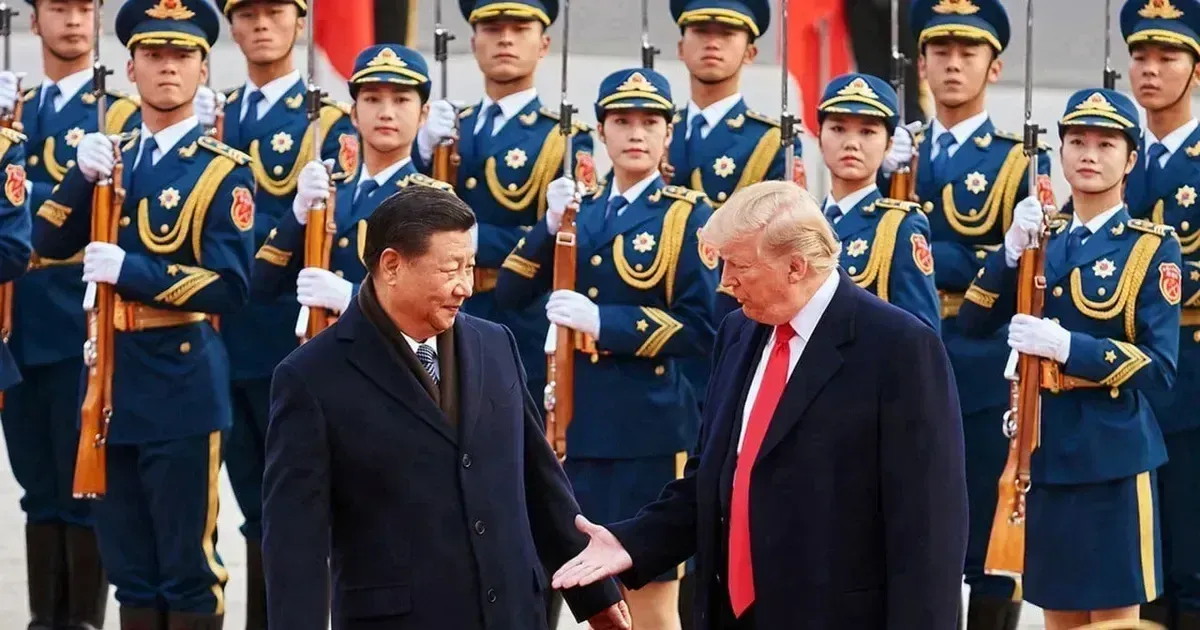
President Donald Trump issued a direct warning to Beijing regarding potential military support for Tehran. He insisted that any provision of advanced weaponry to Iran would fundamentally change the U.S. military posture in the Middle East. The warning placed China inside the administration's broader effort to stop Iranian weapons flows. By April 15, 2026, the White House was monitoring logistics hubs in the South China Sea and hardware preparations at several Iranian ports.
Beijing continues to maintain a $400 billion strategic partnership with the Islamic Republic. Recent intelligence reports suggested a surge in cargo traffic between the two nations, specifically involving components for high-altitude drones and precision guidance systems. Most security analysts argued that such shipments violate existing international sanctions still in place despite the temporary cessation of open fire. American officials asserted that the flow of hardware must stop before any permanent peace treaty can be signed.
China’s Strategic Partnership and Military Support Warnings
Intelligence circles in Washington have identified several key routes used to move military hardware through Central Asia. Analysts stated that these corridors allow China to bypass naval blockades that typically monitor the Persian Gulf. Security experts contended that the equipment being moved includes electronic warfare suites and surface-to-air missile components. Projections show that a fully armed Iranian defense network would double the cost of American air operations in the region. Donald Trump told reporters on Saturday that he would hold Beijing directly responsible for any American casualties resulting from Chinese-made weapons. He commanded that the Chinese leadership cease all military cooperation with Tehran immediately. Administration officials declared that economic retaliatory measures are currently under review by the Treasury Department. Efforts to de-escalate through diplomatic channels have stayed stagnant for months.
Conflict persists despite the nominal ceasefire agreed upon earlier this spring.
Legislative Deadlock Over New War Funding Appropriations
Senator Mark Warner signaled a potential shift in the legislative landscape during a press appearance on Sunday. He stated that he would take a look at any funding request from the administration, even if it meant expanding the war. His comments indicated that the previous Democratic opposition to military spending might be softening as the threat of Chinese intervention grows. Mark Warner is currently the chairman of the Senate Intelligence Committee and wields considerable influence over classified budget allocations.
Democrats previously argued that the White House had no clear exit strategy for the conflict. Legislative progress often depends on the chairman’s appetite for compromise. Funding for the war has already exceeded original projections by billions of dollars. Separately, the Pentagon has requested emergency appropriations to replenish missile stockpiles in the Eastern Mediterranean. The current lack of a long-term budget has forced the military to pull resources from domestic training programs.
Republican Hawks Push for Decisive Military Action
Nikki Haley, the former UN ambassador, argued on CNN that the current pause in fighting is merely a test of nerves. She urged the administration to finish the job rather than allowing Tehran to regroup. Many Republicans in the House and Senate have echoed this sentiment, calling for a decisive strike against Iranian command structures. Nikki Haley stated that the two-week ceasefire has provided Iran with a window to modernize its radar arrays.
GOP lawmakers asserted that a prolonged stalemate only benefits the strategic interests of Beijing. They argued that a show of overwhelming force is the only way to deter further Chinese involvement. Meanwhile, critics of the hawkish approach warned that resuming hostilities would spark a broader regional war. Republican leadership continues to pressure the White House to set a hard deadline for the end of negotiations.
Negotiations intended to secure a permanent end to the conflict have officially stalled. Failure to reach an agreement on nuclear enrichment limits has left both sides in a state of high alert. Peace talks in Doha ended abruptly when the Iranian delegation refused to discuss their regional proxy networks. Both parties have since returned to their respective capitals to prepare for a possible resumption of active combat.
Iran maintains that its partnership with China is a sovereign right that does not concern the United States. Tehran officials declared that any attempt to interfere with their trade routes would be met with force. Security on the ground remains volatile as skirmishes continue along the border zones. Marines stationed in the region reported multiple sightings of unauthorized drones near American outposts.
Weapons Flows and War Pressure
Geopolitical grandstanding often is a smokescreen for domestic fiscal failures. The sudden focus on Chinese arms shipments to Iran appears less like a genuine security discovery and more like a calculated move to justify another large round of military appropriations. While the administration points at Beijing, the real story is the vast $400 billion hole in the defense budget that Congress seems eager to fill. Senator Mark Warner’s willingness to look at new funding indicates that the military-industrial complex has successfully rebranded this conflict as a necessary stand against a global peer competitor.
National security is a ledger of unmet promises. By framing the Iran war as a proxy fight with China, the White House bypasses the fatigue of the American voter. This pivot ensures that the defense industry maintains its record profits while the public is distracted by the threat of a third world war. The ceasefire was never a bridge to peace but a tactical pause to allow the logistical wheels of the American war machine to catch up with its rhetoric. Trump is not looking for a diplomatic exit; he is looking for a reason to escalate without bearing the political cost of being the aggressor. Peace was never on the table.