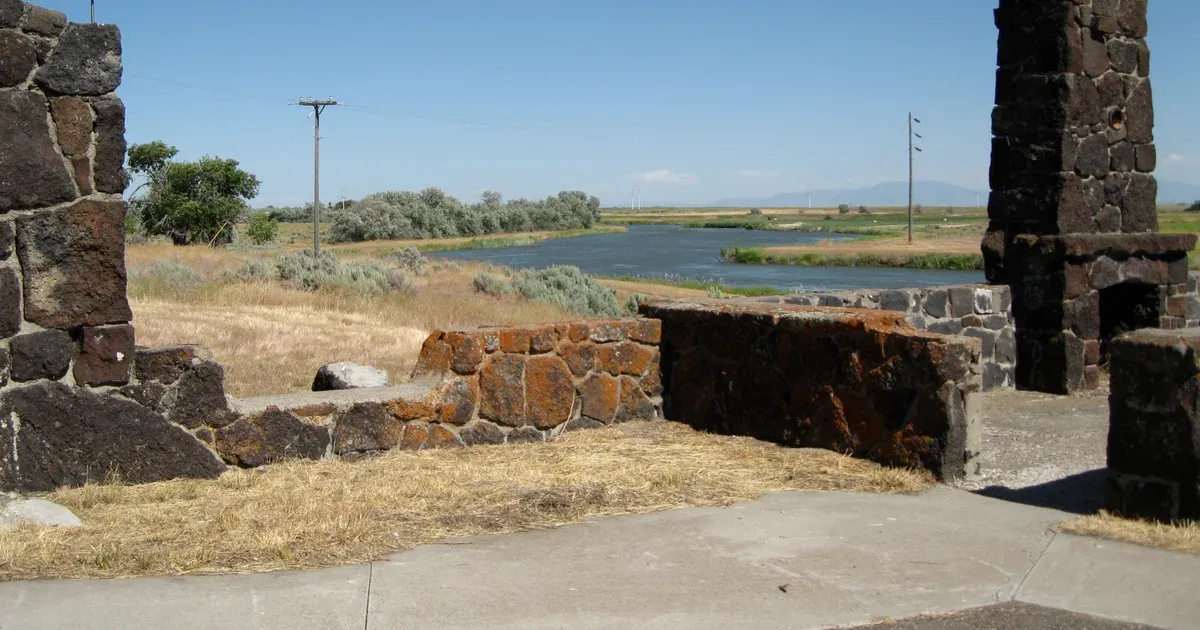
Federal officials confirmed the cancellation of the Lava Ridge Wind Project, citing a successful challenge by a coalition of Japanese American survivors and local ranchers who argued the turbines would desecrate the Minidoka National Historic Site. Opponents of the 400-turbine installation celebrated the decision as a victory for cultural preservation over industrial expansion. Developers from LS Power argued the move sacrifices 1,000 megawatts of clean energy during a period of record demand. Jerome County residents had spent years protesting the scale of the turbines, which would have stood taller than the Space Needle in Seattle.
Public lands in the American West have become a primary battleground for the energy transition, and Minidoka sits at the center of the latest dispute.
Conservationists noted that the wind farm would have occupied nearly 84,000 acres of federal land. This coalition united groups that rarely find common ground, linking the descendants of incarcerated families with conservative agricultural interests in the Magic Valley. Federal land managers initially proposed a smaller version of the project to reduce the visual impact, but local pressure eventually forced a total withdrawal. Political leaders in Boise had also voiced strong opposition, claiming the project was an example of federal overreach that ignored Idaho values. Success for the preservationists means the high desert horizon will remain unchanged for now.
Minidoka National Historic Site Preservation
To allow 600-foot turbines to tower over this place of sorrow and reflection would be to erase the context of our ancestors’ suffering, according to a formal filing by the Friends of Minidoka.
Lava Ridge Wind Project Structural Scale
Technically, the proposal was one of the largest renewable energy initiatives ever planned for the Idaho power grid. LS Power intended to install hundreds of turbines across Lincoln, Jerome, and Minidoka counties. Engineers argued the site was ideal because of its consistent wind patterns and proximity to major transmission lines that feed the Western Interconnection. Loss of the project creates a significant gap in Idaho's long-term energy projections. Projections from regional utilities suggest that the state will face power shortages by the end of the decade without substantial new generation capacity. Wind energy remains a volatile but necessary component of the state's transition away from coal-fired plants.
Construction would have generated hundreds of temporary jobs and millions in tax revenue for rural counties. Local schools and infrastructure projects often rely on these industrial tax bases to fund basic operations. Lincoln County commissioners had expressed interest in the economic windfall, even as they acknowledged the cultural sensitivities of their neighbors. Developers spent years conducting bird migration studies and soil analysis to meet federal requirements. Despite these efforts, the cultural weight of the land proved too heavy for the industrial proposal to carry. Environmentalists found themselves divided, with some prioritizing carbon reduction and others favoring the protection of cultural terrains.
Magic Valley Agricultural and Political Alliances
Locally, the opposition was rooted in a deep skepticism of large-scale federal projects. Ranchers in the Magic Valley worried about the impact on grazing rights and the potential for the turbines to interfere with aerial crop dusting operations. Cattlemen associations joined the Japanese American groups in a rare display of political unity. These agricultural interests viewed the wind farm as a threat to their traditional way of life and the aesthetic beauty of the Snake River Plain. Republican politicians in the statehouse used this discontent to frame the project as a mandate from Washington that ignored the desires of Idahoans. Governor Brad Little and the state legislature passed resolutions early in the process that signaled their disapproval.
Rural residents often feel that their backyard is treated as a battery for urban centers like Boise or Salt Lake City. Energy produced at Lava Ridge would likely have traveled through the Gateway West transmission line to serve customers outside the immediate area. Critics argued that Idaho should not bear the visual and environmental costs of power that primarily benefits California or Oregon tech hubs. This sentiment helped sustain the protest movement for several years. Activists organized town hall meetings and letter-writing campaigns that flooded the Bureau of Land Management with thousands of comments. Federal officials admitted that the volume of negative feedback was a factor in their decision-making process.
Rising Energy Demand and Artificial Intelligence Growth
Grid stability is a mounting concern as 1,000 megawatts of potential power disappears from the future supply chain. Demand for electricity is surging due to the rapid expansion of data centers and the infrastructure required for artificial intelligence. Silicon Valley firms are searching for vast amounts of reliable energy to power their server farms, often looking to the Intermountain West for space. Idaho has become an attractive destination for these firms because of its historically low energy costs. However, the cancellation of projects like Lava Ridge threatens the ability of the state to attract new tech investment. Utility providers must now find alternative sources to meet the exponential growth in consumption.
Nuclear power and geothermal energy are frequently discussed as alternatives, but these technologies face their own regulatory hurdles. Solar arrays require even more land than wind farms to produce the same amount of electricity. Every energy choice involves a trade-off between environmental goals and the preservation of existing land uses. Industry analysts suggest that the defeat of Lava Ridge will make developers more cautious about proposing projects near sensitive cultural or historical sites. Finding locations that are both windy and uncontroversial is becoming increasingly difficult as the grid expands. Demand will continue to rise regardless of where the next turbine is built.
Memory Versus Energy Demand
Infrastructure development in the twenty-first century rarely survives a collision with the ghosts of the twentieth. The collapse of the Lava Ridge Wind Project is more than a local zoning dispute; it is a deep indictment of the current approach to the energy transition. Federal agencies and private developers continue to underestimate the power of emotional and historical resonance when compared to technical efficiency. While the Bureau of Land Management likely believes it reached a democratic compromise by canceling the project, it has essentially prioritized the preservation of a tragic memory over the urgent requirements of a functional future.
Energy scarcity is a looming reality that no amount of historical reverence can reduce. The unlikely alliance between Japanese American descendants and conservative ranchers provides a convenient political shield, but it does nothing to address the 1,000 megawatts of missing capacity. We are moving toward a world where the demand for artificial intelligence and data processing will require every scrap of energy we can harvest. If sacred ground and aesthetic vistas are treated as non-negotiable obstacles, the Western United States will eventually face a choice between permanent blackouts or the forced industrialization of its most cherished places.
This decision sets a precedent that will haunt every subsequent attempt to modernize the grid. Sentiment has won, but the lights may eventually dim as a result. Historical preservation is a luxury of the powered.