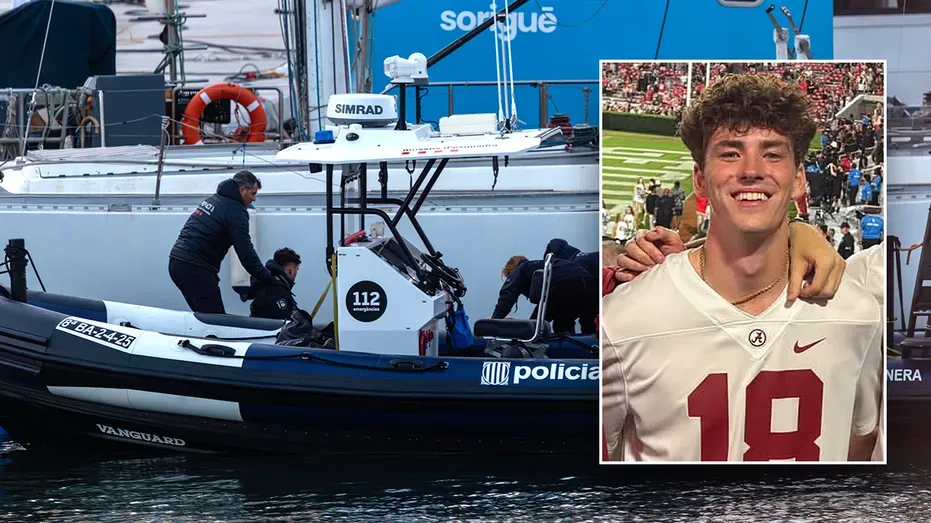
Jimmy Gracey vanished into the dark waters of the Mediterranean according to a report released by Catalan authorities investigating the disappearance of the American college student. Regional police recovered his body from a marina in the Port Olimpic district, located approximately 500 feet from the nightclub where he was last seen alive with his friends. The 20-year-old junior from the University of Alabama had traveled to Spain for a spring break trip before his disappearance triggered an international search effort involving local divers and diplomatic officials. Spanish investigators finalized their initial autopsy findings on Friday, suggesting the death occurred without the intervention of third parties. Mossos d'Esquadra officials stated that the physical evidence collected at the scene aligns with a theory of accidental drowning. Medical examiners in Barcelona performed the autopsy throughout the morning hours to determine if external trauma mattered in the student's death. Their preliminary results did not indicate signs of a struggle or assault prior to his entry into the water. Police sources cited by El Pais indicated that surveillance cameras captured the final moments of the young man as he walked toward the edge of the concrete pier alone. Grainy footage shows a single figure stumbling toward the water line before disappearing from view into the harbor. But the official spokesperson for the Mossos d'Esquadra remained tight-lipped regarding the specific contents of the video during a press briefing on the waterfront. The Department refused to provide a frame-by-frame breakdown of the footage or confirm whether alcohol levels had been finalized in the toxicology report. They noted that the investigation remains open until all forensic data is cross-referenced with witness statements from the nightclub. Friends of the victim told local media that the group had spent several hours at Shoko, a prominent venue on the Barceloneta boardwalk known for hosting international tourists. Most of the party departed around 3:00 a.m., leaving the young man behind in the crowded club.
Mossos d'Esquadra Examine Port Olimpic Surveillance
In fact, the Port Olimpic area is under constant surveillance by a network of high-definition cameras managed by municipal security and private harbor masters. These cameras track the movements of pedestrians along the docks where multimillion-dollar yachts are moored throughout the year. Data from the northern pier suggests the student took a wrong turn after exiting the beachside exit of the Shoko nightclub. Instead of heading toward the taxi stand or the metro station, the individual moved toward the service docks where public access is restricted but often poorly gated. The drop from the pier to the water surface in this section of the marina exceeds six feet, making a self-rescue difficult for an intoxicated or disoriented person.
Separately, the maritime unit of the regional police utilized sonar equipment to locate the body in the silt-heavy floor of the marina. Divers navigated the debris-filled basin for nearly forty-eight hours before discovering the remains pinned near a structural pylon. The depth of the water in the Port Olimpic basin varies, but the area near the nightclub is deep enough to hide a body from surface view for several days. Investigators confirmed the identity of the deceased based on the clothing described by his fraternity brothers and a distinctive gold chain featuring a rhinestone cross. This jewelry remained intact on the victim when his body was brought to the surface on Thursday afternoon. Yet the family of the student and members of the Theta Chi fraternity are seeking more transparency regarding the timeline of the evening. They have questioned why security personnel at the nightclub allowed a lone, seemingly disoriented individual to wander toward the hazardous marina edge. Spanish law generally places the burden of safety on the individual once they leave the premises of a private establishment. Shoko management issued a brief statement expressing condolences but maintained that their internal security protocols were followed throughout the night. They provided their own internal camera feeds to the Mossos d'Esquadra within hours of the missing person report being filed.
Shoko Nightclub Security and Final Known Movements
For instance, the last known photo of the student shows him standing near the bar area of the club, appearing in good spirits while surrounded by other American students. He was wearing a dark shirt that matched the description provided to the U.S. Consulate in Barcelona. Reports from local media outlets suggest he was seen talking to an unidentified American woman with brown hair shortly before he left the building. Detectives are currently attempting to locate this witness to determine if she can provide insight into his state of mind or physical condition. Her testimony is considered a secondary priority compared to the physical evidence found on the CCTV tapes recorded near the water.
According to the University of Alabama, the student was a well-regarded member of the campus community in Tuscaloosa who had planned this trip for months. University administration sent a delegation to assist the family with the repatriation process, which requires coordination between the Spanish Ministry of Justice and the U.S. State Department. This legal procedure typically takes seven to ten days depending on the speed of the final forensic signature. Local authorities must issue a formal death certificate before the remains can be transported via a specialized carrier back to the United States. The Illinois native had no prior history of legal trouble or medical issues that would suggest a predisposition for such an event.
Still, the geography of Barcelona's nightlife district presents recurring hazards for international visitors unfamiliar with the terrain. Proximity of high-volume clubs like Opium, Pacha, and Shoko to the open water of the Port Olimpic creates a corridor where thousands of people congregate on the edge of the sea. Port authorities have faced criticism in the past for the lack of guardrails in certain service areas of the marina. They argue that railings would interfere with the docking of vessels and the operational needs of the harbor. Stone piers remain open to the elements, featuring only small stone curbs that offer little protection against a misstep in the dark.
University of Alabama Community Reacts to Tragedy
Even so, the Greek life community at the University of Alabama has organized a vigil to honor their fallen member as the investigation concludes in Spain. Theta Chi chapter house remained quiet on Friday as members processed the news of the accidental ruling. Many of these students were on the trip with the victim and returned home early after the body was recovered. They described the atmosphere in Barcelona as chaotic during the peak of spring break, with large crowds making it easy for individuals to become separated from their groups. This separation proved fatal in the early hours of Tuesday morning when the student began his walk toward the docks.
By contrast, the city of Barcelona has seen a rise in safety concerns regarding its waterfront districts over the last decade. Local residents have frequently petitioned the city council to increase lighting and police patrols in the Port Olimpic area to deter both crime and accidents. Statistics from the Mossos d'Esquadra show that while foul play is rare in the marina, accidental falls are a persistent issue during the high tourist season. Most of these incidents involve individuals who have spent the evening at the beachside bars. The city has resisted calls to wall off the marina, citing the aesthetic and functional importance of the port to the Mediterranean skyline.
Government officials in Catalonia confirmed that the case will likely be closed once the final toxicology report is delivered to the magistrate. The process involves a detailed screening for substances that may have impaired the victim's balance or judgment. While the initial autopsy ruled out violence, the presence of specific chemicals could provide the legal basis for the accidental death classification. The magistrate overseeing the case has the authority to request further testing if the initial results are inconclusive.
However, the current evidence strongly suggests that the student simply lost his footing while walking near the water's edge in the darkness of the early morning. The final report will be sent to the family once it is translated and notarized by the court. Viral accident footage creates a second incident after the first one: the fall itself, then the public circulation of a person's worst moment.