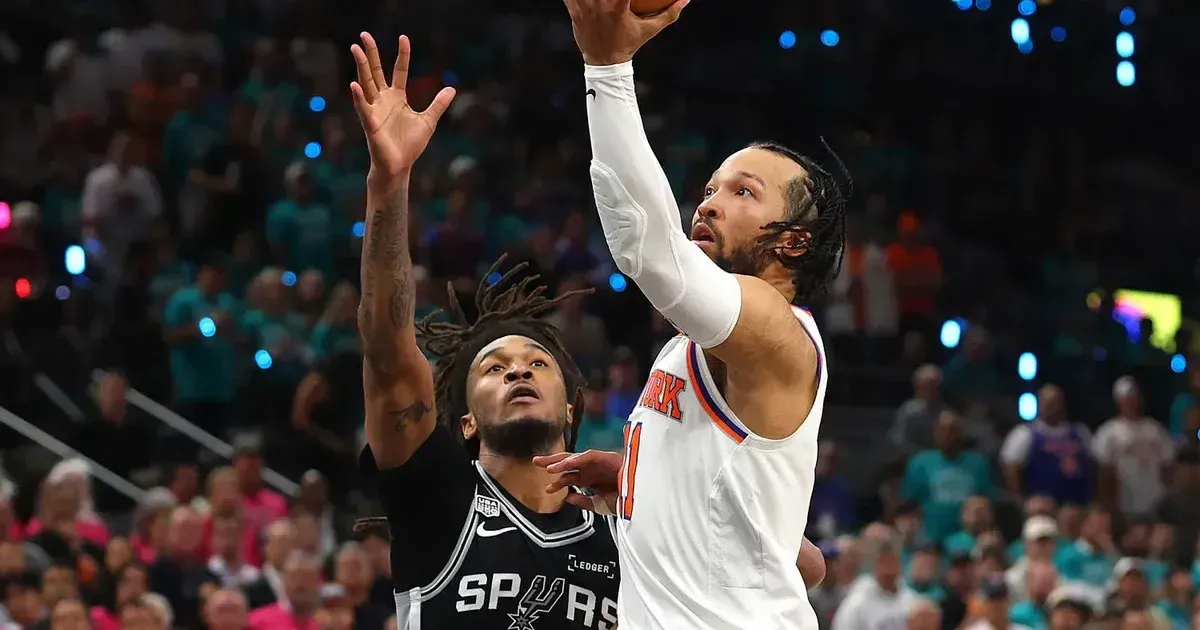
Victor Wembanyama produced the kind of NBA Finals debut that confirmed his individual ceiling, even as the San Antonio Spurs lost Game 1 to the New York Knicks 105-95. The opener also showed how quickly individual promise can be outweighed by late-game execution in the Finals. The 22-year-old finished with 26 points, 12 rebounds and three blocks on June 3, 2026, but he also shot 6-for-21 as New York closed the game with the final 11 points.
The opener gave San Antonio a split verdict: its franchise center looked physically ready for the stage, but the offense stalled badly enough in the fourth quarter to lose home-court advantage. The loss also changes the emotional tone around a young roster that had entered the Finals with momentum from a rapid postseason rise. That tension will shape the next two days of film work because the Spurs need Wembanyama’s production without letting the Knicks dictate every late possession. New York’s late execution, led by Jalen Brunson, turned a 14-point second-half Spurs lead into a 1-0 Knicks series edge.
Wembanyama’s line placed him in rare company for a first Finals game. Reports noted that only a small group of players, including Shaquille O’Neal, Hakeem Olajuwon and Elvin Hayes, had produced a similar mix of scoring, rebounding and shot-blocking in a Finals debut since blocks became an official statistic.
Rare Debut, Difficult Finish
The numbers showed why Wembanyama remains the center of San Antonio’s long-term plan and the defining problem New York must solve throughout the rest of the series. He protected the rim, rebounded through contact and gave the Spurs a clear focal point against a physical Knicks frontcourt. His presence changed how New York attacked the paint, even when his own jumper failed to settle.
The efficiency, though, became a problem. Wembanyama’s 6-for-21 shooting line showed how difficult the Knicks made his first look, especially when they met him early in the lane and forced him to finish through bodies. New York forced him into difficult looks and made San Antonio’s supporting cast prove it could punish help defense. The Spurs had promising stretches, but the final minutes exposed how thin the margin becomes when a young team leans too heavily on one player.
The comparison to O’Neal is useful only up to a point. O’Neal’s Orlando team also learned how quickly a spectacular center can be isolated when the rest of the offense becomes predictable, and San Antonio faces a similar risk if its guards cannot create advantages away from Wembanyama. O’Neal’s 1995 Finals debut also came in a loss, but San Antonio’s challenge is its own: Wembanyama has to turn a historic individual line into a series-level advantage before the Knicks can tighten their coverages further.
San Antonio Searches for Game 2 Answers
San Antonio’s immediate concern is ball security and spacing. The Spurs had enough good possessions to build a second-half lead, but the final sequence exposed how quickly those advantages can vanish when turnovers and stagnant spacing arrive together. The Spurs committed damaging turnovers and struggled to create clean possessions once New York sent extra attention toward Wembanyama. Better weak-side shooting would make the Knicks pay for collapsing into the lane.
Game 2 remains in San Antonio, giving the Spurs a quick chance to answer without leaving home. That matters because falling behind 0-2 before the series shifts would put pressure on every possession and give New York a chance to control tempo before the Spurs settle into the matchup. The adjustment window is short, but it is clear: more reliable entry angles, faster decisions after double teams and a stronger late-game plan when the Knicks switch pressure onto the ball.
The coaching staff also has to manage the emotional piece. A Finals debut with 26 points and 12 rebounds is not a failure, but Wembanyama’s shot selection and fourth-quarter fatigue will be studied closely. The next game will show whether San Antonio can turn his production into cleaner team offense. It will also show whether the Knicks can keep making Wembanyama work for every catch without giving up too many open looks to the shooters around him.
Wembanyama Needs More Help in the Closing Minutes
Wembanyama’s debut strengthened the case that the Spurs already have a championship-level centerpiece. It did not prove they have a finished championship formula. New York won the closing minutes because its veteran creators handled pressure better, while San Antonio’s possessions became slower and more predictable.
The series now turns on whether the Spurs can support Wembanyama with enough perimeter scoring and decision-making to stop New York from loading up on him. The Knicks have already shown they are willing to live with difficult touches if San Antonio’s secondary options cannot punish the help. If they can, the Game 1 stat line may become a foundation. If they cannot, it risks becoming the kind of brilliant individual performance that only underlines how much development still remains. San Antonio will need a cleaner closing plan if it wants Wembanyama’s production to translate into a series-level advantage.