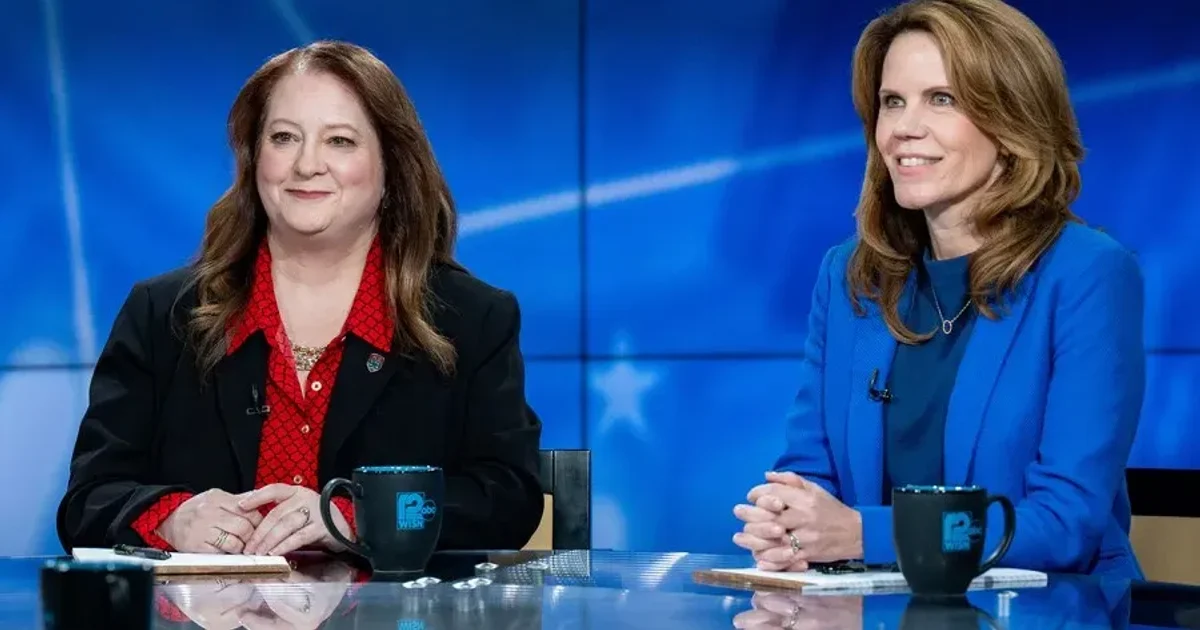
On April 5, 2026, Republican strategists in Madison analyzed internal polling data that showed a widening gap in the high-stakes race for the Wisconsin Supreme Court. Candidates Chris Taylor and Maria Lazar have spent months traversing the state to define the future of its highest bench. Polling numbers released over the weekend indicate that Taylor, the liberal-backed candidate, maintains a clear lead over Lazar, her conservative opponent. Political observers suggest the data reflects a broader erosion of Republican strength in a state once considered a reliable conservative stronghold during the Scott Walker era. Democratic organizations have leveraged this shift by flooding the airwaves with targeted advertisements focused on reproductive rights and voting access. Voter enthusiasm in urban centers remains at record levels for a nonpresidential year. Campaign finance reports filed recently show Chris Taylor has outpaced Maria Lazar by a margin of nearly three to one in individual donations. Liberal groups have funneled more than $15 million into television buys across the Milwaukee and Green Bay markets. Conservative outside groups, which typically provide a financial firewall for judicial candidates, have been uncharacteristically quiet in the final days of the contest. Some analysts attribute this silence to a strategic retreat as donors look toward more winnable contests in the upcoming fall midterm cycle. The lack of financial parity has left Lazar struggling to define her judicial philosophy to independent voters in the essential Fox River Valley. Evidence of this struggle appears in recent focus groups where swing voters expressed confusion over her stance on legislative redistricting.
Campaign Finance Disparity and TV Ad Buys
Financial records indicate that liberal donors have prioritized the Wisconsin judiciary as a main tool for policy changes. Since the 2023 election of Janet Protasiewicz, the fundraising infrastructure for liberal judicial candidates has transformed into a national powerhouse. Small dollar donors from across the United States contributed heavily to Taylor's war chest throughout the spring. These funds allowed Taylor to launch a detailed digital strategy that reached younger voters who rarely engage with traditional media. Lazar, by contrast, relied on a shrinking pool of local donors and traditional PAC support that failed to keep pace with the opposition's spending blitz.
Broadcast data reveals that Taylor's campaign aired five advertisements for every one aired by the Lazar team in the final week of March.
Advertising content shifted the focus away from traditional judicial temperament to specific policy outcomes.
"Wisconsin voters are increasingly rejecting the rigid judicial conservatism that has defined our state for too long," stated a spokesperson for the Democratic Party of Wisconsin in a recent press release.
The internal fracturing of the conservative base has made it difficult for Lazar to present a unified front against Taylor's progressive momentum. Strategists note that the failure to secure the suburban vote could have long-term implications for the party's ability to win statewide office.
Waukesha, Ozaukee, and Washington counties once provided the large Republican margins necessary to offset the Democratic dominance of Milwaukee and Madison. Recent election returns show those margins are thinning as college-educated professionals move into these suburban enclaves. These voters often hold socially liberal views even if they remain fiscally conservative. Taylor targeted these neighborhoods with mailers highlighting Lazar's endorsements from groups that oppose abortion access. Exit polling from previous cycles indicates that the abortion issue has become a major motivator for suburban women who previously voted Republican.
Lazar has struggled to navigate this issue without alienating either the staunch conservative base or the moderate swing voters. The resulting messaging was often viewed as inconsistent or evasive by local media outlets.
Suburban drift is no longer a temporary trend but a permanent fixture of the Wisconsin political map.
Democratic organizers successfully registered thousands of new voters in the suburbs of Milwaukee over the last eighteen months. These efforts were mirrored in Dane County, where the University of Wisconsin-Madison provides a consistent source of liberal votes. Turnout projections for Madison suggest that Taylor could win the city by a margin that Lazar cannot overcome in the rest of the state. Republican efforts to restrict early voting and ballot drop boxes have not sharply dampened these turnout numbers. Instead, these measures often catalyzed liberal organizations to increase their get-out-the-vote operations. The 2026 race is a real-time test of whether the GOP can survive without the overwhelming support of the WOW counties.
Judicial Philosophy and Partisan Alignments
Their apparent hesitation to spend heavily in the 2026 race suggests a lack of confidence in the party's current trajectory. Many business leaders have expressed private frustration with the state party's focus on election integrity issues at the expense of economic development.
The shift in the court's composition will likely lead to a total overhaul of the state's political boundaries.
Legislative redistricting remains the most disputed issue facing the court in the coming term. A 5-2 liberal majority would almost certainly strike down current maps that favor Republican candidates in the state assembly. Such a move would force a redraw of the lines before the 2026 fall elections, potentially ending the GOP's decade-long control of the legislature. Maria Lazar has warned that such an outcome would represent a politicization of the bench. Taylor countered that the current maps are a violation of the state constitution's requirement for compact and contiguous districts.
The legal arguments have largely taken a backseat to the political reality of the situation. Voters appear to view the judicial race as a proxy battle for control of the entire state government. This perception has turned a typically quiet spring election into a high-stakes national event.
Wisconsin Court Race Tests GOP Expectations
Wisconsin Republicans are preparing for a court race that could reshape state politics beyond one election night. Judicial control affects voting, redistricting and abortion cases that will return quickly.