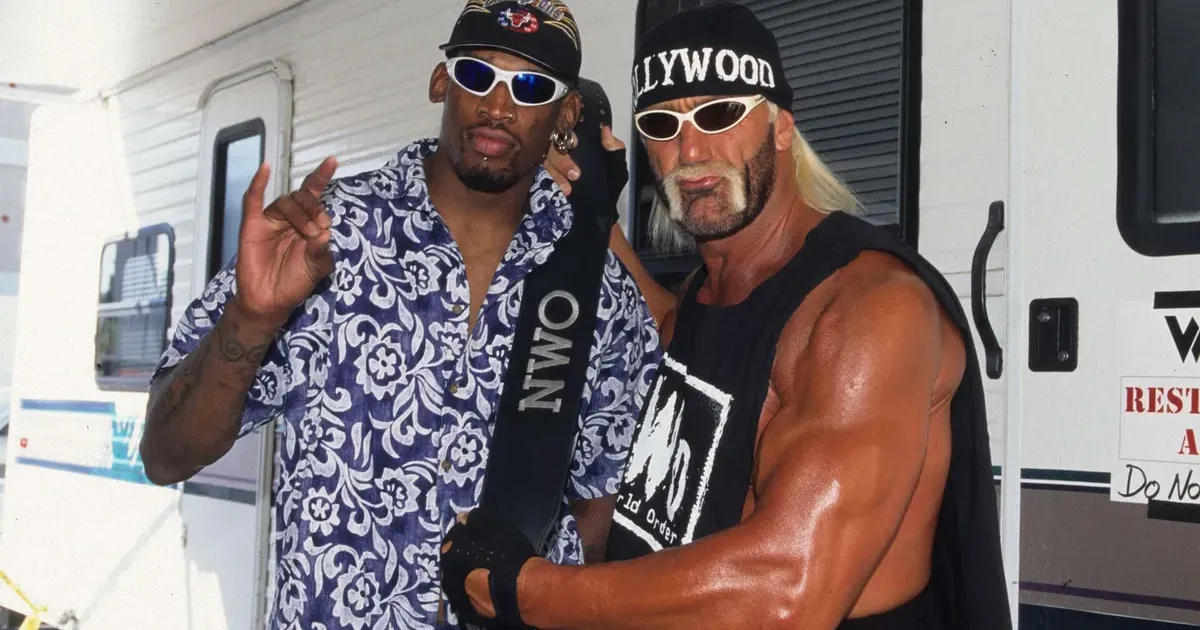
Dennis Rodman secured a place in the WWE Hall of Fame creating a unique historical bridge between the hardwood of the United Center and the squared circle of professional wrestling. News of the induction came via ESPN reports indicating that the five-time NBA champion will join the celebrity wing during WrestleMania week in Las Vegas. This move solidifies his status as a dual-sport icon who leveraged the spectacle of sports entertainment to amplify his global brand during the peak of the 1990s culture wars. Crossover appeal defined his career at a time when the National Basketball Association was reaching its zenith of popularity. While most athletes focused strictly on their respective seasons, Rodman recognized the growing power of cable television and the high-octane drama of wrestling. He joined the New World Order (nWo) faction in World Championship Wrestling (WCW) at the height of the Monday Night Wars. His alliance with Hulk Hogan turned the wrestling world upside down and blurred the lines between reality and scripted performance. Wrestling fans embraced his chaotic persona as a natural extension of his eccentric basketball identity.
Rodman and the WCW Legacy
WCW executives ranked mainstream exposure above technical wrestling proficiency during the late nineties. Signing a high-profile athlete from the dominant Chicago Bulls provided the leverage needed to challenge the dominance of the World Wrestling Federation. Rodman fit the nWo aesthetic perfectly with his dyed hair, numerous tattoos, and blatant disregard for authority. He did not simply make a cameo appearance; he actively participated in storylines that dominated national sports headlines. His presence in the ring signaled to casual viewers that wrestling was a legitimate destination for cultural relevance.
Hulk Hogan served as his primary mentor and tag-team partner during these excursions into the ring. Together, they formed a tough duo that capitalized on the rebellious spirit of the era. Rodman showed a surprising aptitude for the theatrical elements of the business, including the psychological warfare and crowd manipulation required to sustain a heel persona. Their matches were not technical clinics but were massive draws that generated record-breaking buy rates for pay-per-view events. This era established the blueprint for how modern professional sports organizations collaborate with entertainment properties to maximize audience reach.
NBA Finals Conflict and Fines
Infamy followed his wrestling career into the 1998 NBA Finals when he made a choice that stunned the basketball world. Between Games 3 and 4 of the championship series against the Utah Jazz, Rodman flew to Michigan to appear on Monday Nitro. He missed a mandatory practice session with the Bulls to stand in the ring with Hogan and a collection of nWo members. Phil Jackson and the Bulls organization responded swiftly to this breach of protocol. The Chicago Bulls front office issued a $20,000 fine to address the unexcused absence from team activities.
But the controversy only served to heighten the stakes for the upcoming wrestling match scheduled for the following month. Rodman was scheduled to face Karl Malone, his direct rival on the court, in a tag-team main event at Bash at the Beach. Malone teamed with Diamond Dallas Page to confront the Rodman-Hogan alliance in a match that remains one of the most famous celebrity appearances in wrestling history. Critics at the time argued that the spectacle distracted from the integrity of the NBA Finals. In fact, the Bulls went on to win the championship regardless of the extracurricular drama surrounding their star forward.
Separately, the financial impact of these appearances far outweighed the penalties imposed by the NBA. Experts estimate that the exposure generated millions for WCW and strengthened Rodman's marketability as a rogue element in professional sports. He proved that an athlete could be a distraction and an asset simultaneously, provided they maintained their performance on the court. His ability to switch from a defensive specialist in the NBA to a villainous wrestler in WCW showed a level of versatility rarely seen in modern athletes. To that end, the fine was a small price to pay for the massive cultural footprint he established.
WWE Hall of Fame Celebrity Wing
Recognition within the WWE Hall of Fame places him among a select group of non-wrestlers who have shaped the industry. Other sports figures in this wing include Mike Tyson, who helped spark the Attitude Era, and Pete Rose, whose recurring appearances at WrestleMania became a long-running joke. Rodman joins an elite class in 2026 that features Stephanie McMahon, AJ Styles, and the legendary tag team Demolition. Even so, his path to induction is unconventional because he never actually competed in a WWE ring during his primary run. His wrestling legacy exists almost entirely within the archives of WCW, which WWE acquired in 2001.
Still, the acquisition of WCW assets means that WWE owns the footage and the rights to his wrestling history. They have chosen to honor his contributions to the business as a whole rather than focusing strictly on their own brand. This approach acknowledges that the history of professional wrestling is a mix of various promotions and regional territories. Rodman's impact was so significant that ignoring his role in the 1990s wrestling boom would leave a gap in the narrative of the industry. His induction validates the era when professional wrestling became an undeniable pillar of American pop culture.
Questions about his current status in the industry resurfaced in 2023 when he appeared for All Elite Wrestling (AEW). That appearance proved that his connection to the wrestling audience remains intact decades after his peak. He stood in the ring with younger stars, providing a link to the past for a new generation of fans. While some purists might argue over his lack of a WWE match, his overall influence on the business is difficult to deny. He paved the way for future athletes like Rob Gronkowski and Logan Paul to transition into the ring with a level of credibility already established by his 1990s run.
Recent reports from ESPN suggest that Rodman is thrilled with the upcoming honor. He was inducted into the Naismith Basketball Hall of Fame in 2011, and this second induction makes him the first person to hold both honors. The milestone reflects a career defined by breaking barriers and refusing to be pigeonholed into a single category. He navigated the complexities of fame by leaning into the very chaos that others tried to avoid. As WrestleMania week approaches in Las Vegas, the spotlight will once again find the man who proved that personality is just as important as athleticism in the world of professional sports. Dennis Rodman fits WWE's Hall of Fame because spectacle, celebrity and athletic mythology have always overlapped. The induction is less about ring record than cultural fit.