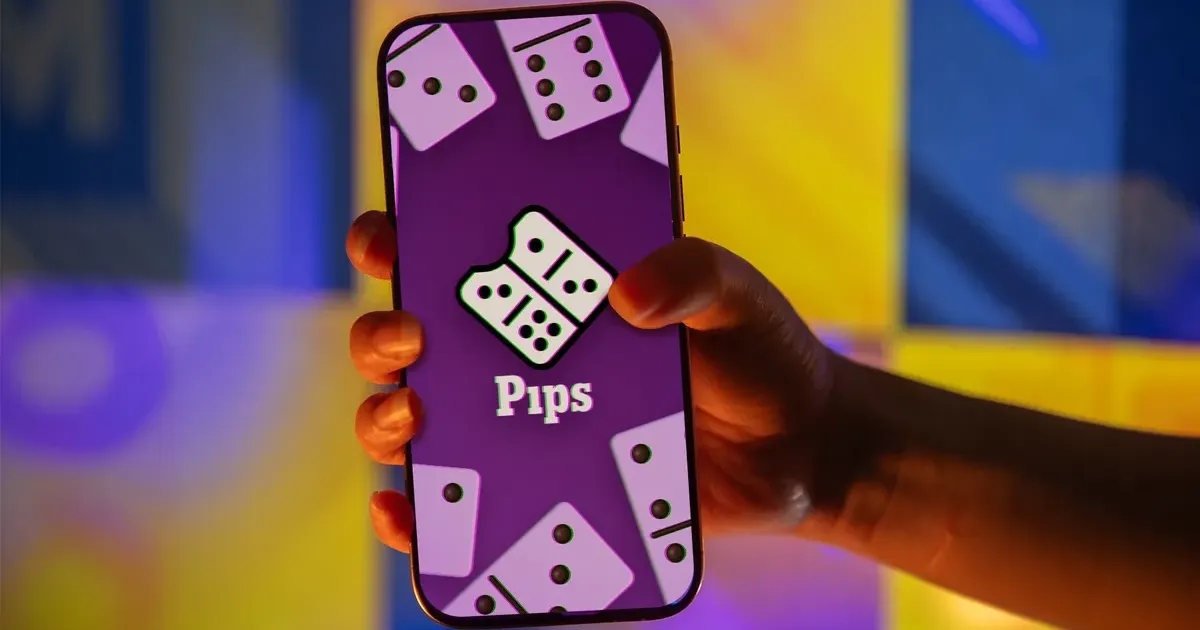
On April 4, 2026, the expansion marks a significant milestone for the New York Times Games division as it solidifies its strategy to merge traditional puzzles with modern digital engagement. Leading the current offerings are Pips, a domino-inspired logic game, and Connections Sports Edition, which integrates deep athletic knowledge with word-association mechanics. These titles reflect a broader corporate initiative to diversify revenue streams beyond standard news reporting. Subscription data indicates that users who engage with daily puzzles show 20% higher retention rates over a twelve-month period.
Pips arrived in the digital catalogue in August 2025, offering a single-player variation on classic dominoes that emphasizes spatial reasoning and arithmetic. Players must place tiles vertically or horizontally while adhering to strict color-coded environmental constraints. Success in the game relies on satisfying conditions such as sum totals or equality requirements within specific grid zones. Unlike its predecessor Wordle, this game offers no partial hints. If a player finds themselves unable to progress, the system only allows for a total puzzle reveal, which subsequently forces a reset to the next difficulty tier.
Domino Mechanics in New York Times Pips
Logic requirements in the April 4, 2026, puzzle demand a careful understanding of the five color-coded conditions. Zones marked for numerical sums require that all pips within that specific space add up to a designated integer. Equal zones dictate that every domino half occupying the space must display the same number of pips, creating a bottleneck for higher-value tiles. In contrast, not-equal zones forbid any repetition of pip counts among the domino halves placed within the boundary. Mathematical precision is the only path to a completed grid. Greater-than and less-than constraints add a layer of inequality logic that frequently trips up casual players. Every domino half in a less-than space must aggregate to a value below the target number, while greater-than spaces require the opposite. It is common for a single tile to straddle two different zones, requiring the player to satisfy two separate logical conditions simultaneously. Areas without color coding offer the only reprieve, functioning as neutral zones where any tile placement is valid. Experts suggest starting with the most restrictive zones to eliminate impossible combinations early in the session.
College basketball themes dominate the Connections Sports Edition puzzle for April 4, 2026. This specific version of the popular word game operates through a partnership with The Athletic, the sports-focused newsroom acquired by the publisher to strengthen its specialized coverage. Players are presented with a grid of 16 words and must identify four distinct groups that share a common thread. Error margins are slim, with only four mistakes permitted before the game concludes. Successful players identify the connection and watch as the corresponding words are removed from the digital board.
Athletic Integration in Sports Connections
April 4 puzzles specifically target fans of the NCAA tournament and professional hoops history. Categories range from jersey numbers of legendary guards to specific terminology used by referees in high-stakes games. While multiple words often appear to fit into a single category, the game design ensures that only one unique configuration of four groups is correct. This creates a psychological tension where the most obvious answer is frequently a trap designed to deplete the player's mistake allowance. Strategic shuffling of the board helps players break cognitive biases that form during the first look at the grid. Color-coded difficulty levels provide feedback on the complexity of the connections found. Yellow represents the most straightforward categories, often involving direct synonyms or simple associations. Purple categories involve wordplay, homophones, or highly specific trivia that requires deep domain expertise. For the April 4 edition, the purple category involves nicknames of college mascots from the 1980s, a detail that has sparked extensive discussion on social media platforms. Such difficulty spikes are intentional, designed to drive daily return visits and foster community interaction through shared results. Gaming has transformed the financial outlook for the New York Times since the 2022 acquisition of Wordle. Digital-only subscriptions now outpace print circulation by a wide margin, with the games app acting as the main entry point for younger demographics. Analysis of internal traffic shows that puzzle players often migrate to the news and cooking sections after finishing their daily challenges. This cross-pollination of content is central to the company goal of becoming a broad lifestyle platform. Revenue from games-related advertising has increased by 15% year-over-year.
Monetization strategies continue to evolve as the publisher experiments with exclusive content for premium tiers. While Pips is available to a broad audience, advanced difficulty levels and historical archives may eventually move behind a stricter paywall. Data from April 4, 2026, shows that 40% of active daily users access at least three different puzzle titles per session. The habit-forming behavior is exactly what the digital product team seeks to cultivate. Engineering resources are focused on reducing load times for mobile users in rural markets with limited bandwidth. Engagement metrics for the sports edition of Connections indicate a successful cooperation between the newsroom and the gaming lab. By using the expertise of journalists at The Athletic, the publisher ensures that the puzzles remain relevant to current events and seasonal trends. The focus on college basketball today aligns perfectly with the peak of the tournament season, driving a surge in mobile app downloads. Total active users for the sports-themed variants have surpassed 5 million globally.
The expansion also gives the Times more ways to segment users by interest. A sports fan and a word-game loyalist may arrive for different puzzles but still enter the same subscription funnel.
Sports categories also help the publisher reach users who may not identify as traditional crossword players. This gives the gaming suite a wider funnel than wordplay alone.
Pips and Sports Expand Puzzle Habit
Pips and sports puzzles widen the habit loop by giving different players different entry points. The strategy is simple: keep users returning for a quick win before they drift to another app.