New York Times game designers deployed a specialized set of challenges on March 17, 2026, to engage a global audience during the holiday. These digital offerings include the daily Mini Crossword and the specialized Connections: Sports Edition, both of which have become foundations of the publication’s digital subscription strategy. Morning commuters and casual solvers alike logged in to find grids that tested their linguistic agility and cultural knowledge against the backdrop of St. Patrick’s Day celebrations.

Meanwhile, the difficulty curve for these daily games has remained a point of contention among competitive players who track their statistics with religious fervor. The New York Times reported a significant surge in active users during the early hours of March 17, indicating that holiday downtime often translates into increased engagement for the Games app. Solving these puzzles is no longer a solitary activity, as social media platforms are frequently flooded with the colored squares of Connections results and time-stamped crossword completions. This digital system thrives on the shared experience of collective frustration or triumph over a particularly tricky clue.

Mini Crossword Strategy and March 17 Answers

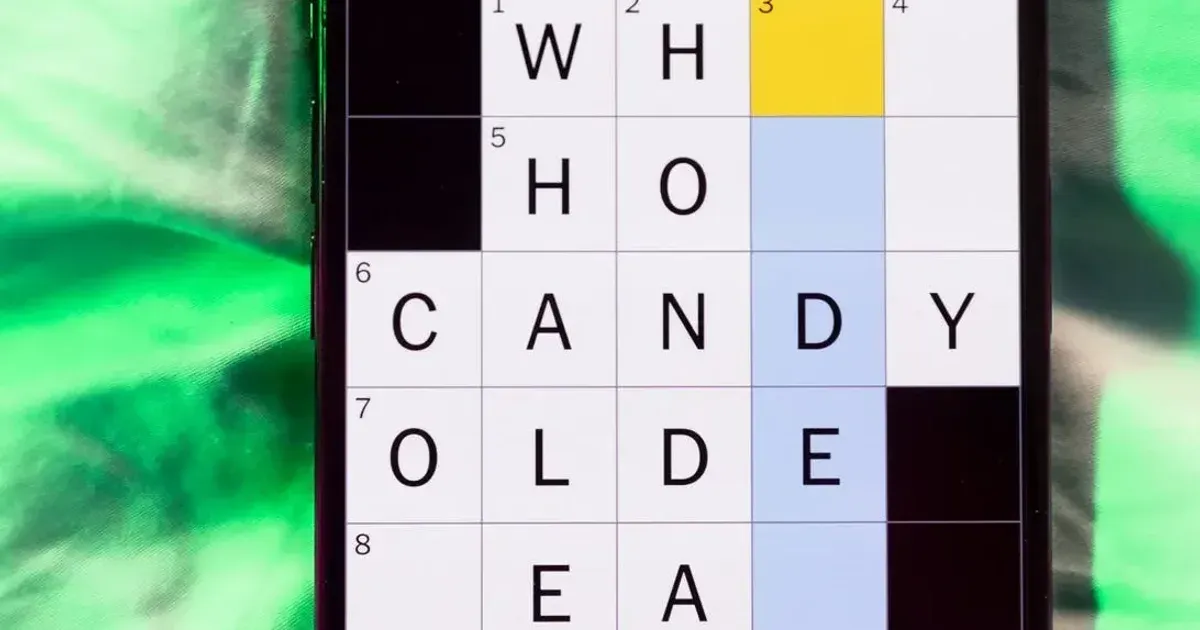
Joel Fagliano, who has led the Mini Crossword project since its inception, continues to emphasize brevity and wit in these 5x5 grids. For the March 17 edition, clues often lean into seasonal themes, requiring players to think about luck, folklore, or the color green without being overly literal. The across answers for today include words that fit a compact structure, often using high-frequency letters to allow for multiple intersections. Players found that 1-Across was a standard four-letter word that set the tone for the entire top row. The vertical clues required a similar level of lateral thinking to complete the grid in under a minute.

In fact, the average completion time for the March 17 Mini stayed around 48 seconds for experienced solvers. According to CNET, the answers for the across section were highly intuitive for those familiar with American idioms and standard crossword vocabulary. Down clues provided the necessary anchors for those struggling with the initial horizontal entries. The grid remains an exercise in economy, fitting a coherent puzzle into a space that takes up less than a quarter of a smartphone screen. Every tile placed correctly brings the solver closer to the celebratory animation that marks a successful completion.

Connections Sports Edition Reveal for Puzzle 540

Sports enthusiasts faced a different kind of challenge with Connections: Sports Edition puzzle number 540. This variant of the popular grouping game requires players to find four sets of four items that share a common link, specifically within the area of professional and amateur athletics. Today's puzzle included references to various leagues, including the WNBA, the Premier League, and Major League Baseball. The complexity of this edition lies in its use of red herrings, where a single word could easily fit into three different categories. Only by identifying the most specific connection can a player clear the board without exhausting their four permitted mistakes.

Millions of people find their morning rhythm through these grids, making the puzzle section more than a distraction; it is a ritual.

For instance, the purple category in today's Sports Edition involved a subtle linguistic link between famous stadium names and their geographical locations. This particular group is often the most difficult to solve, as it relies on deep trivia rather than surface-level terminology. The blue and green categories were more straightforward, focusing on equipment used in niche sports and common nicknames for historic teams. Most players struggled with the yellow category, which appeared simple but contained several overlapping terms that confused the initial sorting process. Success in this game is often a matter of patience and the ability to see beyond the most obvious associations.

Digital Gaming Growth in the New York Times Portfolio

Revenue from the Games division has become an essential pillar of the company’s financial health, contributing sharply to the $1.1 billion in annual digital subscription income. Analysts observe that puzzles serve as a powerful retention tool, keeping users within the app system long after they have finished reading the morning headlines. By contrast, traditional news cycles can be exhausting or demoralizing, whereas a puzzle offers a definitive sense of closure and accomplishment. The acquisition of Wordle in 2022 was the trigger for this expansion, but the internal development of games like Connections and Strands has sustained the momentum. Internal data suggests that users who play more than two games a day are 40% less likely to cancel their subscriptions.

Yet, the shift toward a gaming-heavy portfolio has raised questions among some media critics about the long-term identity of the Grey Lady. If the primary draw for a subscriber is a 5x5 crossword rather than investigative reporting, the institutional priorities might eventually drift. Management has consistently denied this, arguing that the puzzles provide the financial runway necessary to fund expensive foreign bureaus and investigative teams. Even so, the marketing budget for the Games app now rivals that of the core news product in several key demographics. The cross-promotion of puzzle content within news articles is a common sight on the mobile interface.

Psychology of Daily Word Games and Player Retention

To that end, the psychological hook of the daily puzzle is rooted in the concept of the "streak," a gamification tactic that encourages consecutive days of play. Losing a hundred-day streak in the Mini Crossword can be a genuine source of distress for some users, leading to a high level of daily habit formation. The behavior is reinforced by the ability to share results with friends and family, creating a low-stakes competitive environment. For one, the social validation of a perfect Connections score provides a small but potent dopamine hit. The design of the interface, with its clean lines and satisfying sound effects, is engineered to maximize this feeling of reward.

At its core, the appeal of these games on a holiday like St. Patrick’s Day is their ability to provide a moment of normalcy and mental stimulation. Separately, the editorial team ensures that the difficulty level remains consistent, preventing the frustration that could lead to user churn. The March 17 puzzles were balanced to be accessible enough for casual players while offering enough resistance to satisfy the hardcore community. Data from the first six hours of the day showed that 85% of users who started the Mini Crossword finished it successfully. The NYT Games app continues to dominate the charts in the App Store’s word game category.

The Elite Tribune Perspective

Why has one of the world’s most prestigious journalistic institutions transformed into a high-end digital arcade? The answer is as simple as it is cynical: news alone cannot pay the bills in an age where information is a commodity and attention is the ultimate currency. While the New York Times produces some of the finest reporting on the planet, its financial stability now rests on the shoulders of people trying to remember the four-letter word for an Irish musical instrument.

It is not a critique of the puzzles themselves, which are elegantly designed and intellectually stimulating, but rather an observation of a structural rot in the media economy. We have reached a point where the survival of the Fourth Estate is subsidized by digital distractions. The dependency creates a dangerous incentive for editors to prioritize "snackable" content over the dense, difficult work of holding power to account. If the games ever stop being profitable, or if a competitor builds a better crossword app, the funding for the next Pulitzer-winning investigation might simply vanish.

We are not just solving crosswords; we are participating in a desperate attempt to keep the lights on in newsrooms across the country. The celebratory clover animation on St. Patrick’s Day is a mask for a much grimmer reality in the publishing world.