established a historical precedent in collegiate athletics as South Carolina, UConn, UCLA, and Texas secured their positions in the national semifinals. Every regional champion from the previous season successfully defended their territory to recreate the exact same Final Four lineup for the second consecutive year. Phoenix will host this repeated quartet after the four programs dominated their respective brackets with surgical precision. The No 1 Seeds Secure Second Straight Final Four Rematch report carried a March 31, 2026 time marker for readers following the latest account. Consistency at the top of the sport has effectively created a gated community of elite programs that rivals have struggled to infiltrate.
ESPN reports that this specific alignment of four top-seeded teams returning to the semifinals is a rare occurrence in tournament history. Program stability and recruiting dominance provided the foundation for this collective return to the sports world's biggest stage.
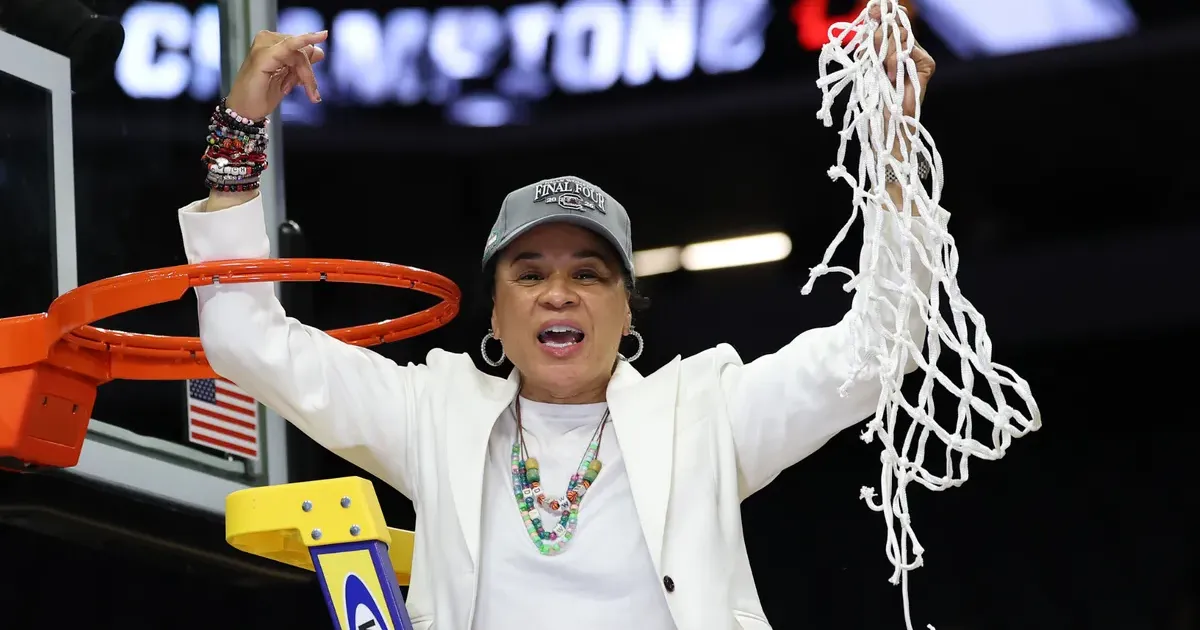
South Carolina entered the record books by dispatching TCU on Monday night in a lopsided victory. Dawn Staley led her squad to a sixth consecutive Final Four appearance, making the Gamecocks only the second team in NCAA history to achieve such a streak. Previous iterations of the Gamecocks relied on different star rosters, yet the current group maintains the defensive identity that defined the program's rise. Pressure defense forced TCU into early turnovers that the Gamecocks converted into transition points. Scoring depth proved too much for the Horned Frogs to handle as the lead ballooned during the second quarter.
Staley’s roster possesses a physical advantage that few teams can match in the paint. South Carolina walloped TCU on Monday night to return to the Final Four for the sixth year in a row.
South Carolina Reaches Sixth Consecutive Final Four
Dominance in the Southeastern Conference translated perfectly to the national tournament as the Gamecocks dismantled every opponent in their path. Historical comparisons now place Staley alongside the most successful coaches in the history of the game. Statistics show that South Carolina has maintained a winning percentage above ninety percent during this six-year stretch of Final Four runs. Recruiting classes ranked in the top five nationally every year have ensured that talent gaps do not exist. While some analysts questioned if the program could sustain its momentum after losing previous All-Americans, the current roster has answered those doubts with blowout victories.
Veteran leadership in the backcourt provided stability during the regional final against a resilient TCU defense. South Carolina remains the team to beat in the desert. Earlier in the postseason, fans tracked how South Carolina and Texas navigated the path to their respective brackets. TCU struggled to find an offensive rhythm against a South Carolina defense that prioritized rim protection. Blocks and contested shots characterized the first half as the Gamecocks built a double-digit cushion. Bench contributions further separated the two teams, with South Carolina's reserves outscoring the TCU starters during key stretches. Coaches around the country have noted that the gap between the Gamecocks and the rest of the field often appears in the fourth-quarter when fatigue sets in for opponents. Staley has cultivated a culture where physical conditioning is as important as tactical execution. Physicality remained the deciding factor in the regional final outcome. South Carolina finished the game with a rebounding margin that nearly doubled their opponent's total.
While CBS Sports suggests the event is a clash of titans, the editorial board noted that fans should savor the clash of titans.
Texas Relies on Experience of Rori Harmon
Texas cruised to its second consecutive Final Four appearance by leaning on the veteran leadership of Rori Harmon. Schaefer’s squad displayed a level of composure that only comes from seasons of high-stakes competition. Harmon acted as the floor general, directing the Longhorns through complex defensive schemes while maintaining her own scoring efficiency. Observers have described Harmon as transformed this season, showing a refined shooting stroke and improved decision-making under pressure. Texas moved through the bracket with a sense of inevitability that mirrored their 2025 run. Phoenix will now serve as the backdrop for their attempt to move past the semifinal round that halted them last year. Experience provides the Longhorns with a psychological edge heading into the national semifinals.
Defense was the catalyst for the Texas run through the regional rounds. Schaefer implements a high-intensity pressure system that requires constant communication and lateral speed. Harmon leads this effort at the point of attack, often disrupting opposing ball-handlers before they cross half-court. Scoring balance across the starting five prevents teams from focusing their defensive efforts on a single individual. Texas showcased this versatility during their regional final victory, where four players reached double figures in points. Transition opportunities generated from steals allowed the Longhorns to dictate the tempo of the game. Phoenix travel plans were finalized immediately following the final buzzer in the regional championship. Texas will face off against UCLA in the first semifinal matchup.
UConn and UCLA Maintain National Dominance
UConn secured another trip to the national semifinals by navigating a difficult regional bracket with veteran poise. Geno Auriemma’s program continues to set the standard for longevity in women's basketball. Injuries that plagued the team in previous years have mostly subsided, allowing the Huskies to field a full-strength rotation during the most critical weeks of the season. UConn remains a fixture in the late rounds of the tournament, relying on a motion offense that prizes ball movement and high-percentage shots. Clinical execution in the half-court set the Huskies apart from their regional competition.
Connecticut fans have already started arriving in Arizona to support a team that is seeking to add another trophy to its expansive collection. Efficiency in the paint remains a hallmark of the current Huskies roster.
UCLA rounded out the Final Four field by winning a tightly contested regional final that tested their defensive resolve. Cori Close has built a program that emphasizes rebounding and physical play in the interior. Bruins players used their size advantage to control the glass and limit second-chance opportunities for their opponents. Consistency has become the defining trait of this UCLA era, as the team reached its second straight Final Four with largely the same core group. Scouts highlight the defensive versatility of the UCLA frontcourt as a primary reason for their tournament success.
UCLA will meet Texas in a rematch of a high-scoring affair from the previous season. The Bruins appear prepared for the physical toll of a national semifinal game. Footprint Center in Phoenix will serve as the venue for these elite encounters. Tournament organizers expect record-breaking television ratings for the upcoming games in Phoenix. CBS Sports and ESPN have both dedicated clear airtime to analyzing the repeat field of number one seeds. While some fans prefer the unpredictability of early-round upsets, the presence of four powerhouse programs ensures a high-level of play. Rivalries between these specific coaches have intensified over the last two years of constant competition. Auriemma, Staley, Schaefer, and Close represent the modern elite of the coaching profession. Every game in the 2026 tournament leading up to this point has reinforced the dominance of the top seeds.
Momentum favors the programs with the deepest benches and the most tournament experience. Phoenix will host the national championship game on April 5, 2026.
Final Four Bracket Power
The rematch gives the No. 1 seeds a chance to prove that their regular-season control can survive the pressure of a national semifinal. Fans will judge the bracket by whether elite depth produces a classic or simply confirms the favorites.