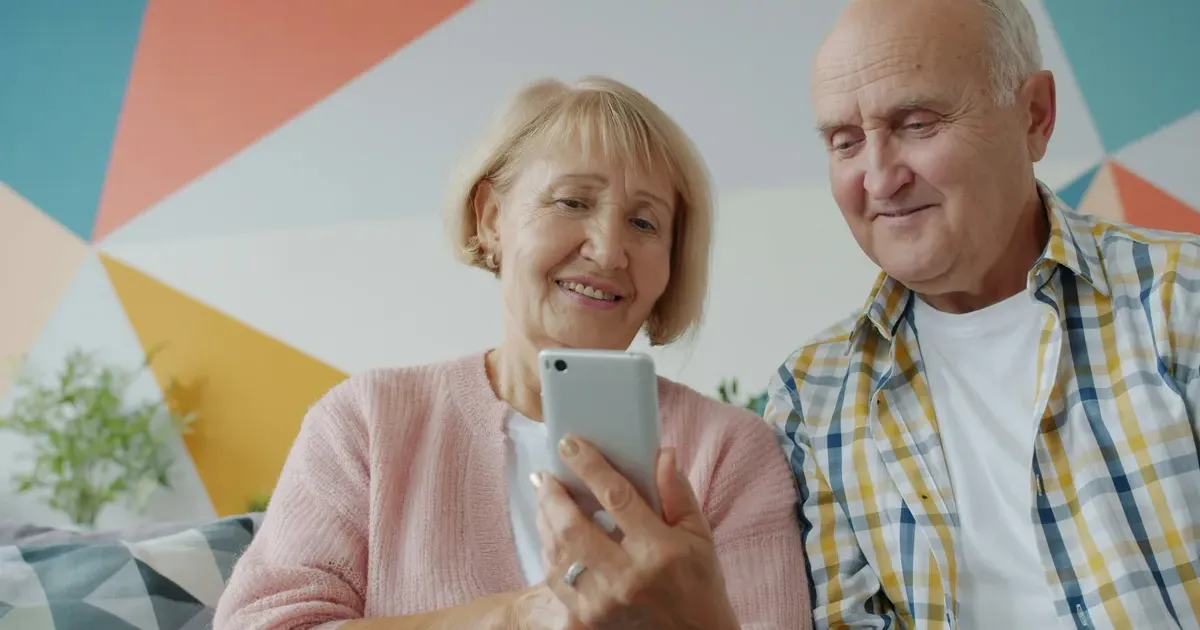
A family choosing a water filter became a case study in what computer scientist Debaleena Chattopadhyay calls technology caregiving. Writing in The Conversation in an article republished by Medical Xpress, she described how her 75-year-old father and 67-year-old mother rejected an app-connected model because they expected updates and forgotten steps to create more support calls. The example is revealing, but it is still one family's experience. It does not show that an aging population has rejected smart-home technology as a category.
Chattopadhyay's broader argument is about change, not access alone. Her parents cook, drive and manage their home independently. She helps from 8,000 miles away with online banking, ticket booking and other digital tasks. As more ordinary services require accounts, apps and changing interfaces, occasional technical help can become recurring work that families did not formally agree to provide.
Digital Tasks Now Sit Inside Daily Life
A 2024 paper in The Gerontologist proposed the term digital activities of daily living for tasks required to use digital platforms and devices. These include creating an account, configuring settings, connecting to a network and updating information. They are not traditional activities of daily living, but they can determine whether a person can manage medication, banking, communication or home equipment independently.
The framework makes an important correction to the idea that a device is automatically assistive because it has more features. A smart pill dispenser may support medication management, for example, while also requiring an app, a user profile, a network connection and repeated configuration. If a person cannot complete those preliminary tasks, the technology's promised benefit remains inaccessible.
That does not mean older adults are uniformly unable or unwilling to use digital tools. The Gerontologist paper notes interest in technologies that support daily needs, social connection and independence. It also identifies privacy, security, cost, network access, physical impairments and interface usability as factors that can shape adoption. Age alone does not describe a user's skills, preferences or support needs.
Support Needs Are Diverse, Not Stereotyped
A qualitative study of older adults' technology support found substantial variation in the help people wanted and how they obtained it. Adult children were a common source, but participants also used computer classes and professional assistance. Some learned through support and later became more self-sufficient or helped peers. Others waited when their preferred helper was unavailable, delaying the benefits they hoped to gain from the technology.
The study was not designed to estimate population-wide rates. Its convenience and snowball sample was relatively well educated, device-rich and composed mostly of internet users. Those limits matter because they rule out sweeping claims about all seniors. The useful finding is narrower: support availability, timing and teaching style can affect whether a digital tool remains usable.
Constant interface changes can undermine that learning. A person who has built a reliable mental model for paying a bill or adjusting a device may have to start again after buttons move or menus are reorganized. Chattopadhyay argues that AI-generated interfaces could intensify the problem if layouts change dynamically. That is a design risk she identifies, not evidence that every AI interface currently behaves that way.
Support Cannot Remain an External Cost
Better design starts with stable core functions, readable controls, clear explanations of changes and recovery paths that do not depend on perfect recall. Products can also support authorized helpers without forcing them to take full control. Community programs, libraries, peer support and formal technical assistance can reduce dependence on a single family member.
The health relevance is independence. When access to medication tools, appointments, benefits or communication depends on a shifting interface, a usability failure can become a barrier to daily life. But the answer is not to label older people as resistant or cognitively incapable. It is to test products with varied users and measure whether they can complete essential tasks after updates, not merely on the day of setup.
A company that continually redesigns an essential interface while leaving families to repair the consequences has not eliminated support work. It has hidden that work outside the product. Innovation that depends on an unpaid relative remaining available is not independent living infrastructure; it is a support system with its labor and failure points omitted from the design.