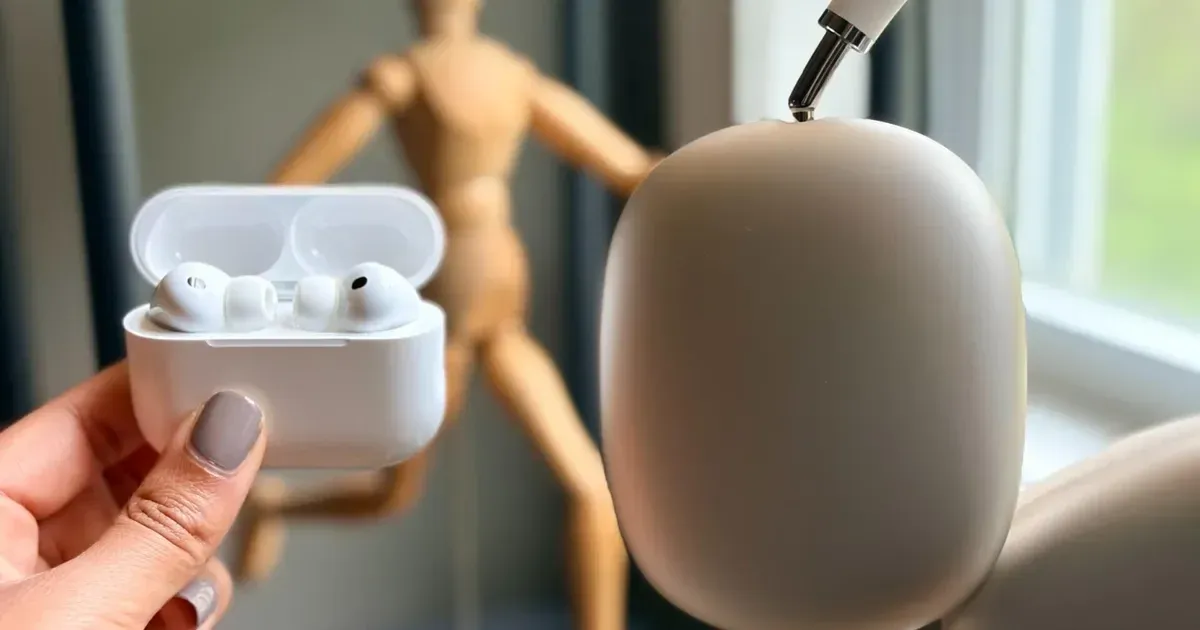
Apple launched the AirPods Max 2 to test whether over-ear hardware can sustain a premium price gap over the AirPods Pro 3. Cupertino executives finalized the rollout after months of speculation regarding the H3 chip integration across both product lines. The April 3, 2026, rollout tests whether over-ear hardware still earns a premium. These headsets represent the pinnacle of consumer audio for the brand, yet technical parity between the two models has created an internal rivalry. Testing protocols reveal that the computational audio improvements found in the smaller earbuds often match or exceed the capabilities of the larger, more expensive canopy design.
Audio fidelity depends heavily on the seal and driver size, which usually favors the over-ear form factor. One change in the latest release cycle involves the uniform application of the H3 chip across both devices. Beneath the aluminum shells, the processing power required for adaptive noise cancellation is identical. Early adopters quickly noticed that the miniaturized components in the smaller model perform with the same efficiency as the heavy hardware inside the Max variant.
The AirPods Max 2 maintains a weight of 385 grams, a figure that remains constant despite internal re-engineering. Weight distribution is managed by the knit-mesh canopy, which attempts to ease pressure during long listening sessions. Professional users often cite this mass as a deterrent compared to the light nature of the Pro series. Portability dictates the market reach of these devices. Consumers frequently prioritize the ability to fit a headset into a pocket over the slightly wider soundstage provided by 40mm dynamic drivers.
Apple AirPods Max 2 Hardware Integration and Design
Refined aesthetics define the exterior of the new over-ear model, but the chassis remains largely unchanged from the 2020 original. USB-C connectivity finally replaces the proprietary Lightning port, bringing the headset into compliance with modern charging standards. Color palettes have shifted to include Midnight, Starlight, and Space Gray. Manufacturing records show that the $549 price point is anchored by the material cost of the machined aluminum earcups and stainless steel frame.
Technical specifications for the drivers indicate a custom acoustic platform designed to minimize distortion at high volumes. High-frequency clarity is consistent. Low-end response, while steady, lacks the visceral punch found in dedicated audiophile monitors from rival brands. Apple prioritizes a neutral sound profile that appeals to a broad demographic. Sound transparency mode operates with zero perceptible lag, allowing users to engage with their environment without removing the headset.
Apple designed the H3 chip to handle over 200 adjustments per second, ensuring that noise cancellation adapts to the unique fit and movement of every individual user, according to an official technical brief from the company.
Precision engineering allows the earcups to pivot independently, which helps maintain a consistent seal around the ears. Independent earcup movement is necessary for effective noise isolation. Memory foam cushions provide a comfortable interface, though they tend to accumulate heat during outdoor use in summer months. Maintenance requires occasional cleaning of the fabric mesh, a task that remains cumbersome for the average user. Durability tests suggest the hinge mechanism can withstand thousands of cycles without losing tension.
Comparing Noise Cancellation in AirPods Pro 3
Comparing the active noise cancellation capabilities reveals a surprisingly narrow margin between the two devices. The AirPods Pro 3 utilizes inward-facing microphones to monitor sound inside the ear canal. Processing power from the silicon allows the system to neutralize external frequencies before they reach the eardrum. Because the silicone tips create a physical barrier within the ear, the starting point for isolation is inherently superior to a foam cushion sitting on the skin. Laboratory results indicate that the Pro 3 blocks an additional 2 decibels of low-frequency rumble compared to the Max 2.
Software features like Adaptive Audio and Conversation Awareness function seamlessly on both platforms. The portability of the earbud case provides a distinct utility that the over-ear model cannot replicate. Charging the AirPods Pro 3 requires only a small MagSafe puck or a standard cable. The bulky Smart Case for the Max 2 still fails to protect the headband, leaving the most vulnerable part of the device exposed to damage in a backpack. Design flaws in the storage solution persist despite widespread criticism from the previous generation.
Battery life remains a primary differentiator for users who travel frequently. The AirPods Max 2 provides 20 hours of playback with all features enabled. By contrast, the Pro 3 offers 6 hours per charge, with the case providing a total of 30 hours. Long-haul flights favor the over-ear design because it does not require periodic breaks for recharging. Users must decide if the convenience of continuous use outweighs the physical burden of the larger headset.
Economic Value of Premium Audio Accessories
Market analysts at various firms suggest that the price-to-performance ratio favors the smaller earbuds. Spending $249 for the Pro 3 secures almost every software feature available in the Apple ecosystem. The additional $300 required for the Max 2 pays primarily for industrial design and larger battery cells. Profit margins on the over-ear model are estimated to be much higher due to the premium positioning. Buyers in the professional creative space may justify the cost through the lens of comfort and status.
Component shortages in late 2025 delayed the initial production run of the H3 silicon, leading to tight supply chains. Apple managed to stabilize output by diversifying its semiconductor partners. Shipping data from March 2026 indicate that the Pro 3 outsells the Max 2 by a ratio of five to one. Retailers often bundle the smaller model with new iPhone purchases, a tactic that further expands its dominance. The premium audio segment is becoming increasingly crowded with high-end offerings from Sony and Bose.
Software updates are expected to bring new spatial audio features to both devices later this year. Computational audio is the primary battlefield for these manufacturers. Personalized Volume uses machine learning to understand environmental preferences over time. Integration with the Vision Pro headset is a key selling point for the AirPods Max 2, as the low-latency connection enhances the immersive experience. Owners of the spatial computing headset often prefer the over-ear fit for a more balanced sensory input.
AirPods Max Faces a Value Test
Did the 2001 iPod launch teach us nothing about the danger of hardware redundancy? Apple is currently cannibalizing its own high-end audio market by refusing to gate its most advanced silicon behind a premium paywall. By placing the H3 chip in both the $249 and $549 models, the company has effectively told its most loyal customers that their extra $300 buys them aluminum and air, not better math. Sharing the same processing power is a strategic blunder that devalues the Max brand.
Luxury is defined by exclusivity and superior performance. When an earbud the size of a grape can out-cancel a headset the size of a grapefruit, the engineering logic collapses. The AirPods Max 2 is not a technological leap; it is a stagnant design wrapped in a new charging port. Apple is coasting on the aesthetic momentum of 2020 while its competitors are iterating on driver technology and acoustic materials. The brand is vulnerable to any competitor that can pair premium materials with a chip that actually justifies a half-thousand-dollar investment.
Expect the Max line to eventually pivot toward a niche, pro-only designation if this trend continues. If the company cannot find a way to make the larger form factor objectively smarter than the smaller one, the consumer will inevitably choose the pocket-sized path of least resistance. The current strategy is a race to the middle. Apple must decide if the Max is a serious tool or merely a fashion-forward headband for those with more money than sense.
Failure to innovate is the first step toward irrelevance.