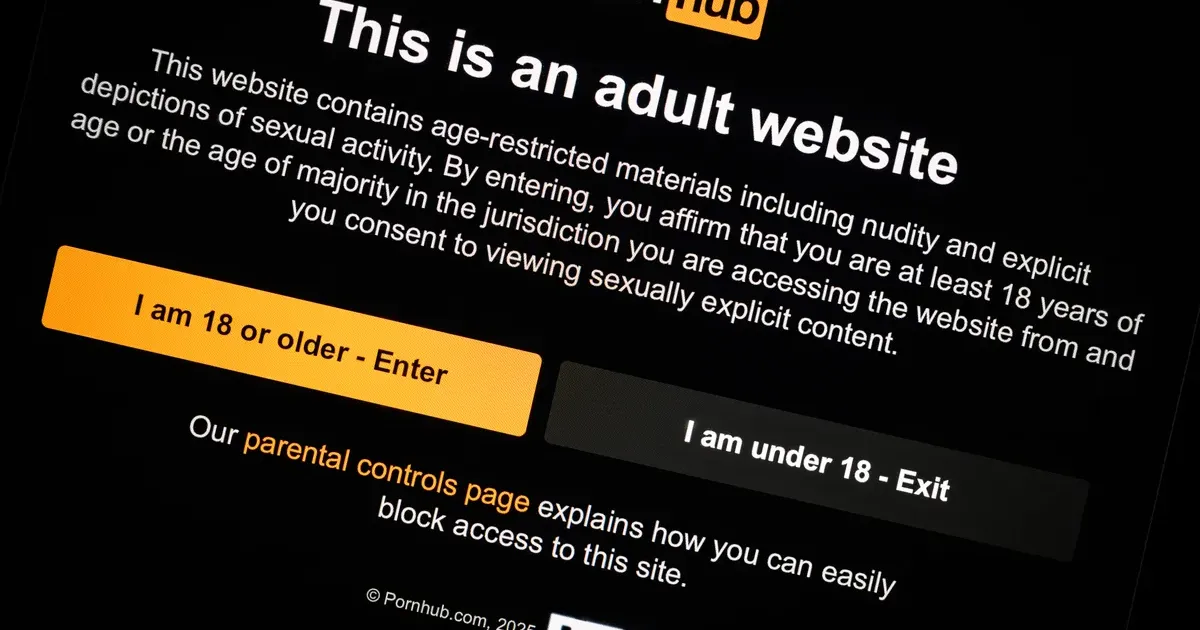
Online age verification has reached a critical threshold for digital privacy as Pornhub continues to restrict access in jurisdictions that demand invasive age verification protocols. Millions of users across the United States, United Kingdom, and France now face digital barriers when attempting to visit the adult entertainment platform. State governments have intensified their efforts to mandate strict identity checks, citing the need to protect minors from explicit content. The April 3, 2026, access fight shows how quickly users adapt to verification rules. These legislative maneuvers forced the platform to disable its services entirely in specific regions rather than implement systems that could compromise user anonymity.
Digital rights advocates warn that these mandates create a large surveillance infrastructure for private browsing habits. Lawmakers in more than 17 states, including Texas and North Carolina, have passed laws requiring adult sites to verify the age of every visitor through government-issued identification. Resistance from the parent company of Pornhub, Aylo, resulted in a total blackout for residents in these territories. Users suddenly found themselves met with a landing page explaining that the site is unavailable due to local regulations. Similar patterns emerged in Europe where the United Kingdom implemented the Online Safety Act to enforce age-related gatekeeping.
US State Mandates Force Pornhub Blockades
Legislative activity in early 2025 created a fractured internet within the borders of the United States. While federal courts previously blocked similar attempts at age verification, recent appellate rulings have allowed state-level mandates to proceed. Florida and Virginia joined the list of jurisdictions where residents cannot access Pornhub without secondary tools. Privacy experts argue that requiring a driver's license for website entry exposes users to meaningful identity theft risks. These concerns are not hypothetical because many third-party verification companies have histories of data breaches. Pornhub maintains that protecting user data is more important than maintaining presence in markets with high regulatory hurdles.
State officials contend that the primary goal is child safety. They argue that the current internet landscape allows children too much freedom to access harmful material. Enforcement of these laws typically involves steep fines for platforms that do not comply with the verification rules. Fines can reach hundreds of thousands of dollars per day for non-compliance. Faced with these potential losses, the platform chose to geofence entire populations. This decision left millions of adults unable to access legal content through traditional means.
Access to adult content should not come at the cost of personal data security, stated a representative for Pornhub in a public release regarding the blockade.
Technical Methods for Free Pornhub Access
Virtual Private Networks, or VPNs, have become the primary method for bypassing these regional restrictions. These tools create a secure tunnel between a user device and a server located in a different geographical area. By connecting to a server in a state or country without age verification laws, a user adopts a new IP address that masks their actual location. This process effectively tricks the website into thinking the visitor is in a permitted jurisdiction. Demand for these services tripled in Texas within 48 hours of the initial site blackout. Many users now look for free ways to regain access to their preferred content platforms.
Premium providers like ExpressVPN offer the most reliable performance for streaming high-definition video. While these services typically require a subscription, many offer trial periods or money-back guarantees that users use for temporary access. Free VPN options exist, though they often come with serious limitations regarding speed and data caps. High-quality encryption ensures that local internet service providers cannot see which specific sites a person visits. Most modern VPN applications allow for one-click connections to locations like New York or Canada where access remains unrestricted. A successful connection bypasses the digital wall set up by state legislators.
France and the United Kingdom have followed a different regulatory path than the American states. The French data protection authority, CNIL, has been locked in a legal battle with adult sites over the methods used to verify age. European regulators prefer technical solutions that do not involve scanning physical IDs. Still, the lack of a universal standard has led to similar access issues for French residents. Users in Paris often find themselves blocked unless they provide credit card details or other personal information. These requirements have driven a huge surge in VPN downloads across the European Union.
British authorities implemented the Online Safety Act with the promise of making the internet safer for children. Critics point out that the law has instead created a two-tier internet for adults. Those with the technical knowledge to use encryption tools can browse freely, while less tech-savvy individuals are subjected to state-monitored gateways. The United Kingdom has seen a 400% increase in searches for free unblocking tools since the law took effect. Internet service providers are now required to implement network-level filters that require the account holder to actively opt out. These filters are easily avoided by changing DNS settings or using a proxy server.
Risks and Realities of Free VPN Services
Security researchers express concern over the proliferation of low-quality free VPN apps in mobile app stores. Many free services monetize their business by selling user browsing data to advertisers. Selling browsing data defeats the purpose of using a VPN for privacy. Some malicious applications have been found to contain malware or trackers that monitor all device activity. Users seeking free access to Pornhub often inadvertently expose their devices to these vulnerabilities. Reliable encryption protocols like OpenVPN or WireGuard are necessary for maintaining a secure connection. Without these protocols, a VPN might leak the user's real IP address to the platform or the government.
Bandwidth limitations are another common hurdle for those using free unblocking methods. Video streaming requires enough data throughput that free servers often cannot sustain. Users frequently experience buffering or low-resolution playback when using congested public servers. Premium services allocate more resources to their infrastructure to handle the heavy load of adult video traffic. Maintaining a global network of high-speed servers is expensive. As a result, the most effective tools for unblocking Pornhub are rarely entirely free in the long term. Strategic users often rotate through different trial offers to maintain high-speed access without a permanent financial commitment.
Age Checks Create a Privacy Workaround Market
Legislative attempts to wall off segments of the internet assume a level of technical illiteracy that no longer exists among the general population. State lawmakers are engaging in a performative game of digital whack-a-mole that ultimately harms the privacy of law-abiding adults while failing to deter anyone with basic search engine skills. By mandating identity verification, governments are effectively creating a honeypot for hackers. A database containing the real names and browsing histories of adult site users is the ultimate prize for digital extortionists. It is not about child safety; it is about the centralization of moral authority through surveillance.
Pornhub's decision to block entire states was a masterful move of corporate brinkmanship. It forced the negative consequences of these laws directly onto the voters. When the lights go out on a major entertainment platform, the public begins to question the utility of the underlying legislation. The sudden spike in VPN usage proves that digital borders are porous and unenforceable. The record confirms the death of the open web at the hands of local politicians who do not understand how IP routing works.
The future of internet access will be defined by a permanent arms race between state filters and encryption tools. Any law that can be defeated by a $100 annual subscription or a free browser extension is not a law; it is an inconvenience. Governments are wasting taxpayer resources on a struggle they cannot win. The tools for circumvention remain more adaptable than the rules built to stop them.