Amazon is previewing an Alexa Plus update built to carry out more detailed requests across a wider range of connected devices. The assistant will choose which compatible product should respond instead of requiring the user to identify the device and exact setting in every command.
The update was announced on July 23, 2026. Planned support covers Bosch and Whirlpool appliances, robot cleaners from iRobot and Ecovacs, Yale Home locks and connected gear made by Tapo, Eufy, Delta and other manufacturers. Automatic device routing is the central change: Alexa Plus is supposed to interpret the request, match it to an available capability and send the action to the right appliance or system.
A Laundry Request Shows How the New Control Layer Works
Amazon demonstrated the system with a supported washing machine. A user could explain that a child's soccer jersey needed a deep clean but had a cold-wash instruction on its label. Alexa Plus would then review the washer's available cycles and select a setting that satisfied both conditions. The person would not need to name a cycle or translate the garment instructions into a sequence of buttons.
The integration depends on a new developer toolkit that gives manufacturers a way to expose functions Alexa did not previously recognize. A conventional connection might support basic actions such as starting, stopping or checking status. The new model is intended to make less common capabilities available to the assistant, including functions that differ between brands and product categories.
That design separates three jobs that a short voice command can hide. Alexa Plus has to understand the user's goal, find the product capable of meeting it and choose an action that respects the stated constraint. The washing-machine example contains all three: cleaning the jersey is the goal, the washer is the target and cold water is the limit the assistant must preserve.
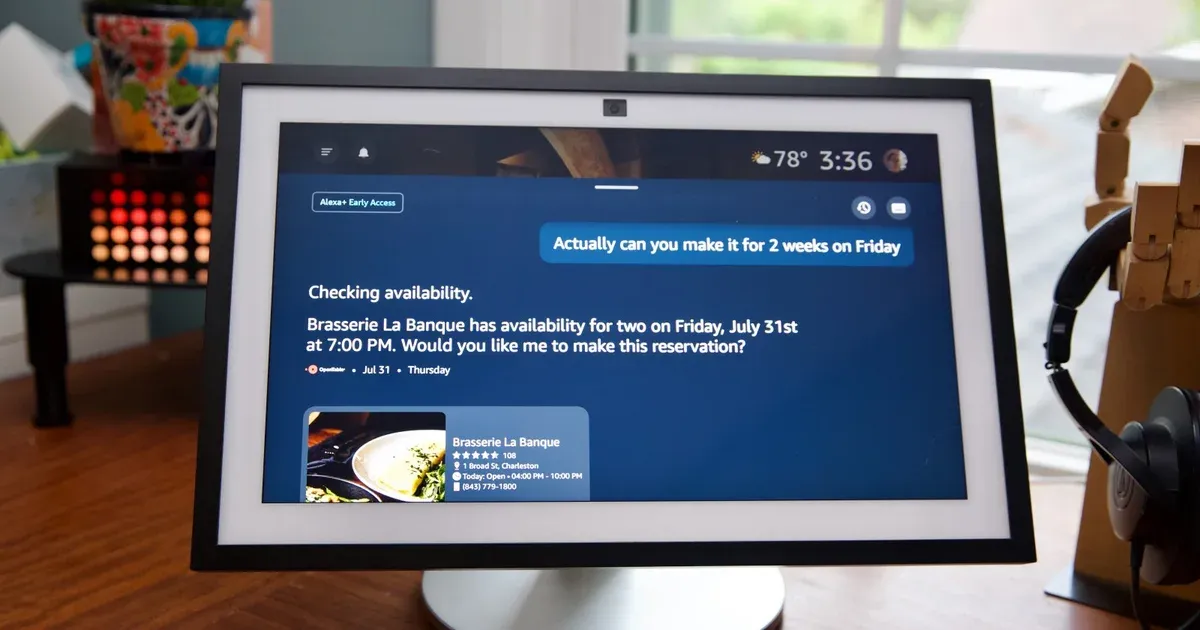
Amazon launched the revamped Alexa Plus more broadly in February with support for multi-step requests and voice-built routines. Its third-party task list has remained limited to services including Ticketmaster, OpenTable, Uber, Thumbtack, Expedia, Yelp, Square and Angi. The smart-home preview shifts attention from booking and information services toward physical equipment that changes conditions inside a home.
The company is also adopting the Model Context Protocol, an open standard that lets AI systems connect with external tools and services. Amazon says the approach will support planned integrations from Canva, Priceline, Lyft, Headspace, Cengage, Virgin Atlantic and additional companies later in 2026. Priceline, for example, is expected to let users browse hotels and complete a booking through Alexa Plus.
Accurate Routing Will Decide Whether Alexa Plus Scales
More integrations increase Alexa Plus's usefulness only if the assistant selects the correct device and action consistently. A mistaken restaurant search is inconvenient; an incorrect command sent to a lock, appliance or cleaning robot can interrupt a household process or create a safety concern. The preview therefore tests execution as much as language understanding.
Manufacturers also have to describe their capabilities in a form the toolkit can route reliably. If two devices can satisfy the same request, Alexa Plus needs a predictable way to choose or ask for clarification. If a command includes a constraint such as cold water, a locked door or a restricted schedule, the system has to retain it through the handoff rather than treating it as conversational decoration.
The number of participating brands gives Amazon a broader surface for Alexa Plus, but it also enlarges the set of device states, exceptions and errors the assistant must manage. The useful measure will not be how many logos join the preview. It will be whether a spoken request produces the intended result on the intended product without forcing the user to correct the system afterward.