$39 million constitutes a total erasure of capital for a firm once hailed as the future of sustainable footwear. Founders Tim Brown and Joey Zwillinger launched the company in 2014 with a singular focus on Merino wool sneakers. Investors initially valued the brand at over $1 billion during its early venture capital rounds. By April 1, 2026, the sale price had turned Allbirds into one of the clearest collapses of the direct-to-consumer era.
Silicon Valley executives quickly adopted the minimalist design as a staple of the professional uniform in Northern California. $4 billion was the peak market capitalization reached during the company's initial public offering in late 2021. High-profile endorsements from tech luminaries and environmental activists propelled the brand into a cultural phenomenon. Markets eventually turned cold as the company struggled to maintain its premium status.
Market Expansion and Product Diversification Issues
Cracks in the business model appeared shortly after the public listing. Management decided to move beyond its core footwear offering to justify the multi-billion-dollar valuation. Apparel lines including leggings, sweaters, and even underwear flooded the digital storefront. These new categories failed to resonate with a customer base that viewed the brand strictly as a shoe company.
By contrast, the quality of the original sneakers began to face scrutiny. Long-term users reported that the wool upper material wore thin or developed holes within months of daily use. Performance athletes criticized the lack of structural supports in the running shoes. Heavy discounting became necessary to clear excess inventory sitting in warehouses across North America.
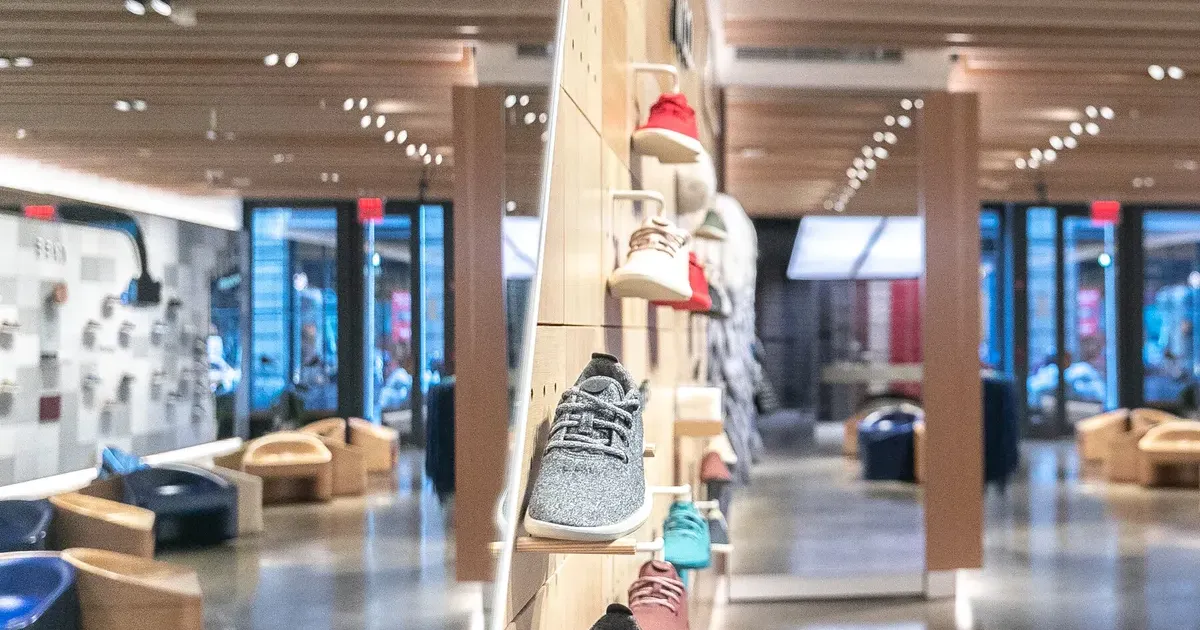
Brand dilution occurred as the company expanded its retail footprint too aggressively. Brick-and-mortar locations required high overhead costs that the margins could not support. Simultaneously, competitors like On Running and Hoka began to dominate the premium footwear space. Those rivals focused on technical performance and specialized cushioning rather than sustainability alone. Allbirds found itself trapped between being a fashion brand and a performance label. Shoppers increasingly prioritized durability over the brand's eco-friendly marketing claims. Marketing expenses ballooned as the cost of acquiring new customers on social media platforms reached unsustainable levels. It was a classic case of over-extension.
Financial Erosion and Public Market Performance
Financial statements for the fiscal year 2023 revealed enormous net losses exceeding $100 million. $100 million in losses signaled the beginning of a desperate restructuring phase. Executives announced a series of layoffs that eliminated nearly a third of the corporate workforce. They also shuttered several underperforming retail locations and exited certain international markets. Institutional shareholders began a mass exodus, driving the stock price below $1 per share. The Nasdaq issued a delisting warning as the market capitalization fell below the minimum required threshold. Efforts to find a strategic partner or a private equity buyer initially proved fruitless. Debt obligations began to outweigh the remaining cash reserves on the balance sheet.
Inventory management became a primary hurdle for the struggling leadership team. Large write-downs on unsold apparel further eroded the company's equity. While some analysts blamed the general downturn in the retail sector, others pointed to specific failures in product design. Specifically, the brand lost its unique identity by trying to compete with fast-fashion retailers. Smaller, more agile brands entered the space with similar sustainable claims at lower price points. Factually, the moat that the founders built around Merino wool was thinner than investors realized. Amazon launched its own private-label wool sneakers that looked nearly identical to the Allbirds design for a fraction of the cost. Legal battles over design patents did little to stem the tide of imitation.
Acquisition Details and Brand Future
Terms of the sale involve the transfer of intellectual property and remaining inventory to a brand management firm. $39 million represents less than one percent of the value at which the company once traded. Shareholders will receive virtually nothing after the liquidation of senior debt and creditor obligations. The once-glitzy headquarters in San Francisco will be vacated as the new owners shift operations to a leaner licensing model. Chronologically, the fall from grace took less than five years. It is a stark example of how quickly consumer sentiment can shift in the digital age. Most of the original executive team has already departed for other roles in the tech sector.
Footwear industry experts suggest that the brand name may persist as a budget label in big-box retailers. Gone is the dream of a sustainable empire that could rival the giants of Portland or Beaverton. The wool runners that defined a decade of Silicon Valley fashion will likely end up in discount bins. History shows that lifestyle brands built on venture capital often struggle once the easy money disappears. Finalized filings indicate that the brand's carbon footprint metrics will no longer be tracked with the same rigor. $39 million is the final verdict on a decade of hype. The deal closed without fanfare.
The new owner will have to decide whether Allbirds remains a broad lifestyle label or returns to a narrower footwear identity.
Allbirds shows how quickly a sustainability story can lose market power when growth, product fit and profitability move in different directions. A beloved early brand still has to survive public-market expectations.
The sale price matters because it turns a once-celebrated direct-to-consumer model into a warning. Investors may reward mission language early, but durable retail value still depends on margins, repeat demand and disciplined expansion.