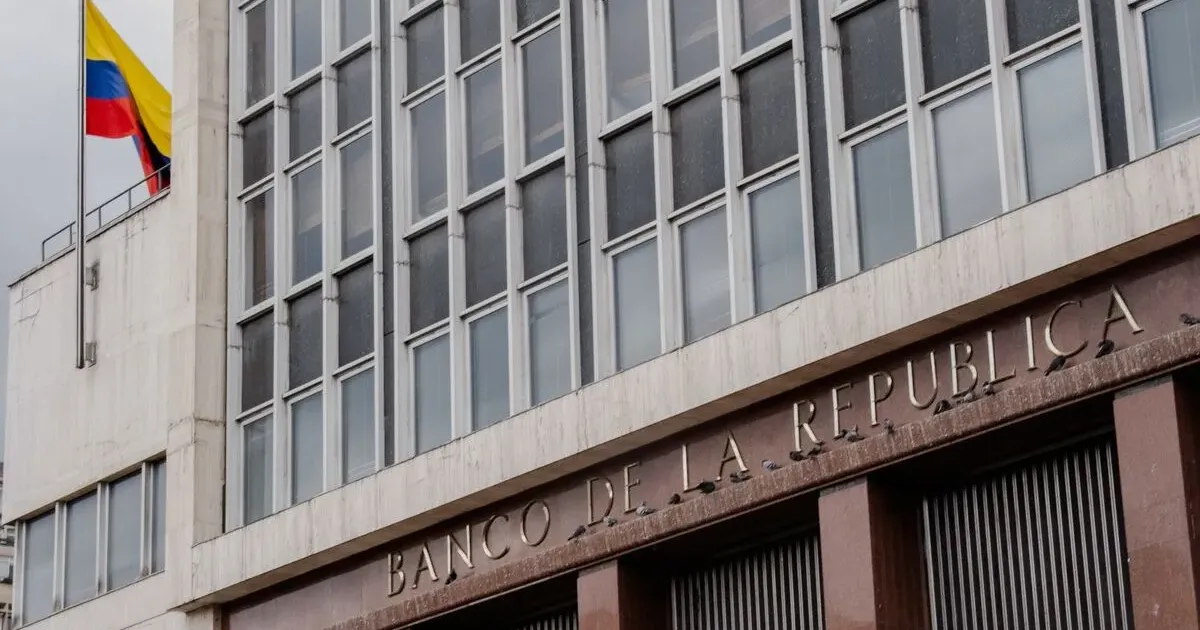
Finance Minister German Avila marched out of the central bank board meeting in Bogota signaling a collapse in communication between the executive branch and the nation monetary policy makers. Disagreement over the trajectory of borrowing costs turned into a public spectacle when Avila, a close confidant of President Gustavo Petro, exited the chambers before a vote was even finalized. Reports from the session indicate that the remaining board members continued the proceedings, ultimately deciding to increase the key interest rate by a full percentage point. On March 31, 2026, the rate increase showed the central bank resisting direct political pressure.
This move brings the lending benchmark to a level not seen in years, defying the specific fiscal objectives of the Petro administration. Banco de la República officials argued that the 100 basis points hike was a necessary measure to anchor inflation expectations which have remained stubbornly high throughout the fiscal year.
Monetary authorities in Bogota have faced intensifying pressure from the Casa de Nariño to lower rates to stimulate a sluggish domestic economy. Gustavo Petro has frequently criticized high-interest rates on social media, claiming they stifle industrial growth and harm the working class. German Avila echoed these sentiments during his brief time in the meeting room, urging a pause or a more moderate adjustment. Board members, however, focused on data suggesting that core inflation has not yet reached the target range required for stability. Banco de la República maintains a constitutional mandate to prioritize price stability over political mandates. Gustavo Petro views this independence as a hurdle to his broader socioeconomic reforms, creating a structural deadlock that now worries international bondholders.
Avila Protests Aggressive Interest Rate Trajectory
Internal sources familiar with the March 31, 2026, meeting describe the atmosphere as toxic from the moment the session opened. German Avila presented a detailed report arguing that the previous tightening cycle already provided sufficient cooling for the economy. He contended that further hikes would lead to a recessionary spiral. When the majority of the board indicated their preference for a full percentage point increase, the finance minister gathered his documents and left. German Avila then spoke briefly to reporters outside, stating that the central bank was disconnected from the lived reality of ordinary citizens. Such a public display of discord is rare for the Colombian central bank, which traditionally prides itself on a culture of consensus and technical deliberation.
Investors reacted with immediate caution to the news of the walkout. Colombian sovereign bonds saw a slight sell-off as the rift suggested a future where the government might seek to challenge the central bank legal autonomy. Gustavo Petro has previously hinted at the possibility of appointing more sympathetic members to the board as vacancies arise. German Avila is the primary bridge between the executive and the monetary authority, but his exit on March 31, 2026, suggests that bridge has suffered serious damage.
Market analysts at major New York firms noted that the lack of coordination between fiscal and monetary policy increases the risk premium for Colombian assets. Banco de la República must now navigate a landscape where every decision is viewed through a partisan lens.
A representative for the Banco de la República board stated after the vote, "The central bank must maintain its independence to protect the purchasing power of all Colombians, regardless of the political climate or fiscal pressures from the executive branch."Central Bank Defends Mandate Against Political Pressure
Constitutional protections for the central bank date back to the 1991 reforms, which were designed to prevent the hyperinflationary cycles seen in neighboring countries. Banco de la República operates with a degree of insulation that few other Colombian institutions enjoy. Gustavo Petro has often framed this insulation as a relic of technocratic elitism. German Avila attempted to reconcile these views by proposing a middle-ground approach to rate adjustments throughout early 2026.
The failure of that mediation led directly to the March 31, 2026, confrontation. 100 basis points represented a clear signal that the board will not be intimidated by the executive branch. High-interest rates are still the primary tool the bank uses to curb credit expansion and slow the depreciation of the Colombian peso.
Economic indicators released earlier this month showed that food prices and service costs continue to climb. Gustavo Petro argues that these price increases are driven by external supply shocks rather than domestic demand. German Avila supported this view, suggesting that higher rates would do little to fix supply-chain issues while doing much to hurt small businesses. Banco de la República disagreed, citing a risk of wage-price spirals if expectations are not managed firmly. Bogota has become the center of a debate that pits traditional economic theory against the populist-left agenda of the current government. Gustavo Petro faces a narrowing window to deliver on his campaign promises as debt service costs for the government rise alongside the central bank key rate.
Financial stability persists as a concern for the broader Andean region. If the standoff in Bogota continues, the cost of borrowing for the Colombian government will likely increase. German Avila remains in his post for now, but his relationship with the bank board is clearly compromised. Banco de la República must convince the public that its 100 basis points hike is a technical necessity instead of a political act. Gustavo Petro will likely use the hike as rhetorical ammunition in upcoming rallies to portray the bank as an obstacle to progress. Political analysts suggest that this friction could lead to a constitutional challenge or a push for legislative changes to the bank charter.
Inflation Outlook Requires Key Rate Escalation
Projected data for the second-quarter of 2026 shows a slight cooling in certain sectors, yet the overall inflation rate is nearly double the bank target. Banco de la República board members believe that failing to act decisively on March 31, 2026, would have destroyed their credibility. German Avila argued that the bank was overreacting to temporary data points. Gustavo Petro has consistently advocated for a more flexible interpretation of inflation targets to allow for higher employment. Bogota is now bracing for the impact of the 100 basis points increases on mortgage rates and consumer loans.
Retailers have expressed concern that the hike will dampen spending during the upcoming mid-year shopping season. German Avila warned that the central bank was effectively putting the brakes on a vehicle that was already slowing down.
The 100 basis points hike was not a unanimous decision among those who stayed, but it carried the necessary majority. Banco de la República emphasized in its post-meeting statement that its primary loyalty is to the Colombian currency. Gustavo Petro countered that a stable currency is useless if the people are impoverished by debt. German Avila did not return to the central bank for the press conference following the vote. Bogota market watchers are now looking to the next scheduled meeting to see if a reconciliation is possible.
Gustavo Petro has yet to issue a formal executive order related to the matter, but his rhetoric has sharpened. 100 basis points may be the breaking point for the delicate balance of power in the capital.
Independence Test for Policy Makers
The rate increase matters because it shows the central bank is willing to accept political criticism to defend its inflation mandate. That stance can calm markets if investors believe policy makers will not bend under pressure.
The risk is domestic backlash. Higher borrowing costs are painful for households and firms, so the bank has to explain why delayed action would be more damaging than a sharper move now.