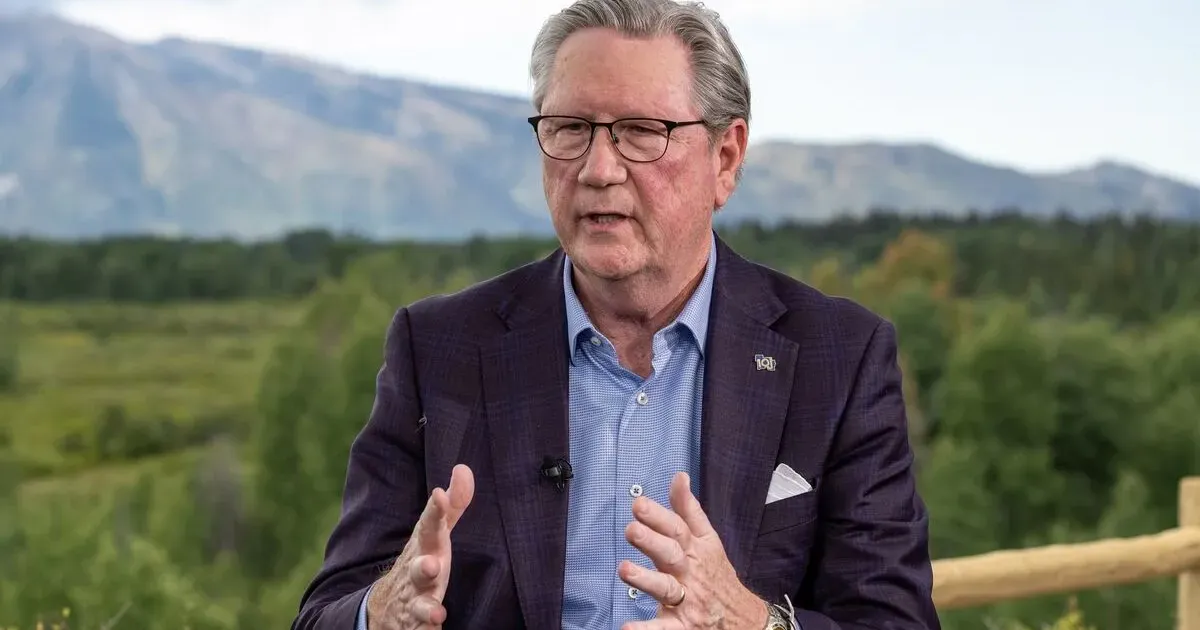
Jeff Schmid, president of the Federal Reserve Bank of Kansas City, warned that US inflation could hold steady near 3% due to energy market shocks. Escalating regional instability in Iran has forced crude oil futures higher, creating new hurdles for the central bank’s enduring price stability goals. Schmid signaled that policy makers cannot ignore these supply-side pressures when determining the future path of interest rates.
By March 31, 2026, the Kansas City Fed warning had sharpened concern that inflation could stall above target. Volatility in global energy markets often trickles down to consumer prices, impacting everything from transport costs to manufacturing inputs. Price stability remains the primary focus of the Federal Open Market Committee, but achieving a 2 percent target grows more difficult as commodity costs rise.
Kansas City Fed officials have historically leaned toward more hawkish monetary stances, and Schmid’s recent commentary aligns with that institutional legacy. He emphasized that the central bank must avoid the temptation to look through energy price spikes, particularly when those spikes can anchor inflation expectations at elevated levels. Inflationary pressures often prove more persistent than initial forecasts suggest, and a plateau at 3 percent would represent a meaningful departure from the Fed’s mandate. Financial markets have reacted to these warnings by adjusting expectations for rate cuts in the second half of the year. Investors now face a reality where borrowing costs may stay higher for longer than previously anticipated.
Kansas City Fed President Targets Price Stability
Price stability is the foundation of the American economy, yet the current environment presents a unique set of challenges for the Federal Reserve. Schmid noted during his remarks that the progress made in late 2025 has begun to level off. Persistence in service-sector inflation combined with volatile energy inputs creates a complex environment for monetary policy. Core inflation metrics, which exclude food and energy, are often the preferred gauge for policy makers, but headline figures drive public perception and wage demands. If consumers expect inflation to stay near 3 percent, they will likely demand higher wages, creating a self-reinforcing cycle. Schmid joined the Kansas City Fed in 2023.
The Federal Reserve should not look through the impact on inflation of a surge in energy prices stemming from the conflict in Iran, according to Jeff Schmid.
Achieving a soft landing requires a precise balance between cooling demands and maintaining employment. Recent data shows that the labor market stays strikingly resilient, which provides the Fed some cushion to keep rates elevated. However, this resilience also means that domestic demands are not cooling fast enough to offset external price shocks. Earlier projections of multiple rate cuts in 2026 now appear overly optimistic given these comments. Monetary policy works with a lag, and the full restrictive effect of current rates is still filtering through the system. Evidence of a floor in inflation suggests that the neutral rate of interest might be higher than historical averages.
Energy Market Volatility and Monetary Policy
Energy prices are a primary driver of headline inflation and have a deep impact on consumer sentiment. When gasoline prices rise, consumers immediately feel the pinch, leading to a reduction in discretionary spending elsewhere. Schmid argued that ignoring these shifts is a mistake for policy makers who are focused on the long-term inflation outlook. Crude oil prices recently breached the $95 per barrel mark, reflecting fears of a broader supply disruption. Rising costs for energy-intensive industries eventually lead to higher prices for finished goods and services. The Federal Reserve must decide if these increases are temporary or structural shifts in the global economy.
Supply-chain disruptions from the Middle East add another layer of complexity to the domestic economic picture. While the United States is a major energy producer, the global nature of oil pricing means that domestic consumers are not insulated from overseas conflicts. Higher energy costs act as a tax on both households and businesses, slowing economic growth while simultaneously pushing prices upward. This phenomenon, often described as stagflationary pressure, is a worst-case scenario for central bankers. Projections for the Consumer Price Index in April 2026 now show a potential uptick that could derail months of steady progress. Fed official Tom Barkin similarly noted that regional instability in Iran poses a notable threat to inflation progress.
Iran Conflict Impacts Global Energy Supply
Violent unrest in the Persian Gulf has directly impacted the flow of oil through the Strait of Hormuz. Iran maintains a strategic position near this essential waterway, where nearly 20 percent of the world’s petroleum passes daily. Any threat to shipping lanes causes an immediate spike in insurance premiums and freight rates, which are then passed on to refineries and consumers. Schmid’s warning reflects a mounting concern that these geopolitical risks are becoming permanent features of the economic landscape. Market analysts at major investment banks have revised their oil price targets upward to reflect this risk. The global energy balance is currently tight, leaving little room for error or supply outages.
Energy market instability often forces the Fed to choose between supporting growth or fighting inflation. In this instance, the hawkish tone from the Kansas City Fed suggests a preference for the latter. Schmid’s colleagues on the FOMC have expressed varied views on how to treat supply-side shocks, but his stance is clear. Persistent energy inflation can leak into core inflation by raising the cost of production and distribution for almost all goods. If the conflict in the Middle East continues, the upward pressure on energy will stay a dominant theme in every policy meeting. The price of Brent crude is a key metric for global inflation forecasting.
A plateau would also complicate communication because households may not care whether inflation is improving if prices still rise faster than paychecks.
That is why the warning matters even without a new rate decision. It tells markets that the last stretch toward the inflation target may be slower than the first decline.
Policy Risk of a 3 Percent Plateau
A 3 percent inflation plateau would be awkward for the Fed because it is too high to declare victory and too low to justify panic. That middle ground can keep rates restrictive longer than markets expect.
Energy volatility makes the message harder. Officials can tolerate some price noise, but they cannot ignore a shock that changes expectations for businesses and households.