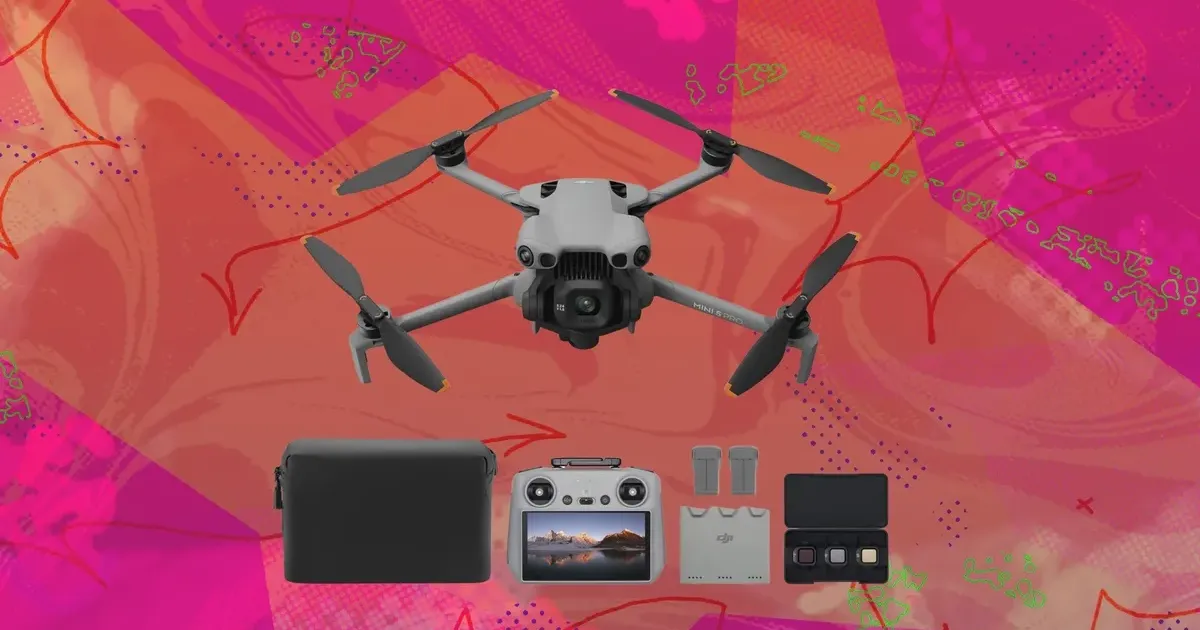
Amazon initiated a meaningful price reduction on April 4, 2026, for its flagship aerial photography hardware, lowering the cost of the DJI Mini 5 Pro Fly More Combo to a record-low $1,099. Consumers looking to enter the high-end drone market now face a 31% discount from the standard $1,599 list price. Data from retail tracking tools suggests this is the lowest price ever recorded for the bundle on the platform. DJI continues to dominate the consumer drone sector, yet this specific pricing shift arrives as the industry faces unique geopolitical headwinds and shifting domestic trade policies.
Retailers across the United States are currently managing a complex period for Chinese-manufactured electronics. Pressure from federal regulators regarding data security and domestic manufacturing has created a volatile environment for brands like DJI. These legislative discussions often center on potential import restrictions or bans on specific drone models. Market observers indicate that such uncertainty frequently triggers aggressive inventory liquidations to ensure stock moves before any regulatory changes take effect. Amazon has not confirmed if these factors influenced the current $500 discount.
Drone enthusiasts generally view the Fly More Combo as the essential version of the DJI Mini 5 Pro because it includes additional batteries, a charging hub, and a carrying case. Standard flight times often fall short for professional videography, making the extra hardware included in this bundle a necessity for serious users. Previous discounts on this model rarely exceeded $200, making the current $500 reduction a statistical outlier in the product's pricing history. Total savings for the consumer represent one of the largest price drops in the aerial imaging category this year.
Drone Market Volatility and Import Restrictions
Legislative efforts to curb the influence of foreign-made technology have placed DJI in an unstable position within the American market. Specifically, the Countering CCP Drones Act and similar proposals have debated the legality of operating these devices on U.S. soil. While no total ban has been implemented as of April 4, 2026, the possibility of future restrictions weighs heavily on purchasing decisions. Buyers must weigh the immediate benefit of a record-low price against the long-term risk of potential software or hardware limitations imposed by government mandates.
Inventory management strategies at major e-commerce platforms often respond to these political signals by lowering prices to stimulate rapid sell-through. Large volumes of DJI Mini 5 Pro units sitting in warehouses represent a financial liability if import status changes overnight. Retailers frequently use seasonal events, such as the Amazon Spring Sale, to mask these defensive pricing maneuvers. This strategy allows companies to maintain high sales velocity while offloading units that carry higher regulatory risks. Financial reports from the first quarter of 2026 show a general trend of declining margins in the drone sector due to these high-volume, low-price sales.
The drone market is in a weird state of flux right now, according to a recent analysis from the Mashable editorial board regarding the current retail landscape for DJI products. The recent Amazon Big Spring Sale underscores a wider retail push to offload hardware amid shifting market conditions.
Consumer demand for high-resolution 4K imaging remains high despite the legal controversies surrounding the manufacturers. The DJI Mini 5 Pro features a 1/1.3-inch CMOS sensor and advanced obstacle sensing that keep it ahead of most competitors in the sub-250-gram weight class. Many professional creators rely on these specific specifications for social media content and real estate photography. Competitive pressure from brands like Autel or Skydio has not yet managed to unseat DJI from its primary market position. Current price points reflect an attempt to lock in users before alternative platforms gain further domestic traction.
Refurbished Tech Trends Drive Large MacBook Savings
Parallel to the drone price drops, the secondary market for portable computing is seeing historic deals on legacy hardware. Apple devices, known for maintaining high resale values, are currently experiencing serious price corrections on older models. A refurbished MacBook Pro from 2020 is now retailing for $429.97, representing a total reduction of $1,569.03 from its original $1,999 launch price. This specific offer is scheduled to remain active until April 19, 2026, or until existing stock is depleted.
Economic shifts have pushed more consumers toward the refurbished electronics sector as new laptop prices continue to climb. A 2020 MacBook Pro remains a capable machine for students and office workers who do not require the extreme processing power of the latest M-series chips. Specifically, this model marks the final era of Intel-based architecture before the company transitioned fully to its proprietary silicon. Buyers often prioritize the build quality and screen resolution of a Pro-tier device over the raw speed of a newer, entry-level MacBook Air. Current listings show that the hardware has undergone rigorous testing to meet functional standards.
Refurbished units provide a critical entry point for users who are otherwise priced out of the premium ecosystem. The price of $429.97 places a high-performance laptop within the same range as budget Chromebooks or mid-tier tablets. Longevity for these devices depends heavily on continued software support from the manufacturer. Apple typically provides macOS updates for approximately seven years after a device's release, suggesting the 2020 model has several years of utility remaining. Reliability data for the 13-inch chassis from this era shows fewer keyboard failures compared to earlier iterations.
Consumer Electronics Lifecycle and Secondary Market Growth
Supply-chain analysts note that the volume of refurbished laptops has increased as corporations cycle through their three-year hardware leases. These enterprise-grade machines frequently enter the consumer market in bulk, driving down prices for individual buyers. A flood of 2020 models has hit the market recently, coinciding with the mass adoption of newer hardware by large-scale institutional clients. This surplus allows retailers to offer discounts exceeding 75% without compromising their profit margins on the initial acquisition cost. Secondary market platforms have invested heavily in certification processes to combat the negative stigma formerly associated with used electronics.
Environmental considerations also play a role in the rising popularity of these discounted legacy devices. E-waste remains a critical concern for the technology industry, and extending the life of a MacBook Pro by four or five years sharply reduces its carbon footprint. Many buyers now view refurbished hardware as a responsible choice rather than just a financial one. Corporate sustainability mandates have further encouraged the resale and reuse of functional hardware. Market data indicates that the refurbished laptop sector grew by 12% in the last fiscal year alone.
Predicting the future value of these electronics requires an understanding of both hardware durability and market saturation. As the April 19 deadline approaches for the current MacBook deal, inventory levels are expected to fluctuate. Amazon and other major retailers use these deadlines to create a sense of urgency that clears out older stock before the next generation of products is announced. Tech cycles are accelerating, and what was considered a flagship device four years ago is now positioned as a budget-friendly alternative. The transition is a standard feature of the modern consumer electronics economy.
The Elite Tribune Strategic Analysis
Should consumers celebrate a $500 discount on a DJI drone or a 75% price cut on an old MacBook? Sensationally low prices are rarely an act of corporate charity. They are more often a symptom of impending obsolescence or legal toxicity. DJI is currently dumping inventory because its future in the American airspace is legally uncertain. Buying into that ecosystem today is a gamble on whether the federal government will turn your $1,099 investment into a very expensive paperweight via software geofencing or import blocks. Investors and consumers alike should view this not as a bargain, but as a risk-premium adjustment.
MacBook deals for $429.97 represent a different kind of trap. The 2020 Intel-based models are the dinosaurs of the Apple world. As the company improves its entire software suite for ARM-based silicon, the performance gap for Intel machines will widen from a crack to a canyon. You are buying a ticket on a sinking ship, even if the seats are made of premium aluminum. For those who only need a browser and a word processor, the price is acceptable. For anyone else, it is a short-term fix for a long-term productivity problem.
Strategic purchasing in 2026 requires looking past the percentage-off sticker. Retailers are currently purging 2020-era technology to make room for the next wave of AI-integrated hardware that will likely render these models redundant by next year. The smart money waits for the price drop on the first-generation M-series chips or looks toward manufacturers with more stable domestic legal standings. Cheap tech is often the most expensive tech to own over a three-year window. Verdict: Avoid the bait.