April 4, 2026, brought a botanical shift to the New York Times digital puzzle suite, requiring users to identify spring-specific flora within the Strands interface. Puzzle editors leaned heavily into seasonal imagery, challenging the global audience with a vertical spangram that anchored a grid of hyacinths and tulips. These daily rituals have evolved from simple pastimes into a serious driver of digital subscriptions for the news organization. Success in these games often depends on a player's ability to recognize patterns across disparate linguistic fields.
Wordle enthusiasts found themselves navigating a beach-themed challenge that departed from the more abstract vocabulary often seen in late-week puzzles. Originally developed by Josh Wardle as a private gift for his partner, the game now is the primary entry point for millions of users into the broader games ecosystem. Casual players frequently start their mornings with this five-letter guessing game before moving to more complex offerings like Connections or the cryptic Strands. Wordle utilizes a simple feedback loop of green, yellow, and gray tiles to guide users toward the solution.
Connections Strategy and Wyna Liu Categories
Connections, the grouping game overseen by associate puzzle editor Wyna Liu, presented a military-themed set of categories on this Saturday. Players must categorize 16 distinct words into four groups of four, each sharing a hidden commonality. Liu designs these puzzles to include red herrings, where a single word might logically fit into multiple categories. This linguistic overlap forces players to use a process of elimination to succeed within the four-mistake limit. The interface allows for shuffling the board to break visual patterns that might lead to incorrect guesses.
Yellow represents the most straightforward category, while purple means the most abstract or wordplay-heavy grouping. Green and blue occupy the middle ground of difficulty, often requiring specific cultural or technical knowledge. Military terminology appeared prominently in the April 4 grid, rewarding players with a background in defense or history. While some categories focus on synonyms, others might revolve around prefixes, suffixes, or pop culture references. Experts suggest that looking for the purple category first can often clear the most difficult obstacles from the board.
Logic dictates that the most obvious connection is not always the correct one. Words that seem to share a theme might be split across two different categories to trap the unwary. Liu has previously stated that the human element of puzzle construction is what keeps the game fresh despite the rise of AI-generated word lists. Each category is verified to ensure only one variation of the 16 words results in a perfect score. Mistakes carry a heavy price, as four incorrect attempts end the session immediately.
Spring Blossom Mechanics in Strands
Strands offers a more flexible approach to word searching by allowing letters to connect in any direction. Every single letter in the April 4, 2026, grid belonged to a valid answer, leaving no room for filler characters. The theme for the day, titled Early Risers, focused exclusively on flowers that emerge in the initial weeks of the season. Players successfully identified words such as Hyacinth, Tulip, Snowdrop, Daffodil, and Crocus to clear the board. This game mode requires a deeper level of spatial awareness than the standard Wordle grid.
The spangram for today was Spring Blossom, which spanned the grid vertically to define the overall theme. Unlike standard answers, the spangram must touch two opposite sides of the board. Finding the spangram early provides a meaningful advantage by narrowing the search parameters for the remaining hidden words. Strands provide an opaque hint at the start of each session, but the full word list remains hidden until the player discovers each item. If a user finds three non-theme words of at least four letters, the game provides a hint by highlighting the letters of a theme word.
Every letter in the grid must be used exactly once. This constraint allows players to deduce the final words by looking at the remaining clusters of letters as the game nears completion. Strands is often cited as a more time-consuming experience than its counterparts, sometimes requiring ten minutes or more for a full solve. The shapes formed by the words can be erratic, moving diagonally and then snapping to a vertical orientation within the same term. Spring themes are common in the April rotation, but the specific botanical list for this Saturday was particularly dense.
Wordle History and Subscriber Paywalls
Wordle persists as the anchor of the digital gaming landscape. Its transition from a standalone website to a corporate asset reflects the broader trend of media companies acquiring viral hits to strengthen their recurring revenue. Josh Wardle famously sold the game to the New York Times in early 2022, a move that integrated the simple interface into a much larger subscription engine. Since that acquisition, the company has introduced features like the Wordle Bot to analyze player performance. Some fans maintain that the game has become more difficult, though data indicates the word list has remained largely consistent with the original design.
"The entire archive of past Wordle puzzles was originally available for anyone to enjoy whenever they felt like it, but it was later taken down," Mashable reports regarding the policy shift enforced by the New York Times.
Access to previous puzzles is now restricted to those with a paid Games subscription. The decision sparked debate among the early community of players who enjoyed the open-access nature of the original site. The publisher eventually launched its own official archive, but the paywall remains a barrier for casual users. Despite these changes, the daily social media sharing of the colorful grids continues to drive organic growth. Strategic players often use starting words with multiple vowels to narrow down the possibilities within the first two turns.
Consonants like S, T, R, and N are also prioritized in opening gambits. The beach theme for April 4 used common letters, making it accessible for those using standard tactical openings. While the archive remains a point of contention, the daily puzzle stays free for now as a lead generation tool. Viral success on platforms like TikTok has further cemented the game's place in the cultural mood. Creators often livestream their solving process, attracting thousands of viewers who watch the logic unfold in real time.
Mini Crossword Solutions and Saturday Patterns
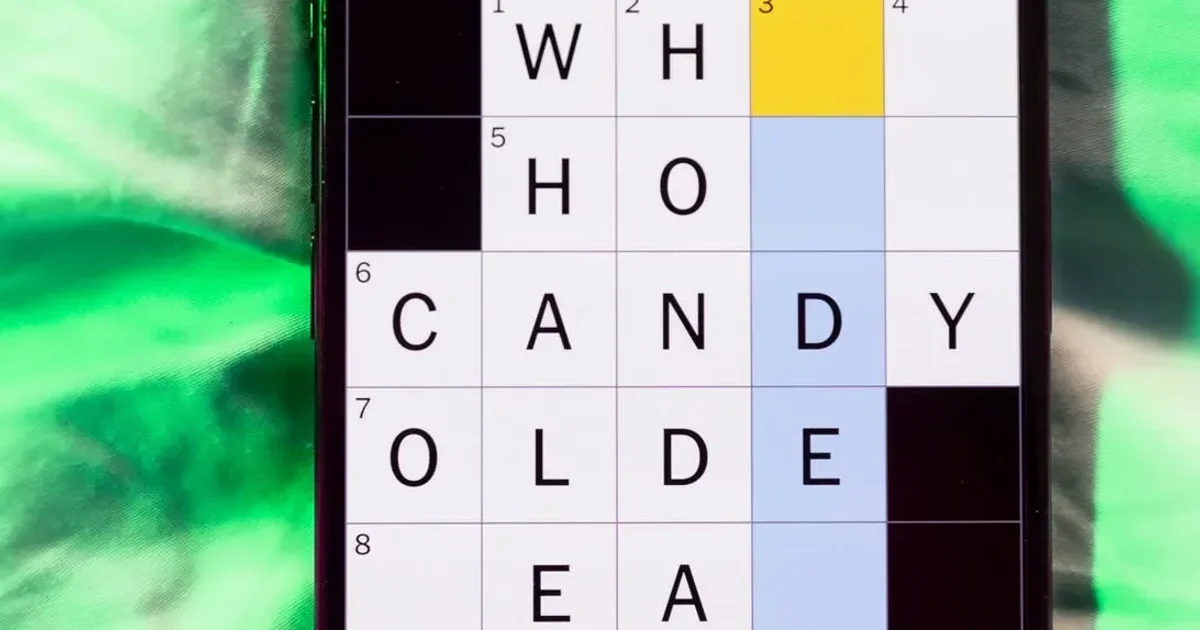
Saturday puzzles in the Mini Crossword category typically offer a steeper challenge than weekday editions. The grid for April 4, 2026, followed this trend with clues that required a mix of trivia and lateral thinking. Mini Crosswords are designed to be completed in under two minutes by experienced solvers, though the weekend variants can push that time higher. Unlike the full-sized crossword, the Mini uses a 5x5 or slightly larger grid to provide a quick hit of cognitive exercise. Speed is a primary metric for the community, with many players competing for the lowest time on shared leaderboards.
Editors at the New York Times use the Mini to experiment with modern slang and current events that might not yet fit the traditional Sunday puzzle. The flexibility keeps the content relevant to a younger demographic that may find the standard crossword too intimidating. The Saturday grid often features more interlocking words and fewer black squares, increasing the difficulty of finding a starting point. Once a single word is confirmed, the crossing letters usually provide enough context to solve the remaining clues. Digital interfaces make this process seamless by automatically highlighting the corresponding across and down clues.
Subscription models for these games have become a blueprint for other media outlets. By bundling the crossword, Wordle, and Connections into a single package, the publisher has created a high-retention product. Revenue from these games supports the broader newsroom, illustrating the symbiotic relationship between entertainment and journalism. The April 4, 2026, puzzles demonstrate that even simple word games can be a sophisticated tool for audience engagement. Each new game addition, such as Strands, undergoes rigorous testing to ensure it meets the standards of a highly literate and demanding user base.
The Elite Tribune Strategic Analysis
Newspaper tycoons of the nineteenth century used serialized fiction to hook readers, yet the digital age has replaced Dickens with five-letter grids. The New York Times has masterfully executed a soft-power takeover of the average worker's morning routine. By commodifying the simple pleasure of a word search, they have built a moat that few other legacy media organizations can cross. The transition of Wordle from an altruistic gift to a foundation of a subscription paywall is not just a business move, it is a clinical extraction of value from a viral moment. Skepticism is warranted when a news organization becomes more famous for its puzzles than its reporting.
The current puzzle ecosystem functions as a high-frequency engagement trap. Each game is designed to be just difficult enough to provide a dopamine hit upon completion, but short enough to fit into a subway commute or a coffee break. It is not about linguistic education; it is about data points and daily active users. When you analyze the April 4, 2026, botanical theme in Strands or the beach clues in Wordle, you see a curated experience designed to feel personal while remaining mass-produced. The removal of the free archive was the final signal that the era of the open, playful web is dead. We are now in the age of the gated community of letters. Everything is for sale.
Will this model persist? As long as humans crave the validation of a solved riddle, the answer is yes. The New York Times has successfully weaponized the crossword to subsidize the high cost of investigative journalism. Whether this compromise is sustainable depends on how long the audience is willing to pay for what used to be free. Intellectual property is the new oil, and the New York Times is drilling deep into the lexicon to keep its engines running. The verdict is clear. Monopolizing the morning brain-teaser is a brilliant, albeit cynical, survival strategy.