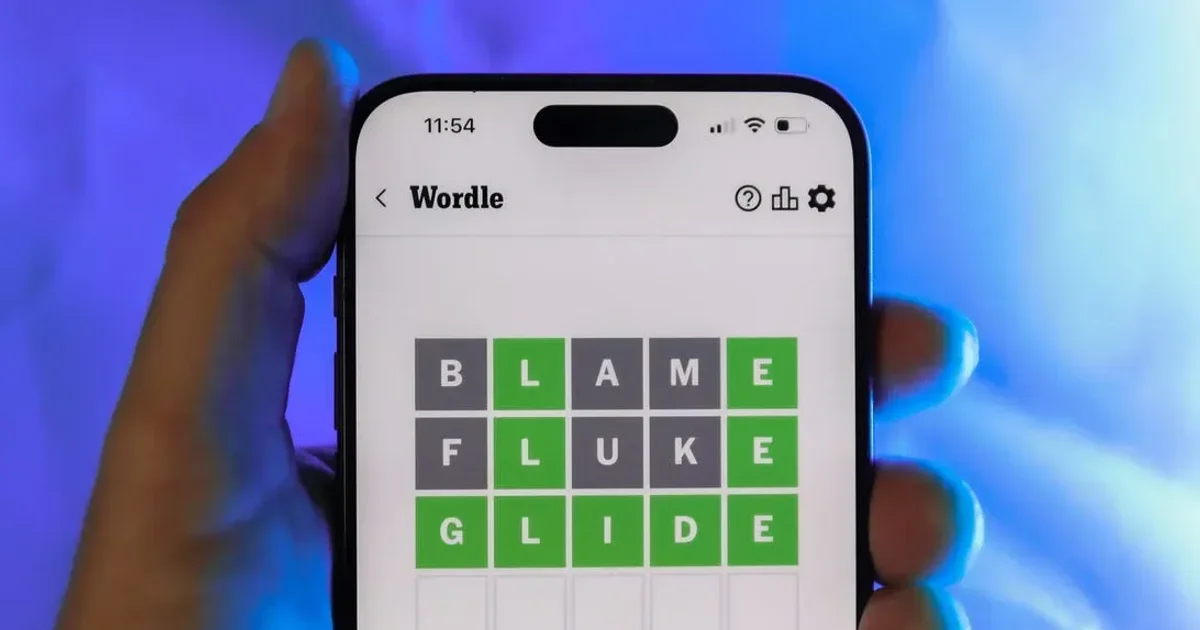
New York Times digital subscribers encountered Wordle puzzle number 1,750 on April 4, 2026, marking a meaningful milestone in the company's effort to anchor its subscription model around habit-forming engagement. Daily word games became a foundation of the media giant's growth strategy following the acquisition of the viral hit from developer Josh Wardle in early 2022. Solvers often turn to CNET and other digital guides to maintain their streaks when faced with linguistically complex solutions or obscure vocabulary. The puzzle slate gave subscribers a harder-than-usual daily routine. Data from independent puzzle trackers suggest that modern word games have transitioned from simple diversions into competitive social currency.
Wordle #1,750 went live at midnight.
Subscription retention metrics are increasingly tied to the Games app, which now attracts a demographic far younger than the traditional print readership. Executives at the New York Times have publicly stated that puzzles are the primary entry point for new digital subscribers who eventually convert to news or cooking packages. Internal reports suggest that a user who plays daily for seven consecutive days is 80% more likely to maintain an annual subscription. Success in these games often requires a deep understanding of letter frequency and semantic patterns common in American English.
Wordle Maintenance of Global Engagement
Wordle continues to dominate the daily routine of millions, with puzzle #1,750 presenting a specific challenge related to vowel placement. Initially designed as a gift for a partner, the game is now the anchor for an entire ecosystem of word search and logic challenges. Players must navigate the six-try limit with precision, often starting with high-frequency words like ADIEU or CRANE to eliminate common letters early in the process. CNET provides hints that allow players to narrow down the possibilities without revealing the final answer immediately.
Linguistic complexity varies sharply from day to day, but the core mechanics remain unchanged since the game's inception. Times editors rotate the solution list to avoid repeating words or including overly controversial terms that might alienate a global audience. While some critics argued that the difficulty increased after the corporate takeover, the data indicates that the word list remains largely consistent with Wardle's original curated set. Competition on social media platforms like X and TikTok has created a subculture where players share their color-coded grids as a sign of intellectual accomplishment.
Connections Expands with Specialized Sports Edition
Connections puzzle #1,028 challenged users on April 4, 2026, to find common threads between sixteen disparate words. This specific game requires a higher degree of lateral thinking rather than the deductive logic used in Wordle. Wyna Liu, the associate puzzle editor, often designs these grids to include red herrings that lead players toward incorrect groupings. A common tactic involves placing four words that could relate to a single topic, only for one of those words to belong to a more obscure fifth category.
"Puzzles are a key part of our strategy to become the essential subscription for every English-speaking person," a New York Times corporate report said.
Expansion of the format led to the creation of Connections: Sports Edition, which reached puzzle #558 on the same date. This version targets a niche audience by focusing on athletes, team names, and technical terminology from the world of professional competition. Sports enthusiasts found themselves analyzing terms related to defensive strategies and championship history to solve the April 4 grid. Cross-referencing between the standard and sports versions reveals a strategy to capture different segments of the New York Times audience simultaneously.
Strands Evolution and Digital Word Search Metrics
Strands puzzle #762 represented the newest evolution of the word search format on April 4, 2026. Unlike traditional searches, Strands requires players to find words that fill every empty space on a 6x8 grid without overlapping. The Spangram, a central theme word that touches two sides of the board, provides the necessary context for the remaining hidden terms. Hints are earned by finding non-theme words, creating a gameplay loop that rewards persistence and vocabulary depth. CNET's coverage of Strands #762 highlighted the theme's connection to seasonal events or cultural milestones.
Mechanics in Strands differ from the static nature of the crossword by providing dynamic feedback as words are discovered. Success in this game requires players to visualize patterns in a non-linear fashion, moving diagonally and vertically across the board. The New York Times has integrated this game into its primary app to ensure users spend more time within the digital ecosystem. Engagement data shows that Strands has the highest average session time among all current puzzle offerings on the platform.
Harder Grids Turn Games Into Daily Habits
The harder April slate matters because the games are built on return habits. Wordle, Connections and Strands do not need dramatic changes to keep subscribers engaged; small swings in difficulty are enough to keep daily players comparing results.