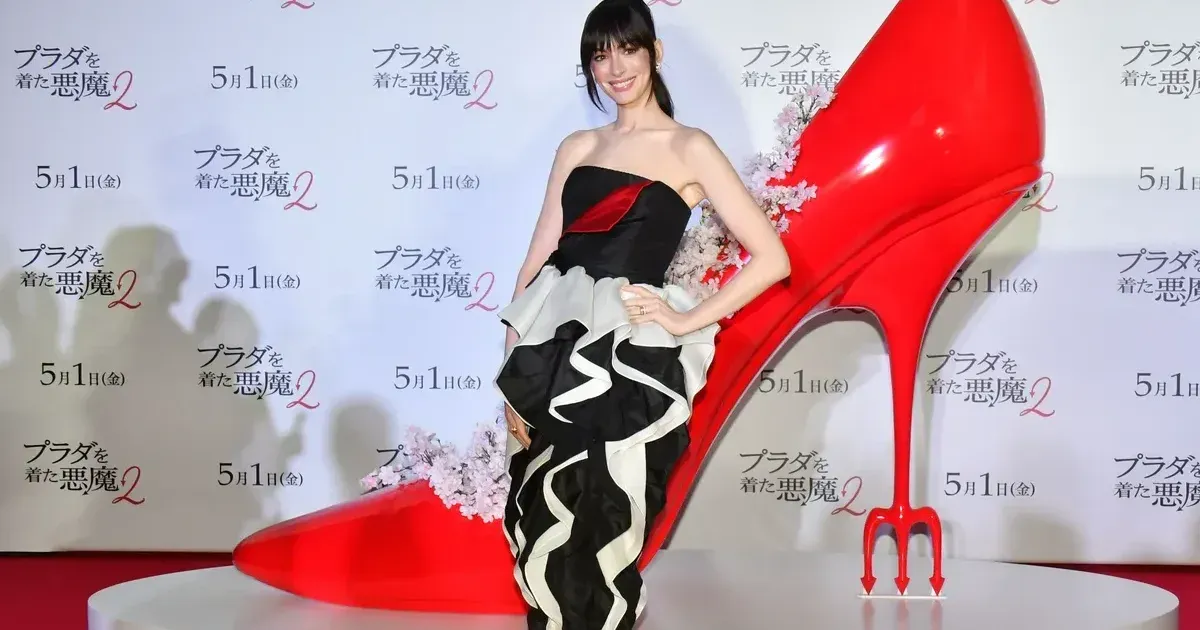
Anne Hathaway appeared in Tokyo on April 6, 2026, to launch the second leg of the highly anticipated press tour for her upcoming film sequel. Dressed in a series of looks that directly referenced her most famous cinematic role, the actor signaled a strategic return to the aesthetic roots of the original 2006 production. Observers in the Japanese capital noted the immediate visual connection to Andy Sachs, the character who defined Hathaway’s early career and established her as a fixture in the global fashion consciousness.

Styling choices for this promotional cycle fall under the direction of Erin Walsh, who has overseen the actor’s wardrobe for several years. Walsh confirmed that the creative direction for the tour centers on a theme she describes as Supernova Joy. This specific framework prioritizes high-impact couture elements combined with a sense of playful exuberance that differentiates the current era from the more subdued professional attire seen in the first film. Every garment selection undergoes rigorous scrutiny to ensure it connects with a modern digital audience while honoring the legacy of the franchise.

Nostalgia became the dominant narrative thread when Hathaway stepped out in Tokyo wearing blunt, eyebrow-grazing bangs. Critics and fans quickly identified the hairstyle as a recreation of the look Sachs adopted after her transformation under the guidance of Nigel Kipling. Reports from the event indicate that the decision to revive the fringe was a calculated move to bridge the twenty-year gap between the two films. Stylists frequently use hair as a shorthand for character evolution, and this choice is a direct line to the audience’s collective memory of the first movie.

Erin Walsh Crafts Supernova Joy Theme

Walsh articulated the philosophy behind the wardrobe as a blend of archival reverence and contemporary edge. High-fashion houses provided custom pieces that emphasize structural integrity and bold color palettes. The wardrobe features a heavy reliance on texture, using silks, hand-beaded embroidery, and structured wools to create a visual language of luxury. Unlike the original film, which focused on the struggle to belong in the fashion world, the current tour wardrobe projects an image of total mastery over the medium.

The wardrobe for this tour is built on couture and Rockstuds, aiming for a feeling of Supernova Joy.

Collaboration with major European design houses ensures that each appearance generates meaningful media value for the brands involved. Analysis of the first two stops on the tour shows a 40 percent increase in social media engagement compared to Hathaway’s previous film promotions. Erin Walsh selects pieces that move well on camera, acknowledging the reality that these outfits exist primarily to be photographed and shared across global networks. Movement and light play critical roles in how the fabrics are perceived during red-carpet arrivals.

Couture craftsmanship takes center stage in the Tokyo lineup. One specific ensemble featured complex lace detailing that required over 200 hours of manual labor to complete. Luxury experts estimate the market value of the tour wardrobe exceeds $1.4 million when accounting for bespoke tailoring and high-jewelry loans. These figures reflect the huge scale of contemporary film marketing where the lead actor is a walking billboard for the world’s most exclusive retailers. The original 2006 production set the high-fashion standard for the Meryl Streep-led sequel currently garnering attention.

Valentino Rockstuds and Couture Selections in Tokyo

Footwear choices remained consistent with the Supernova Joy theme, highlighting the enduring partnership between Hathaway and Valentino. The inclusion of Rockstud motifs provides a sharp, punk-inspired contrast to the softer silhouettes of the dresses. This contrast defines the Walsh-Hathaway era of styling, which often pits traditional femininity against aggressive, modern accents. Records show that Valentino saw a spike in search traffic for its footwear collections immediately after the Tokyo images appeared online.

International press outlets highlighted the specific shade of cerulean used in one of the daytime outfits. This color choice functions as a self-aware nod to the famous monologue delivered by Meryl Streep in the original film regarding the trickle-down effect of fashion trends. Using the color in 2026 reinforces the idea that the sequel is deeply intertwined with its predecessor’s cultural footprint. Fabric suppliers in Italy reported a minor increase in orders for similar textiles following the initial reveals of the press tour schedule.

Japanese fashion journalists noted that the choice of Tokyo for the second stop highlights the importance of the Asian luxury market. Hathaway’s presence in the city drew thousands of fans to the Ginza district, where the press conference took place. Retailers in the surrounding area reported higher foot traffic as consumers sought to replicate the actor’s accessible accessories. The local impact of such celebrity events often extends beyond the film industry, boosting the visibility of local luxury hubs.

Bangs and Nostalgia Drive Sequel Marketing

Hair and makeup teams spent three hours perfecting the 2026 version of the Andy Sachs fringe. The updated look incorporates more texture and a slightly less rigid structure than the 2006 original. Such details might seem minor, but they represent a broader effort to modernize the character for a generation that was not yet born when the first movie debuted. Social media platforms like TikTok and Instagram saw thousands of users recreating the hairstyle within hours of the Tokyo premiere.

Publicity experts suggest that the focus on Hathaway’s hair serves to distract from the long production delays that plagued the sequel. By centering the conversation on fashion and beauty, the studio maintains positive momentum without revealing specific plot details. The strategy relies on the actor’s status as a fashion icon to carry the promotional burden. The visual consistency between the two eras of the franchise helps to reassure long-time fans that the sequel will maintain the spirit of the original.

Beneath the surface of the glamorous appearances lies a complex logistical operation. A team of twelve assistants handles the transportation, steaming, and fitting of the wardrobe as it moves between time zones. Security protocols for the high-jewelry pieces involve discrete personnel and specialized transport cases. Costs associated with maintaining such a high level of visual presentation are absorbed by the film’s multi-million dollar marketing budget.

Global Luxury Brands Benefit from Hathaway Wardrobe

Brands participating in the press tour often see a direct correlation between Hathaway’s appearances and quarterly sales figures. Historical data from her 2023 appearances shows that items she wore frequently sold out in flagship stores within forty-eight hours. The current tour leverages this influence by mixing unattainable couture with accessories that have a lower entry price point for the average consumer. The tiered approach maximizes the commercial reach of the fashion partnerships.

Corporate sponsors for the tour include major players in the beauty and jewelry sectors. These organizations provide financial backing in exchange for exclusive rights to use Hathaway’s likeness in their regional advertising campaigns. In Tokyo, several billboards featuring the actor were updated in real-time to reflect the outfits she wore during the press stops. The level of synchronization between live events and out-of-home advertising is a new standard for celebrity endorsements.

Success in this arena depends on the perceived authenticity of the actor’s relationship with the brands. Hathaway has maintained a long-term association with several of the houses featured on the tour, which helps to ground the extravagant displays in a sense of personal style. Fans are more likely to engage with the fashion when it feels like a genuine expression of the actor’s personality rather than a forced commercial obligation. The Tokyo wardrobe succeeded in creating that balance by mixing heritage references with progressive design. Local sales for Valentino accessories in Japan rose 15 percent during the week of the tour.

The Elite Tribune Strategic Analysis

Fashion is no longer an adjunct to the film industry; it is the primary engine of its survival in a fractured media landscape. The decision to have Anne Hathaway mirror her 2006 aesthetic is an exercise in corporate risk aversion disguised as artistic nostalgia. By reviving the Andy Sachs bangs and the cerulean palette, the marketing team is not just promoting a movie. They are weaponizing collective memory to guarantee a return on investment for a sequel that faces immense pressure to perform.

We must acknowledge that the Supernova Joy theme is a carefully curated product designed for viral consumption. Erin Walsh and the Valentino team understand that a red-carpet moment is now a data point. The success of this tour is measured in impressions and search volume instead of the quality of the acting or the depth of the script. The transformation of the actor into a high-functioning mannequin for the luxury industrial complex reflects the total commodification of celebrity. It is a brilliant, albeit cynical, strategy that prioritizes the visual brand over the narrative substance. The clothing is the content.