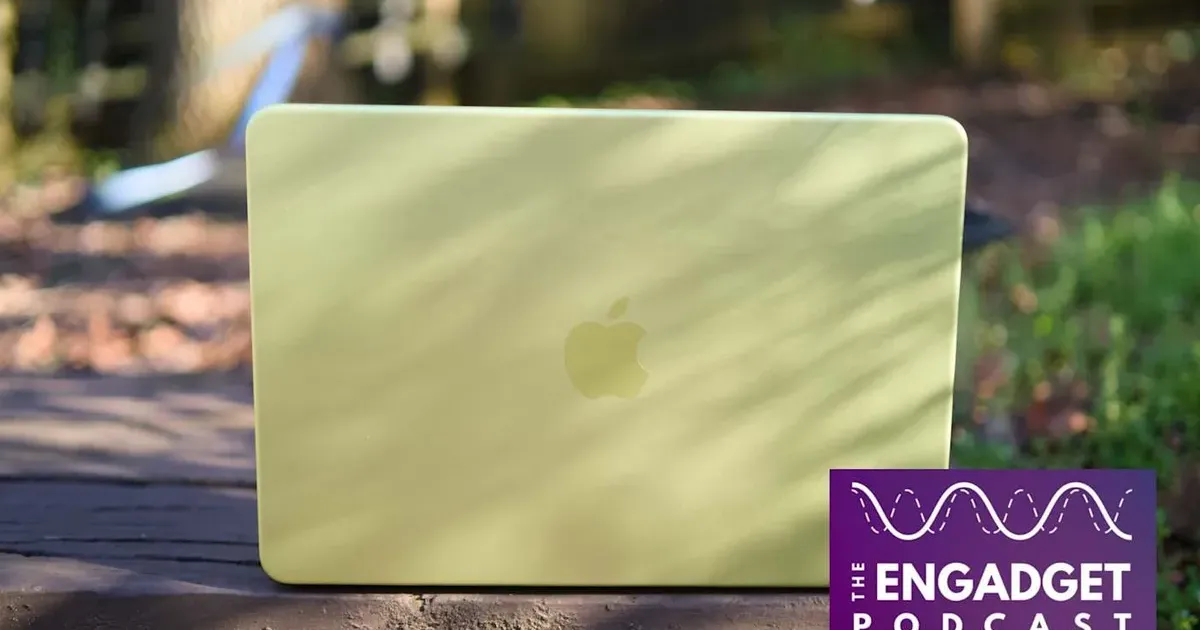
Apple celebrates its 50th anniversary through a series of product retrospectives and hardware updates. Executives at the Cupertino giant highlighted the legacy of the Mac and the evolving role of wearable technology during a press event. Apple has maintained its market position by transitioning from a niche computer manufacturer into a global lifestyle brand. Current data suggests the hardware sector accounts for a shrinking percentage of net profit compared to software subscriptions. The April 3, 2026, anniversary framed Apple's past dominance against a new hardware transition. Devindra Hardawar and Igor Bonifacic of Engadget discussed the corporate birthday during a recent broadcast. They noted that the company persists as one of the few PC manufacturers firmly committed to the concept of personal computing. The commitment to personal computing defines the current product lineup from the Mac Studio to the latest MacBook Neo. Apple recently reported record revenue from its services division while maintaining high margins on its laptop hardware.
Reporters at CNET looked back on how the brand shaped consumer habits over five decades. Many recalled the launch of the original Macintosh as the primary catalyst for modern graphical interfaces. $1.75 trillion valuations for space companies like SpaceX now dominate financial headlines, yet Apple continues to influence the terrestrial electronics market. Internal memos indicate a renewed focus on hardware longevity to combat slowing upgrade cycles.
Apple Watch Redefines Modern Health Monitoring
Victoria Song of The Verge noted that the state of health technology stems from the release of the Series 4 watch. Before 2018, wearable devices functioned primarily as fitness trackers for step counts and heart rate. The Series 4 introduced medical-grade sensors like the electrocardiogram to a mass consumer audience. Hardware manufacturers have since scrambled to match the integration of health metrics with daily notification management.
The device moved the industry toward preventative health rather than simple activity logging. Modern Apple Watch models now monitor blood oxygen levels and detect falls with high precision. Insurance providers in the US and UK offer discounts to users who share their activity data through the HealthKit platform. Critics often point to the privacy implications of such data collection, but adoption rates continue to climb globally. Wearable devices accounted for nearly 10% of total revenue in the last fiscal quarter. The 10% share illustrates the successful diversification of the product portfolio away from the iPhone. Software developers now prioritize watchOS apps for quick interactions, reducing the time users spend staring at larger screens. Competitors like Samsung and Google have adopted similar design philosophies for their respective wearable ecosystems. The shift helps explain how Apple marks 50 years of influence across the global consumer technology landscape.
Personal Computing Commitment Drives Apple Revenue
Desktop and laptop computers continue to represent the core identity of the brand despite the growth of mobile services. Igor Bonifacic observed that the company stays nimble for its age by rapidly iterating on its internal silicon. The move from Intel processors to custom M-series chips allowed for serious performance gains. Many industry analysts believe this transition prevented a mass exodus of professional creators to Windows platforms.
MacBook Pro sales spiked 15% following the introduction of the latest neural engine components. Professional users in video production and software engineering cited battery life as the primary reason for their brand loyalty. While the iPad Pro attempts to bridge the gap between tablets and laptops, the Mac remains the preferred tool for complex workflows. Apple engineers are currently testing a unified operating system that could further blur these lines. Hardware design remains a point of contention among long-term users. Some CNET reporters expressed nostalgia for the translucent designs of the late 1990s. Modern aesthetics favor industrial minimalism with recycled aluminum and glass. Environmental groups have praised the company for its goal of becoming carbon neutral by 2030, a target that influences every stage of the supply chain.
Historical Context of Apple Hardware Shifts
The history of the company is defined by its ability to cannibalize its own products. Steve Jobs famously introduced the iPhone which eventually reduced the market for the iPod. Tim Cook followed this strategy by expanding the ecosystem into services like Apple TV+ and Apple Music. Those expansions ensured the company stayed relevant during the transition from physical media to streaming platforms.
Market analysts note that the hardware replacement cycle has lengthened to nearly five years for most consumers. To combat this, the company focuses on software updates that keep older devices functional. NASA recently used Apple hardware for specialized simulations during the Artemis II mission planning phases. High-profile use cases strengthen the reputation of the brand for reliability in demanding environments.
Meanwhile, the Federal Communications Commission issued a ban on foreign-made WiFi routers which could benefit local hardware providers. The policy creates an opening for Apple to re-enter the networking market with a new version of the AirPort Extreme. Sources inside the supply chain report increased orders for networking components at manufacturing facilities in Vietnam. Expansion into smart home infrastructure is a logical step for a company with 50 years of consumer data. Artificial intelligence integration dominates the plan for the next decade of development. The recent leak of Anthropic source code for Claude Code highlights the volatility of the software sector. Apple has taken a more conservative approach by processing most AI tasks on the device to protect user privacy. Local processing requires more powerful chips, driving demand for high-end hardware upgrades.
The successful launch of the Artemis II mission on April 2, 2026, coincided with Apple's anniversary celebrations. Space exploration technology often trickles down to consumer electronics in the form of improved sensors and communications. Engineers are exploring satellite-based messaging for all devices to eliminate cellular dead zones. The technology is already present in recent iPhone models for emergency situations.
Apple's Hardware Legacy Faces a Services Future
Celebrating half a century of existence is a feat few technology firms manage without becoming bloated or irrelevant. Apple has survived by convincing its user base that its products are not just tools but extensions of personal identity. However, the current reliance on incremental hardware updates suggests a company that is more interested in protecting its rent-seeking ecosystem than in genuine invention. The magic of the Jobs era has been replaced by the ruthless efficiency of the Cook era, where supply-chain optimization is the ultimate metric of success.
Apple now has to prove that its next platform can be more than a luxury utility.