Mia Ballard faced the sudden collapse of her publishing contract because Hachette officially scrapped the United States release of her novel Shy Girl. Allegations regarding the illicit use of large language models to generate the prose triggered an internal investigation that ultimately led to the project being abandoned. Readers first flagged inconsistencies in the narrative structure and repetitive linguistic patterns common in synthetic text production. Hachette took this action to protect its brand integrity within a market increasingly saturated by unoriginal, machine-produced content. The April 3, 2026, cancellation intensified the publishing industry's AI-authorship debate.
Detection software initially flagged Shy Girl after several online book reviewers noted that the prose lacked the specific emotional resonance typical of Ballard's previous works. Digital forensics experts employed by Hachette later confirmed that multiple chapters exhibited high probability scores for AI generation. Critics argued that the lack of disclosure regarding these tools constituted a breach of creative trust. The cancellation is a substantial financial loss for the author, who had already begun promotional circuits for the spring release. Mia Ballard has yet to provide a detailed rebuttal to the specific technical findings presented by her former publisher.
Hachette Scraps Shy Girl Release Plans
Industry leaders watched closely as Hachette moved to distance itself from the controversy surrounding Mia Ballard and her latest manuscript. Publishing houses now face a landscape where the cost of vetting every submission against sophisticated AI models has tripled. Contracts are being rewritten to include specific clauses that permit immediate cancellation if a writer fails to disclose the use of generative software. Shy Girl was intended to be a flagship release for the 2026 season, making the cancellation particularly damaging to the publisher's quarterly projections. Project managers at the firm declined to comment on whether any portion of the author's advance would be recouped through legal channels.
Literary agents suggest that the incident involving Mia Ballard will lead to a broader chilling effect across the industry. Manuscript submissions now undergo four rounds of digital analysis before reaching an editor's desk. Hachette executives indicated that they remain committed to human-authored content, though they acknowledged the difficulty in verifying every individual sentence. The financial impact of the Shy Girl cancellation includes the destruction of thousands of physical copies already printed for distribution. Inventory logs show that 45,000 units were slated for the initial West Coast rollout alone.
Detection Experts Analyze Ballard Text
Automated writing tools often leave subtle markers, such as an over-reliance on common adjectives and a perfect, yet sterile, grammatical structure. Experts who examined the Mia Ballard text noted that Shy Girl contained zero idiosyncratic errors, which is often a red flag for synthetic generation. Analysts at several tech firms observed that the vocabulary breadth in the contested chapters was sharply narrower than in Ballard's debut novel. The initial findings provided the empirical basis for the decision to cancel the contract. Hachette relied on three independent verification services to ensure the accuracy of their findings before making the announcement.
Publishing professionals are now calling for a universal watermarking system for all digital drafts. If authors use AI for brainstorming or outlining, those interactions must be documented in a transparent log. The case of Shy Girl illustrates how easily machine-generated content can bypass traditional editorial gatekeepers. While some suggest that AI can be a tool for productivity, others view it as a direct threat to the livelihood of career novelists. Mia Ballard saw her social media following decline by 15% within hours of the news breaking in major trade journals.
Tom Steyer Proposes National AI Token Tax
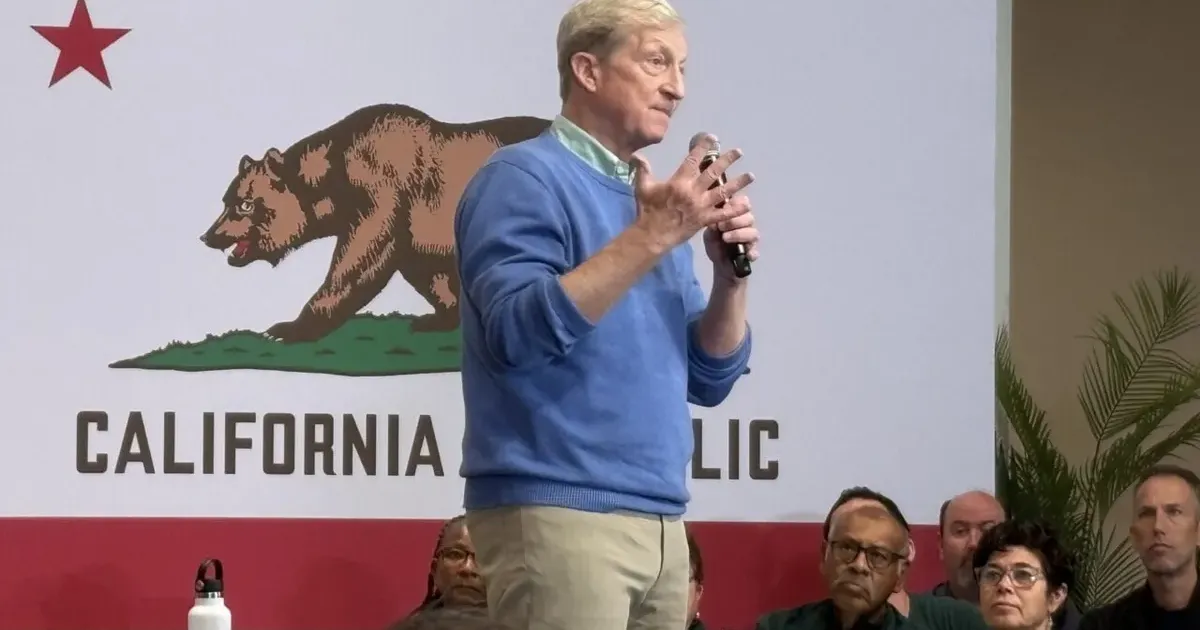
Meanwhile, Tom Steyer introduced a radical economic proposal on April 3, 2026, to address the societal displacement caused by such technologies. Steyer called for a federal tax on every AI token generated by large-scale computing clusters. He argued that the revenue generated from this tax should fund a national sovereign wealth fund to support citizens losing their jobs to automation. Tom Steyer characterized the current wealth concentration in the technology sector as unsustainable for the broader American economy. Projections from his research team suggest that a small tax per token could generate billions in annual revenue.
"We cannot have 12 trillionaires and 40 million people who can't make rent," according to Tom Steyer.
Silicon Valley executives reacted with skepticism to the proposal, citing concerns about stifling innovation and driving compute centers overseas. Tom Steyer argued that the infrastructure used to train these models relies heavily on public resources and should therefore benefit the public. Taxing tokens would effectively create a royalty system for the data processed by artificial intelligence. Every time a model generates a response or writes a page of a novel like Shy Girl, a micro-fraction of a cent would go to the wealth fund. Critics in the Republican party labeled the plan a tax on progress that would benefit competitors in Asia.
Proponents of the Tom Steyer plan point to the Alaska Permanent Fund as a successful model for distributive wealth management. If the AI tax were implemented today, the fund could potentially distribute $2,000 to every American household by the end of the decade. Wealth inequality has reached levels not seen since the Gilded Age, prompting several California legislators to endorse the Steyer initiative. 12 trillionaires now control more wealth than the bottom 50% of the global population combined. The proposal seeks to decouple survival from traditional labor as AI continues to automate creative and analytical roles. Tom Steyer believes that without such a mechanism, the social contract will eventually disintegrate under the weight of mass unemployment.
National debates regarding the definition of a token tax are expected to dominate the upcoming legislative session. A token is a basic unit of text or code processed by an AI, meaning high-volume users like search engines and coding platforms would pay the most. Economists estimate that $12 trillion in market value could be shifted into the public sector over the next twenty years through this mechanism. This approach aims to provide a safety net for workers in the publishing, legal, and software industries. Hachette and other major corporations have not yet taken a formal stance on the specific tax rate proposed by Steyer.
AI Token Tax Reopens the Authorship Fight
Will the destruction of a single novel be the catalyst that finally forces the hand of the federal government to tax the machines? The collapse of the Mia Ballard deal is both a literary scandal and a market failure indicating that the traditional guardrails of human creativity are no longer functional. The slow-motion erosion of intellectual property is already underway, where the line between author and algorithm has been erased by corporate greed and a lack of regulatory oversight. Hachette is attempting to hold a crumbling dam, but the flood of synthetic content is already here.
Steyer is correct to identify the extreme concentration of wealth as a terminal threat to social stability. The reality of 12 trillionaires presiding over a landscape of renters who cannot afford their existence is a recipe for civil unrest that no amount of Silicon Valley philanthropy can solve. A token tax is a blunt instrument, yet it is the only one capable of capturing the value being extracted from the collective human knowledge used to train these models. If the technology companies are allowed to harvest our language and labor without compensation, the sovereign wealth fund remains the only viable mechanism for survival.