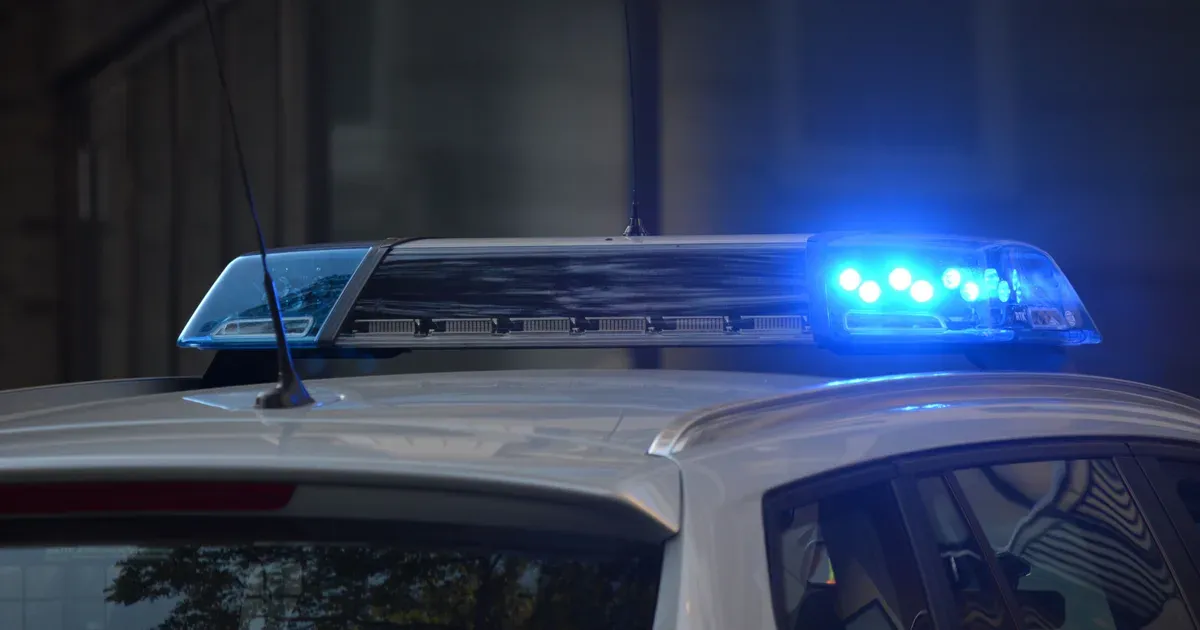
Glass shards and twisted metal littered the entrance of the facility as emergency responders arrived shortly after the midday impact. Law enforcement officials confirmed that the driver intentionally targeted the structure during a period of active use. Investigators are examining the crash, the weapon and the suspect's intent after an armed driver rammed a vehicle into a Michigan synagogue. Initial reports from the Michigan State Police indicate that the suspect attempted to enter the sanctuary after the vehicle became wedged in the structural frame of the lobby. No fatalities were reported in the immediate aftermath, though several congregants were treated for shock and minor injuries caused by flying debris. Shattered windows and compromised structural supports now define a space that had recently undergone extensive renovations. Security personnel on site engaged the suspect within seconds of the crash, preventing further entry into the main prayer hall. These officers used tactics developed during recent training sessions focused on active threat mitigation. Witnesses described a scene of rapid escalation as the sound of the collision echoed through the surrounding neighborhood. Local residents reported seeing a dark sedan accelerating toward the building without any sign of braking. Officers recovered a weapon from the vehicle during the subsequent search of the scene. Security measures at the facility had been the subject of intense focus for several months leading up to this event. Administrators at the synagogue recognized increasing vulnerabilities and sought to create a more resilient physical environment. For instance, the board of directors recently allocated $150,000 toward the installation of reinforced doors and advanced surveillance systems. These upgrades were intended to serve as a deterrent against the very type of intrusion that occurred this week. Despite these efforts, the kinetic energy of a high-speed vehicle proved difficult to fully arrest at the building's primary entrance point. Local law enforcement had been coordinating with religious leaders to conduct vulnerability assessments throughout the previous year. These consultations led to the installation of several dozen cameras linked directly to a centralized monitoring hub. The synagogue leadership prioritized the hardening of external walls and the implementation of strict access control protocols. the reliance on passive barriers was tested by a driver determined to use a car as a weapon. Evidence suggests the suspect may have conducted reconnaissance on the property multiple times before the final approach.
The synagogue crash is being treated as an intentional attack, not a traffic accident with political noise around it.
Synagogue Security Limits the Damage
Efforts to safeguard the congregation involved not only physical barriers. Staff members and regular attendees participated in quarterly safety drills designed to simplify evacuation and lockdown procedures. According to a security consultant familiar with the project, the synagogue had transitioned to a professionalized security model that replaced volunteer ushers with trained tactical guards. This shift occurred in response to a documented rise in credible threats targeting religious minorities across the Midwest. To that end, the facility had integrated automated lock systems that could be triggered from multiple remote locations within the building.
Federal grant programs provided much of the capital required for these technological integrations. The Department of Homeland Security issued a series of non-profit security grants that allowed the synagogue to purchase blast-resistant glazing for all ground-floor windows. The strategy focused on creating layers of defense that would delay an intruder long enough for police to arrive. Older religious structures in the same county often lack the financial resources to implement such sophisticated systems. The discrepancy in safety standards between various houses of worship remains a point of contention for local civil rights advocates.
Investigators Examine Possible Motive
Surveillance footage captured the exact moment the vehicle turned off the main road and entered the synagogue parking lot. Time stamps show the car idling for approximately 45 seconds before the driver accelerated toward the glass-fronted entrance. Security guards deployed mobile barriers, but the vehicle managed to bypass the primary checkpoints by jumping a curb and traversing a grassy embankment. Meanwhile, dispatchers received the first emergency call at 1:14 p.m., exactly one minute after the impact occurred. Officers arrived on the scene four minutes later, finding the suspect still struggling to exit the crumpled vehicle.
investigators are looking into the digital footprint of the driver to determine if the timing was coordinated with other events. The suspect, whose identity has not been released pending formal charges, reportedly possessed materials that indicated a long-standing grievance with the institution. But the focus of the probe has shifted toward the possibility of broader radicalization. Detectives are analyzing encrypted messages found on a mobile device recovered from the driver's side floorboard. Forensic teams spent several hours documenting the path of the vehicle and the points of failure in the perimeter fencing.
Federal agents from the FBI joined the task force on the second day of the investigation to explore potential hate crime charges. Evidence suggests the suspect had no personal connection to any member of the congregation, pointing toward an ideological motive rather than a personal vendetta. The prosecutor's office is preparing a thorough list of charges that includes domestic terrorism and assault with a deadly weapon. The vehicle itself is being held in a secure impound lot for further mechanical analysis. This process aims to determine if any modifications were made to the car to increase its impact force.
Religious Sites Reassess Threat Planning
Rising tensions across the country have forced many religious centers to rethink their relationship with the public. Open-door policies that once defined community worship are being replaced by buzz-in systems and armed patrols. In particular, the Jewish community in Michigan has reported a 30 percent increase in harassment incidents over the last 24 months. These figures, compiled by the Jewish Federation, highlight a growing sense of unease that transcends individual zip codes. Many families have expressed hesitation about attending large gatherings or holiday services due to these persistent safety concerns. State legislators are debating a bill that would increase penalties for crimes committed at houses of worship.
Security Hardware Cannot Answer Hate
Can a society claim to be free when its citizens must pass through armored gates to pray? The failure of the perimeter in Michigan, despite months of expensive hardening and federal grants, exposes an uncomfortable truth about modern security theater. We spend millions on bollards and blast-resistant glass while ignoring the cultural rot that turns a neighbor into a vehicular assailant. The obsession with physical barriers is a sedative for a terrified public, offering the illusion of safety while the underlying threat remains untouched and unaddressed.
If a $150,000 security package cannot stop a determined driver in a common sedan, the entire concept of 'defensible space' in an open society is a lie. We are building fortresses where we should be building communities, yet we wonder why the walls keep getting taller. The reality is that no amount of reinforced concrete can protect a temple from a person who has decided that their life is less valuable than their grievance. Leaders who continue to champion these tactical band-aids are only managing the decline of public safety rather than solving the crisis.
Until we confront the sources of this radicalization with the same intensity we use to install surveillance cameras, these attacks will continue to bypass our most sophisticated defenses.