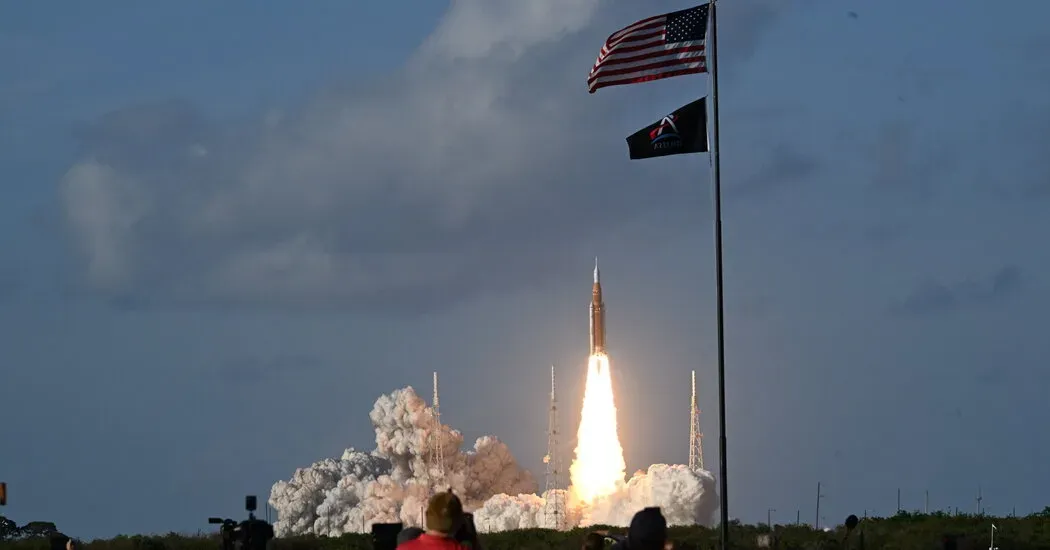
NASA's Artemis II is no longer a launch-day promise. The crew has flown around the moon, returned to Earth and reunited with the Orion capsule at Kennedy Space Center three months later. Commander Reid Wiseman, pilot Victor Glover, mission specialist Christina Koch and Canadian Space Agency astronaut Jeremy Hansen turned the first crewed lunar flight in more than 50 years into a completed test of NASA's deep-space hardware.
The mission's headline achievement was historic distance: AP reported the crew traveled 252,756 miles from Earth, farther than any humans before them. But the bigger question for Artemis is not whether one crew could make the loop. It is whether NASA can turn that success into a regular sequence of missions without being overtaken by cost, schedule pressure or shifting politics.
Orion Came Back With the Evidence
Artemis II was built around Orion as a crewed test article. The spacecraft had to support people beyond low Earth orbit, handle communications, navigation, power, life-support operations and the heat of lunar-return reentry. A successful splashdown gave engineers something more valuable than a clean broadcast: physical hardware and flight data.
The returned hardware matters because Artemis cannot move on slogans. Engineers have to inspect what heated, flexed, eroded, worked smoothly or demanded more margin. Every sensor reading and crew comment becomes part of the decision about how much risk NASA can carry into the next mission.
The Crew Changed the Symbolism
The four-person crew gave the mission cultural weight beyond the engineering. Koch became the first woman to fly to the moon. Glover became the first Black astronaut on a moon-bound mission. Hansen's seat showed Canada's place inside the Artemis partnership. Wiseman carried the burden of command on a flight watched as both a technical test and a national moment.
The crew symbolism is useful, but it is not decorative. Artemis is being sold as a coalition project rather than an Apollo replay. The crew composition, European service module, Canadian participation and commercial lander architecture all point to a program that depends on partners as much as on NASA's own rocket.
SLS Still Has to Justify Its Cost
The Space Launch System did what NASA needed it to do: lift Orion and the crew into the mission profile. A successful launch does not end the argument over SLS. The rocket remains expensive, politically defended and often compared with reusable commercial systems that promise lower costs and faster repeat-flight discipline.
A clean Artemis II helps the SLS case because crew safety and mission success carry enormous weight. It does not make the program immune from scrutiny. If NASA cannot fly often enough, the question will return: whether a government-owned heavy-lift rocket is the backbone of a sustainable lunar campaign or a costly bridge to a different architecture.
Artemis III Is No Longer a Straight Landing Step
The next phase has become more complicated than a simple march to the lunar surface. The Artemis III crew announced for 2027 is expected to remain in Earth orbit and practice docking with lunar lander systems being developed by SpaceX and Blue Origin. Artemis IV, now pointed to as early as 2028, is the mission associated with returning astronauts to the lunar surface.
The revised sequence is important. It shows NASA is trying to reduce risk before putting astronauts into a landing campaign. It also shows how dependent the program has become on commercial lander readiness. Orion and SLS can succeed and still be waiting on the rest of the architecture.
The Moon Race Is About Flying Again
Artemis II happened in a different strategic world from Apollo. China is moving toward its own lunar goals, commercial companies are building vehicles NASA did not own in the Apollo era, and the moon is increasingly discussed as infrastructure, science platform and geopolitical marker.
In the current strategic environment, one mission is not enough. Repeat-flight discipline is the measure now: how quickly NASA can inspect, fix, train, stack, launch and repeat. A program that flies once every several years can inspire the public and still lose the operational race. A program that flies reliably starts shaping the rules around lunar activity.
The Applause Was Earned, but It Was Not the Finish
Artemis II earned its public reaction. It carried humans back into lunar space, proved the crew could live and work inside Orion, and gave NASA a rare moment of visible national achievement. The July reunion with the capsule showed how emotional the mission remained even after splashdown.
The tougher part begins after the celebration. NASA has to convert data into decisions, decisions into hardware changes and hardware changes into the next flight. The moon is no longer just a destination on a patch. It is a test of whether the United States and its partners can sustain ambition after the first record is already in the books.