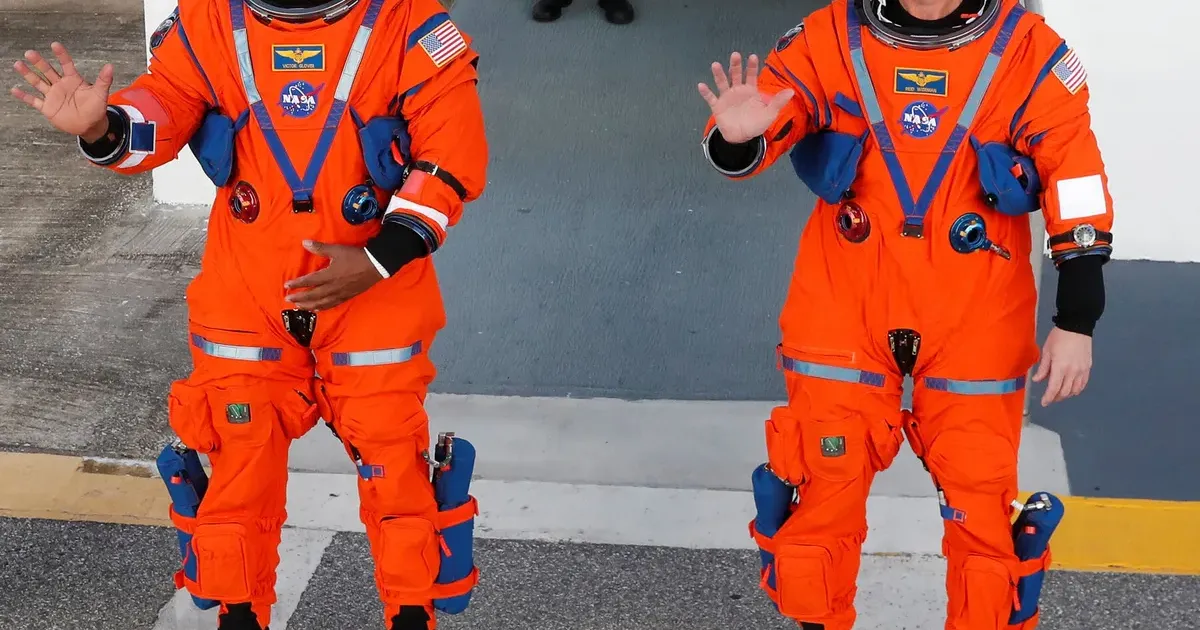
NASA finalized the technical flight protocols for the upcoming lunar mission confirming that the crew will wear a specifically engineered shade of orange. Selection of this specific hue follows rigorous safety testing for the Orion Crew Survival System, the pressurized garment designed to protect Christina Koch, Reid Wiseman, Victor Glover, and Jeremy Hansen. By April 1, 2026, NASA’s suit choice had put a familiar safety color back at the center of Artemis II planning. Selection of the International Orange pigment reflects decades of aerospace safety data regarding high-contrast visibility against the deep blues of the Pacific Ocean.
Flight engineers prioritize recovery logistics over aesthetic novelty for the first crewed lunar mission in over half a century. While the deep black of space might suggest a different color palette, the critical phase of the mission occurs during splashdown. Search and rescue teams must locate the capsule and its occupants quickly in the vast expanse of the sea. International Orange provides the highest possible contrast against water, a fact confirmed by maritime safety standards worldwide.
Orion missions rely on the ability of recovery teams to spot astronauts if they are forced to egress the spacecraft before it is secured on a naval vessel. Victor Glover and Reid Wiseman will lead the crew as they test the life support system of the spacecraft. Under these conditions, the visibility of the suit becomes a primary safety feature. Passive survival elements often outweigh complex electronic signaling devices in unpredictable ocean environments.
Orion Crew Survival System Design Specifications
Engineering documents for the Orion Crew Survival System indicate that the garment is more than a simple jumpsuit. It functions as a personalized spacecraft designed to keep Christina Koch and Jeremy Hansen alive during sudden cabin depressurization. Each suit features a self-contained oxygen supply and thermal regulation systems to prevent hypothermia or heat stroke. The hardware must withstand the extreme G-forces of launch and the intense vibrations of reentry.
NASA designers integrated advanced mobility joints into the OCSS to allow for greater range of motion compared to older models. Unlike the bulky Extravehicular Activity suits used for spacewalks, these pressure suits are tailored for the cramped confines of the Orion capsule. Each component undergoes individual pressure testing to ensure it can maintain a habitable internal atmosphere. The suits include a liquid cooling garment worn underneath to manage body temperature.
Communication arrays are built directly into the helmet assembly to enable constant contact with Mission Control. Redundancy is a core requirement for every piece of equipment on the Artemis II mission. If the primary life support system on Orion fails, these suits provide a secondary layer of protection for up to six days. Internal sensors monitor the physiological status of Reid Wiseman and the other crew members in real time.
Historical Evolution of Astronaut Pressure Suits
NASA used various color schemes throughout the early decades of space exploration, often driven by the specific needs of each program. Mercury and Gemini astronauts wore silver or white suits, focusing on thermal reflection and internal cooling. During the Apollo era, white became the standard for lunar surface operations to reflect solar radiation. The shift to orange only became permanent during the Space Shuttle program after the Challenger disaster highlighted the need for high-visibility survival gear. Advanced Crew Escape Suits, often called pumpkin suits, were a staple of the Shuttle era from 1988 until the program ended in 2011. These garments were designed specifically for the ascent and entry phases of flight. Engineers realized that if a crew had to bail out over the ocean, a white suit would blend into the whitecaps of waves. International Orange ensured that a lone astronaut drifting in the water could be spotted by a helicopter pilot from miles away.
The Orion Crew Survival System is designed for a multi-day survival scenario in the event of a cabin depressurization, providing a safe environment for the crew until they can return to Earth.
Technological parallels between the Shuttle suits and the new Orion suits exist, but the Artemis hardware is much more capable. Jeremy Hansen will be the first Canadian to wear the OCSS during a lunar mission. His suit, like those of his colleagues, features upgraded materials that are lighter and more durable than those used in the 1990s. Improved gloves allow for better tactile feedback when operating touchscreens and physical switches.
Visibility Requirements During Pacific Ocean Recovery
Recovery operations for Artemis II will involve the US Navy and NASA specialized teams in the Pacific. Because the Orion capsule enters the atmosphere at approximately 25,000 miles per hour, the landing zone can be wide. Rapid location of the capsule is essential to ensure the health of Christina Koch and her fellow crew members. Ocean currents and weather patterns can move a floating capsule or an individual astronaut several miles in a matter of hours.
Visibility remains the most effective tool for search aircraft during the initial stages of recovery. Computer modeling shows that International Orange is the least likely color to be confused with natural ocean phenomena. This pigment choice eliminates the risk of searchers mistaking an astronaut for sea foam or debris. Victor Glover emphasized the importance of these safety layers during pre-flight briefings at the Johnson Space Center. Every second saved during recovery reduces the physiological stress on the human body after 10 days in microgravity. Search and rescue teams use both visual and electronic means to track the crew. While GPS beacons and radio transponders are standard, they can fail in salt water or due to impact damage. High-visibility fabric is a failsafe that requires no power and cannot malfunction. The human eye remains a primary instrument in the final approach of a recovery vessel. A splash of orange against the blue horizon is often the first sign of a successful mission completion.
Why Suit Color Still Matters
International Orange is not a style choice; it is a survival signal. A crew returning to the Pacific needs to be visible to recovery teams under difficult light, weather and sea conditions.
The Artemis II suit decision also connects modern lunar missions to earlier safety lessons. NASA is selling a future return to deep space, but the basics of rescue, visibility and redundancy still decide crew risk.