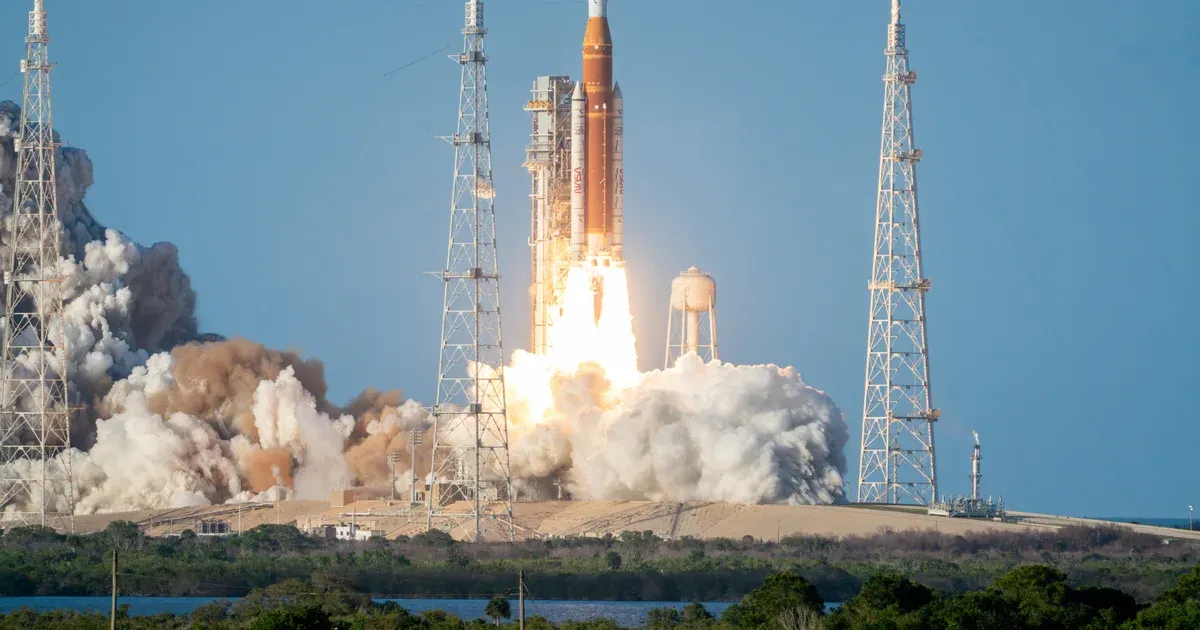
NASA flight controllers in Houston monitored the Orion spacecraft while the four-member crew of Artemis II prepared for a high-speed reentry into Earth's atmosphere. Recovery teams positioned themselves in the Pacific Ocean to await the splashdown of the capsule, which concludes a 10-day journey around the moon. Artemis II is the first crewed mission to the lunar vicinity since the Apollo era. Mission teams prepared for Pacific recovery operations on April 10, 2026, with the splashdown target set. Mission commanders confirmed the spacecraft is maintaining a precise trajectory toward the primary recovery zone. Calculations provided by flight dynamics officers indicate a splashdown time of approximately 8:07 p.m. Eastern time.
Reentry Dynamics and Atmospheric Heating
Orion engineers designed the spacecraft to survive a blunt-body reentry that generates extreme thermal energy. Speed at the point of atmospheric interface reaches nearly 25,000 miles per hour. Friction between the capsule and gas molecules in the upper atmosphere creates a plasma field that blocks communication for several minutes. Temperatures on the exterior of the NASA heat shield are expected to peak at five thousand degrees Fahrenheit. Technical data from the mission show the capsule utilizes a skip-reentry maneuver to dissipate energy. This maneuver allows the spacecraft to dip into the atmosphere, bounce back into space briefly, and then make a final descent. Gravity loads on the crew remain within safety limits during this two-stage deceleration process. NBC News reported that the astronauts are currently reviewing procedures for the final hours of the flight.
The Artemis II crew began packing and reviewing procedures for their return to Earth on Friday. Personnel on the ground are monitoring the thermal protection system integrity throughout the final approach. NASA has invested $20.4 billion in the development of the Orion and Space Launch System infrastructure to ensure these safety margins. Previous uncrewed tests verified the durability of the AVCOAT ablation material under similar stressors.
Recovery Operations in the Pacific Ocean
Navy divers and recovery specialists are currently stationed aboard vessels near the projected impact point. Weather forecasts provided by meteorologists suggest favorable conditions with manageable wave heights. Al Roker noted on the TODAY show that visibility should remain clear for the nighttime recovery. Infrared cameras on recovery helicopters will track the capsule during its parachute descent.
The recovery process involves the deployment of three main parachutes that slow the vehicle to roughly 20 miles per hour. Recovery ships must secure the capsule quickly to prevent excessive rolling in the ocean swells. Mark Strassmann detailed the logistical hurdles of retrieving a crew in the dark of night. Sailors are trained to attach a tether and pull the Orion into the well deck of an amphibious transport dock ship. Recovery operations usually take approximately two hours from the moment of splashdown to the extraction of the astronauts. Medical teams are on standby to assess the physical condition of the four crew members after ten days in microgravity. 8:07 p.m. remains the target window for the initial contact with the water surface.
Scientific Gains From Lunar Far Side Transit
Cameras aboard the Orion captured high-resolution images of the lunar far side during the mission's closest approach. These photographs provide new data on crater density and geological formations in regions rarely seen from Earth. Scientists at the Jet Propulsion Laboratory expect to analyze gigabytes of telemetry data regarding solar radiation levels outside the Van Allen belts. Preliminary reports indicate the spacecraft radiation shielding performed according to design specifications.
Lunar exploration objectives for this mission included testing the high-gain antenna systems required for future Mars voyages. Communication systems maintained a steady link during the transit, despite the distance of over 230,000 miles. Every maneuver performed by the crew was a validation for the upcoming Artemis III landing mission. Data collected during the flight will dictate the timeline for the next phase of deep-space habitation.