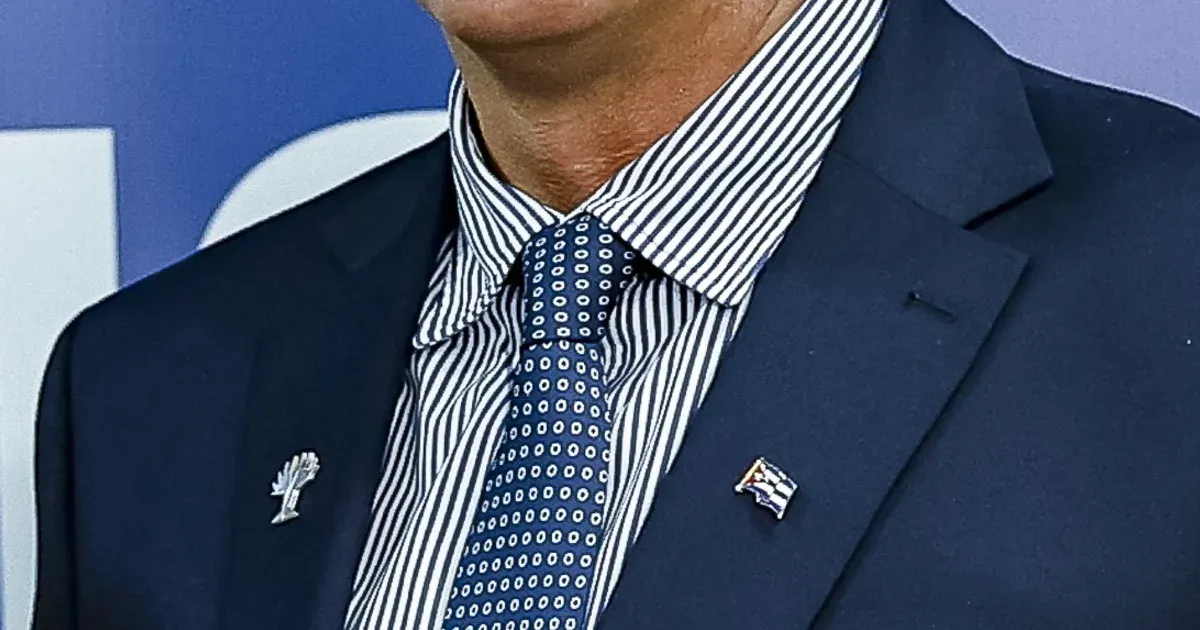
President Miguel Díaz-Canel confirmed during an exclusive exchange with NBC News that he has no intention of resigning his position despite a worsening economic situation on the island. Sitting in a high-backed chair in the Palacio de la Revolución, the leader addressed mounting speculation regarding his political future. Pressure has intensified on the administration as citizens contend with the most severe energy shortages in a generation. The NBC interview aired on April 10, 2026, as Cuba faced widening power and currency pressure. He dismissed the notion that his government has lost control of the domestic narrative or the ability to govern effectively.
Havana remains the center of a geopolitical tug-of-war that has persisted since the 1959 revolution. Díaz-Canel, who took the helm in 2018, represents the first generation of leadership born after the revolutionary struggle led by Fidel Castro. His tenure has been marked by a series of systemic shocks, including the global pandemic and a significant tightening of trade restrictions. International observers have noted that the current level of popular discontent mirrors the frustrations that led to the widespread protests on July 11, 2021.
Havana Faces Growing Internal Pressure
Domestic critics point to a failing infrastructure that can no longer support the basic needs of the 11 million residents living in Cuba. Rolling blackouts have become a daily occurrence, often lasting upwards of twelve hours in provinces outside the capital. These electrical failures directly impact food preservation and water distribution, creating a cycle of hardship that fuels resentment. Díaz-Canel told Kristen Welker that these issues are the direct result of external interference rather than internal mismanagement.
Data from the previous fiscal year indicate that the Cuban peso has lost serious value against the dollar on the informal market. This currency devaluation makes it nearly impossible for state-run enterprises to secure the foreign exchange needed for essential imports. Food prices have climbed to levels that exceed the monthly salary of many government employees. Small business owners, once the hope of a limited liberalization effort, now find themselves strangled by new tax regulations and supply-chain bottlenecks.
“I have a commitment to the people who elected me and to the Communist Party of Cuba to see through the current reforms, and I will not abandon my post at this hour of challenge,” President Miguel Díaz-Canel told NBC News.
Success in the Cuban political system has historically depended on maintaining a unified front within the party ranks. Díaz-Canel continues to enjoy the public backing of the military elite and the remnants of the old guard. While some younger officials have whispered about the need for faster modernization, the central committee stays firm in its adherence to the planned economy model. The president argued that any sudden change in leadership would only invite instability and foreign intervention.
Díaz-Canel Defends Communist Party Record
Records from the Communist Party of Cuba suggest that the leadership is currently focused on a three-year stabilization plan. This strategy involves courting investment from non-traditional allies while maintaining strict social controls. Díaz-Canel insisted during the interview that the social safety net, though strained, continues to provide healthcare and education to every citizen. He cited these achievements as evidence of the system's underlying durability. Efforts to modernize the medical sector have stalled because of a lack of raw materials for pharmaceuticals. Havana continues to struggle with a mass exodus of its youngest and most educated citizens. Migration figures reached a historic peak in late 2025 as thousands sought a way out through various transit points in Central America. This brain drain leaves the state with an aging population and a shrinking tax base. Díaz-Canel acknowledged the migration trend but blamed the United States for encouraging illegal departures through specific policy choices.
Successive Crisis Management in Post-Castro Era
Transitioning away from the direct rule of the Castro family has proved more difficult than many analysts originally projected. Raúl Castro remains an influential figure in the background, providing a measure of legitimacy to Díaz-Canel's decisions. Critics argue that this dual-track authority prevents the current president from enacting the bold reforms necessary to save the economy. Every major policy shift must be weighed against the ideological purity demanded by the revolutionary founders.
Energy production in the country relies heavily on aging thermoelectric plants that date back to the Cold War. Frequent breakdowns at these facilities require expensive parts that are difficult to source under current trade rules. Maintenance cycles have been deferred repeatedly because of a lack of hard currency. Díaz-Canel stated that new agreements with foreign energy firms would eventually stabilize the grid, though he provided no specific timeline for these improvements. He refused to concede that the socialist model had failed.
Foreign journalists in Havana have documented a tightening of security in public squares and near government buildings. Security forces increased their presence following reports of small-scale demonstrations in the eastern city of Santiago. These localized protests focused on the lack of bread and the duration of power cuts. Díaz-Canel maintained that the majority of the population supports the government and that dissent is being amplified by digital platforms managed from abroad.
Economic Sanctions and U.S. Diplomatic Stasis
Washington has shown little interest in returning to the era of rapprochement seen during the Obama administration. The United States keeps Cuba on the list of state sponsors of terrorism, a designation that severely limits the island's access to the international banking system. Díaz-Canel emphasized that the removal of this designation is a requirement for any meaningful dialogue between the two nations. The White House, however, has maintained that any shift in policy is contingent on human rights improvements. Remittances from the Cuban diaspora in Miami and Madrid serve as a lifeline for millions of families. These funds have historically provided a buffer against the failures of the state-run distribution system. Recent changes in US banking regulations have made it more difficult to send these payments through official channels. Díaz-Canel argued that targeting these financial flows is a form of collective punishment against the Cuban people. Survival is the primary objective of the current administration.
Official reports from the National Office of Statistics and Information show a 2 percent contraction in the gross domestic product over the last twelve months. Tourism, once the engine of the economy, has failed to return to pre-2020 levels. High-end hotels in Havana sit largely empty while the surrounding neighborhoods suffer from crumbling infrastructure and leaking sewage lines. Díaz-Canel concluded the interview by stating that the revolution has survived worse periods and will endure this one as well.
Cuba's Political Stalemate
Does the refusal to step down signal strength or a terminal lack of alternatives for the Cuban Communist Party? Miguel Díaz-Canel is less a leader and more a placeholder for a system that has run out of both fuel and ideas. By clinging to power through the lens of NBC News, he is performing for an international audience while his domestic credibility evaporates with every blackout. The revolutionary logic that once sustained the Castro brothers cannot be inherited through bureaucracy. He is trapped between the demands of a hungry population and the constraints of an elite that fears any meaningful opening will lead to their immediate irrelevance.
The administration relies on the hope that global geopolitical shifts will provide a new benefactor. Without the large subsidies once provided by the Soviet Union or the oil once shipped from Venezuela, Cuba is an island without a motor. Díaz-Canel is betting that the United States will eventually tire of the stalemate, yet his refusal to offer even symbolic concessions makes that outcome impossible. He remains the face of a managed decline. Stagnation is the only remaining export of Havana.