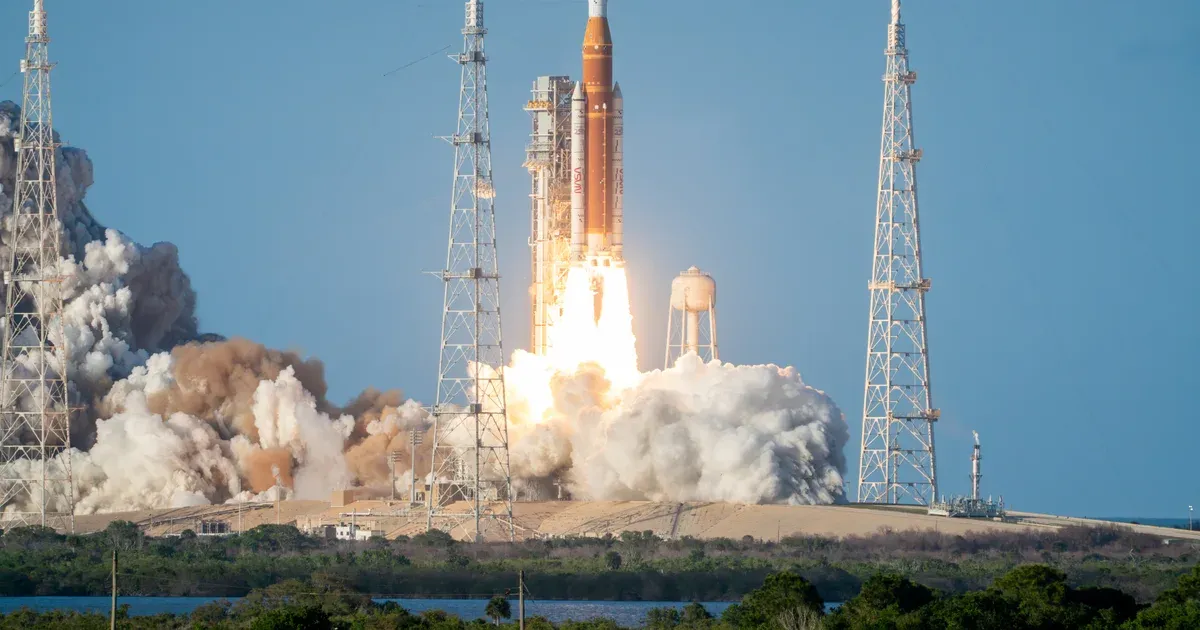
NASA officials confirmed that Artemis II completed final reentry checks ahead of Orion spacecraft splashdown in the Pacific. Engineers monitored heat shield, communications and recovery systems as the crew moved toward the mission closeout phase. The update on April 9, 2026, marked one of the final technical hurdles before the lunar test flight could be judged complete. Reentry is one of the most unforgiving stages of any crewed mission. The spacecraft must survive extreme heat, maintain the correct angle and communicate enough data for recovery teams to track its descent. A small error can have outsized consequences.
Artemis II Reentry Checks
The heat shield will receive particular attention because Artemis missions are designed to support future lunar operations. Engineers need evidence that Orion can protect astronauts after deep-space trajectories, as well as low-Earth orbit returns.
Communications checks also matter. Recovery teams need reliable positioning and status information as the capsule approaches splashdown. Delays or gaps can complicate the first minutes after landing.
Orion Recovery Planning
The Pacific recovery operation requires coordination between NASA, the Navy and medical teams. Crews must secure the capsule, assess the astronauts and preserve data from the spacecraft. The operation is rehearsed, but each real mission provides new information.
Artemis II is a test flight, so success is measured through both safe return and engineering detail. NASA will study loads, temperatures, crew experience and system performance before approving later missions.
Weather windows, recovery-vessel position and medical readiness will also shape the final risk picture, because reentry success is only complete once the crew and capsule are secured.
NASA's Lunar Test
The mission carries public importance because it is a bridge between uncrewed tests and future lunar landing attempts. A clean reentry would strengthen confidence in the program's schedule and hardware.
NASA still has to avoid treating splashdown as the only milestone. Post-flight analysis can reveal issues that were not obvious during the mission. The real verdict will come after engineers compare performance with expectations and decide what must change before the next crew flies.
Reentry data will influence more than the immediate mission review. Artemis is meant to support a sequence of increasingly complex lunar operations, and each flight has to reduce uncertainty for the next one. If Orion performs as expected, planners can focus attention on mission architecture, surface systems and launch cadence. If it does not, the program may need additional engineering time.
The crew experience is also part of the test. NASA will evaluate communications, seating, displays, life-support performance and how astronauts handled the final mission phase. Human factors can reveal issues that sensors alone do not capture.
Public confidence matters because Artemis carries a large budget and a long political timeline. A successful splashdown would give supporters a clear milestone to defend the program. A problem during return would intensify questions about schedule pressure and system readiness.
That is why officials are careful with language before recovery is complete. Reentry checks are a positive sign, but NASA will not have the full answer until the capsule is secured, the crew is evaluated and engineers begin comparing flight data with the mission plan. The mission's importance is larger than one capsule return because Artemis II is meant to prove that NASA can safely move astronauts through a lunar-distance profile. Reentry is where many earlier design assumptions meet the physical reality of heat, speed and recovery timing. Engineers will compare sensor readings with models, inspect the heat shield and review how the crew experienced the final phase. Even a successful splashdown can produce changes before the next mission. That is normal for a test flight, not a sign of failure. The key is whether any findings are manageable within the program's schedule and safety culture. NASA will need both technical detail and public clarity after recovery. Artemis II's return will be read through engineering evidence rather than celebration alone. A safe splashdown is essential, but NASA still has to inspect hardware, review crew data and decide whether any findings affect later lunar missions. That post-flight discipline is part of mission success. Artemis II also sits inside a larger political promise about returning humans to the Moon in a sustained way. A safe return would not solve every schedule or budget question, but it would give NASA a concrete achievement to build on. A difficult return would force a slower and more expensive reassessment. Recovery operations will provide the final public image of the mission, but engineers will care just as much about post-flight inspection. Heat-shield condition, crew reports and system logs will decide whether the mission is treated as clean validation or as a success with required modifications. The agency also has to communicate uncertainty honestly. A test flight can be successful and still produce fixes, and that distinction will be important when NASA explains what Artemis II means for the next mission. That review will define the mission's real technical legacy by connecting the public milestone with the engineering evidence.