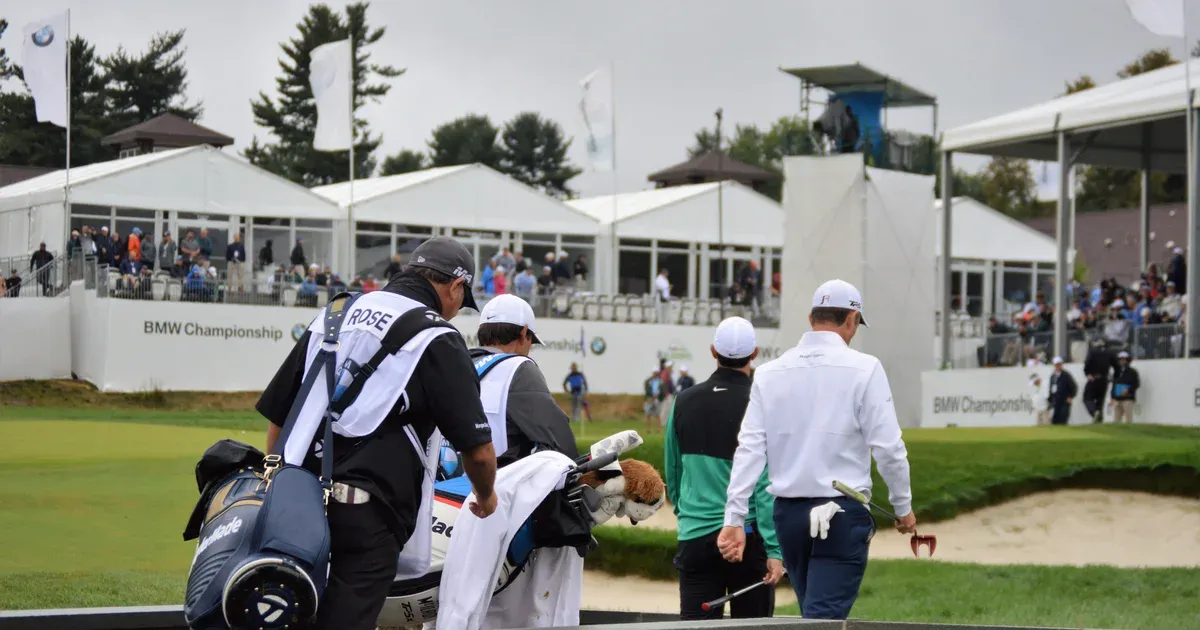
Rory McIlroy entered Masters week with momentum, but the early lead did not quiet the scrutiny around his long wait for another major title. At Augusta National, every sharp iron shot and every missed opportunity feeds a larger story about whether one of golf's most gifted players can finally finish the job. That burden is familiar at Augusta. The pressure was visible on April 10, 2026, as his strong start was measured against years of near misses.
Rory McIlroy has lived with this kind of attention before. His game still gives him enough length and control to lead elite fields, yet the Masters asks for patience as much as power. The course punishes small emotional mistakes, especially from players whose history there is already carrying extra weight.
Early Augusta Control
McIlroy's opening rhythm gave him a chance to dictate the tournament rather than chase it. He found scoring chances on the par fives and avoided the kind of early damage that can make Augusta feel narrow. That steadiness matters because criticism around him often grows loudest when a round begins to wobble.
His comments after the round suggested a player trying to stay inside the immediate task. He stressed patience, distance control and the need to accept difficult stretches rather than force a heroic recovery. That answer sounded familiar, but the execution behind it was stronger than in several previous Masters starts.
"You have to stay patient here because the course can change quickly," McIlroy said after his round.
Weather and pin positions will add another variable, because Augusta can turn a confident Thursday rhythm into a defensive Friday calculation very quickly.
Rival Questions Add Noise
The tournament backdrop also included questions around Bryson DeChambeau and a reported issue involving a 3D-printed club component. Equipment debates can become distractions at a major because they touch both performance and fairness. For McIlroy, the practical impact was limited, but the controversy added another thread to a week already heavy with narrative.
Golf observers are watching the leaderboard and whether McIlroy can keep his decision-making clean when the weekend pressure rises. The first two rounds can build belief, but Augusta usually decides champions through a sequence of uncomfortable choices on the back nine.
The early lead gave McIlroy the kind of platform he has too often spent majors trying to recover. If his driving remains controlled and his wedge play stays precise, the criticism will have less room to breathe. If the old impatience returns, Augusta will expose it quickly.
The psychological part of McIlroy's week is as important as the swing mechanics. Augusta rewards players who accept conservative targets when the course asks for them, then attack when the correct angle appears. McIlroy has sometimes looked as though he is playing both the field and his own history at once. The early round was encouraging because he did not chase every pin or force every recovery into a statement. He played like someone trying to build four rounds instead of win the tournament in one burst.
The criticism around him will not disappear until the final putt of a major victory, and that is the burden he carries into every Masters weekend. Still, the opening position changes the tone. Instead of needing a comeback, he can manage the lead group, watch how the course firms up and let rivals take the risk first. That does not guarantee anything at Augusta, but it gives McIlroy the kind of tournament shape that suits his best version.
His putting will decide how much of that platform survives. Augusta's greens can turn a well-managed round into a defensive exercise if speed control slips, and McIlroy has learned that hard lesson more than once. The useful sign is that he created birdie chances without relying on reckless recovery shots or emotional surges. If the putter stays neutral, his ball-striking gives him enough room to absorb a mistake and still remain in the tournament. That is the difference between leading as a headline and leading as a sustainable position. He also has to avoid letting outside arguments change the pace of his round. The Masters often becomes dangerous when a player starts answering reputation questions with aggressive decisions. McIlroy's best route is less dramatic: fairways, controlled approaches, patient putting and a refusal to let one bad bounce become a second mistake.