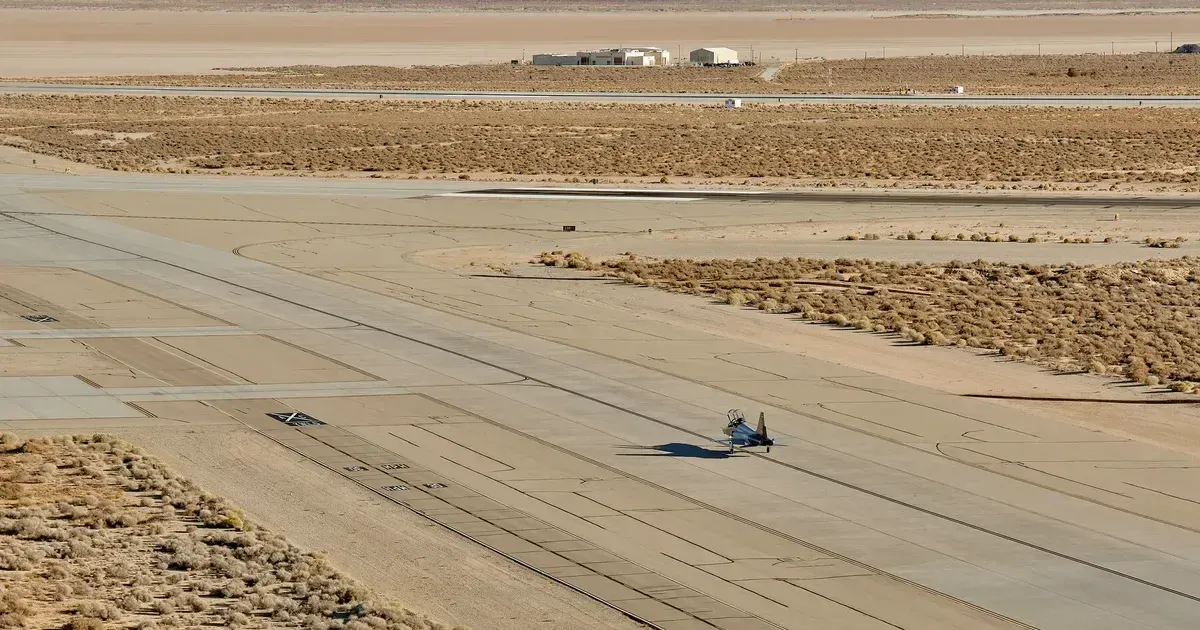
A U.S. Air Force B-52 Stratofortress crashed shortly after takeoff at Edwards Air Force Base in California, turning a routine military flight into a major safety investigation. The crash happened on June 15, 2026, at the Mojave Desert base. Base officials said emergency crews responded immediately, but the cause of the crash and the condition of anyone aboard were not immediately released.
The incident happened on the Edwards airfield at about 11:20 a.m. local time, according to the base. Video and local reports showed black smoke rising from the crash area while responders worked to secure the scene.
Emergency Response Centers on the Airfield
Edwards Air Force Base sits about 100 miles north of Los Angeles and is one of the most important flight-test sites in the U.S. military. Its remote desert location allows aircraft testing and emergency response to unfold away from dense civilian neighborhoods. Officials have not disclosed whether the bomber was on a test, training or operational support mission. They also have not confirmed the unit, crew count, injuries or any possible damage beyond the base airfield.
That uncertainty is important. Early aircraft-crash reports often move faster than the investigation, and officials typically avoid naming a cause until the wreckage, weather, maintenance history and flight data can be reviewed. Local reporting showed a large smoke plume, but that visual evidence does not answer the central safety questions. Investigators will need to determine whether the aircraft lost power, suffered a mechanical failure, encountered a flight-control problem or faced another issue during the climb.
The response also requires careful site control because large military aircraft can carry hazardous materials, sensitive equipment and fuel loads that complicate firefighting and recovery work.
The B-52 Remains a Strategic Workhorse
The B-52 has been in service since the 1950s and remains a major long-range bomber in the U.S. fleet. The aircraft can carry conventional and nuclear weapons, and the Air Force has continued modernization work intended to keep it flying for decades.
Edwards is closely tied to that modernization mission because it hosts flight testing, evaluation units and specialized safety infrastructure. Any accident involving a B-52 therefore draws attention not only because of the aircraft's size, but because of its role in the broader bomber force.
The bomber's age makes modernization essential, but it also means every accident can raise questions about maintenance, upgrades and the stress of keeping legacy airframes in service. Those questions should wait for evidence, yet they explain why the crash drew national attention quickly. Edwards has deep aviation history, including high-risk test work that helped define U.S. military flight. That history gives the base the tools to respond, but it does not make a crash routine.
The Air Force will likely convene a safety investigation to examine mechanical, human and environmental factors. A separate accident investigation can follow if officials need a public accountability record. Investigators will also review training schedules, maintenance logs and any recent modifications to the aircraft. Because Edwards handles test and evaluation work, even ordinary flight activity can involve equipment or procedures that require specialized review after an incident.
What Investigators Need to Establish
The first questions are basic: whether the crew survived, whether the aircraft carried unusual test equipment, and what happened during the short window between takeoff and impact. Those answers will determine whether the crash points to a localized incident or a wider fleet concern. For now, the safest conclusion is limited. A B-52 crashed after takeoff at Edwards, emergency crews responded, and the military has not yet released the cause or casualty information.
That makes caution necessary. The aircraft's strategic role is significant, but the immediate priority remains the people involved and the evidence investigators can preserve at the crash site. Until the Air Force releases more information, any claims about casualties, mission purpose or mechanical cause should be treated as unconfirmed.
The next official update will likely clarify whether the crew ejected, whether rescue crews reached the aircraft before the fire spread, and whether the base paused related flight operations. Those details will shape the difference between a serious but contained accident and a wider operational concern.