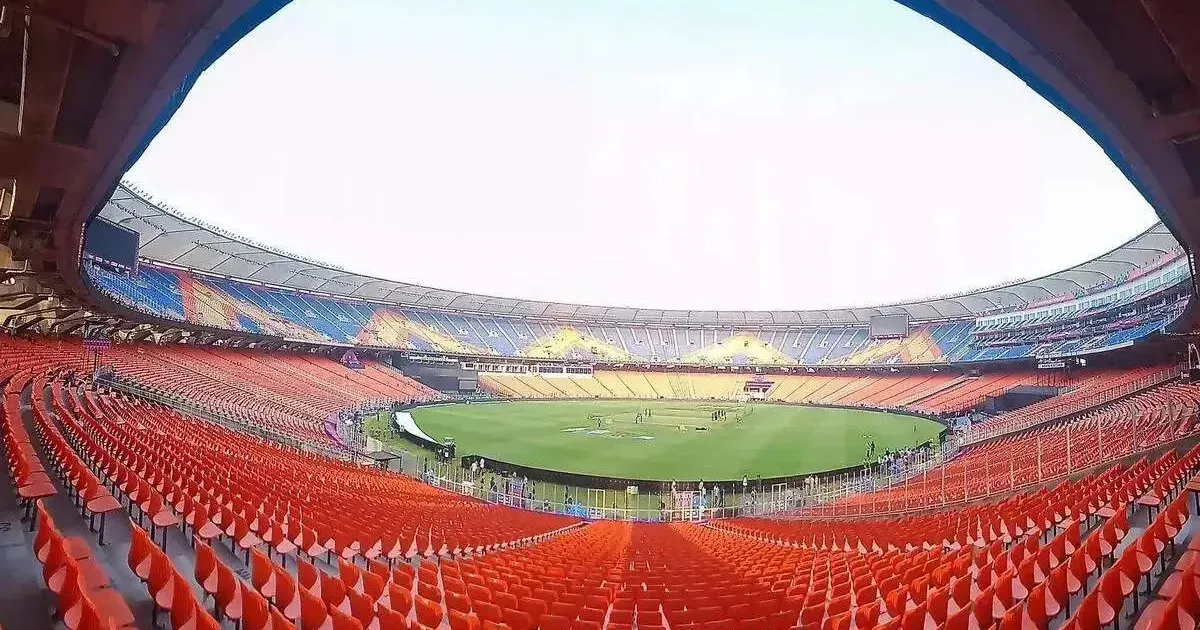
The IPL venue change is a logistics decision with sporting and commercial consequences. Ahmedabad gives the board a larger stadium and a familiar high-profile final stage. Bengaluru loses the showcase after already building expectations around hosting duties. The board still has to settle ticketing, hospitality and broadcast details. On May 6, 2026, the BCCI move made Ahmedabad the center of the final-week planning. The Board of Control for Cricket in India has moved the IPL 2026 final from Bengaluru to Ahmedabad, sending the May 31 title match to Narendra Modi Stadium instead of M. Chinnaswamy Stadium. The decision matters because Royal Challengers Bengaluru, the 2025 champions, had been widely expected to host under the league's usual convention. BCCI officials pointed to capacity, logistics and the broader playoff schedule while explaining the change, giving the decision both commercial and competitive consequences.
Ahmedabad gives the league a far larger venue for its biggest match, but the move also changes the emotional frame of the final. Bengaluru supporters expected the defending champions' city to receive the season's closing fixture and its national spotlight. Instead, the final will be staged in Gujarat on a larger stage, while the playoff week is distributed across Mullanpur and Dharamsala before the title match.
BCCI Redirects Final to Ahmedabad
The most important wording is convention, not entitlement. The IPL has often rewarded the defending champion's home city with the final, but the BCCI has room to adjust when operational priorities change. That distinction keeps the story factual: Bengaluru lost an expected hosting role, while Ahmedabad gained the final because the board judged the larger venue and logistics more suitable for 2026.
NDTV reported that Bengaluru had been in line to stage the final before the change. The board's explanation emphasized the scale of Narendra Modi Stadium and the need to manage a high-demand event with fewer constraints. That does not remove the disappointment for RCB fans, but it explains why the governing body treated the final as a national event rather than a direct reward for last season's winner.
The choice also reflects how the IPL has grown. Finals now carry television, hospitality, security and crowd-management demands that can outweigh sentiment. Ahmedabad's capacity gives the BCCI a cleaner commercial and operational argument. Bengaluru's case is built more on tradition, local emotion and the symbolic value of letting the reigning champions close the season at home. That is why the venue decision has produced more reaction than a routine schedule update.
Mullanpur and Dharamsala Get Playoff Matches
The rest of the playoff schedule spreads the tournament across North India. Mullanpur and Dharamsala are set to host the Qualifier 1, Eliminator and Qualifier 2 fixtures on May 26, 27 and 29 before Ahmedabad stages the final two days later. That sequence will force teams to manage travel, surface changes and recovery during the most important week of the season.
Mullanpur gives the league a modern venue in Punjab, while Dharamsala offers a very different setting with altitude, cooler conditions and a pitch profile that can reward seam movement. For teams still fighting to qualify, the venue map is now part of the competitive calculation. A squad built for one home surface may have to win across three very different environments.
The distribution also helps the BCCI avoid putting every marquee match in one city. That is a practical political and commercial decision, especially in a league with regional fan bases that expect access to major fixtures. The final remains the prize event, but the road to it will now pass through venues that can influence selection and tactics before a ball is bowled in Ahmedabad.
For the top four, the announcement turns logistics into preparation. Teams may have to plan for different boundaries, travel recovery, practice windows and bowling combinations within the same week, making the announcement a competitive planning issue as much as an administrative one. A side comfortable in Bengaluru will not automatically carry that comfort to Dharamsala or Mullanpur, and the final in Ahmedabad adds another surface to solve. The venue map therefore becomes part of the cricket for teams during playoff week, not just an event plan.
The Venue Move Trades Bengaluru Tradition for Ahmedabad Scale
For Royal Challengers Bengaluru, the cost is not only symbolic. If RCB reach the final, they will do so without the advantage of closing the tournament in front of a home crowd at Chinnaswamy. The team's recent identity has been tied closely to that ground, and removing the final from Bengaluru changes the atmosphere around what could have been a championship homecoming.
The BCCI's counterargument is scale. A final in Ahmedabad can hold more fans, serve more hospitality demand and project the league's biggest night from a stadium designed for mega-events. That is a defensible administrative position, but it still leaves a sporting question: how much should tradition matter when the league can earn more and stage bigger by moving the match?
The answer may shape future seasons. If Ahmedabad hosts smoothly and the event delivers the expected commercial return, the defending-champion convention could become less influential. If the move draws sustained criticism from Bengaluru supporters, the board may face pressure to clarify how final venues are chosen. Either way, IPL 2026 has turned a scheduling decision into a larger argument over whether the final is a home reward or a neutral-site showpiece. That argument will not end with the venue announcement, because every playoff crowd, travel complaint and RCB result will now be read against the decision to move the biggest night away from Bengaluru.