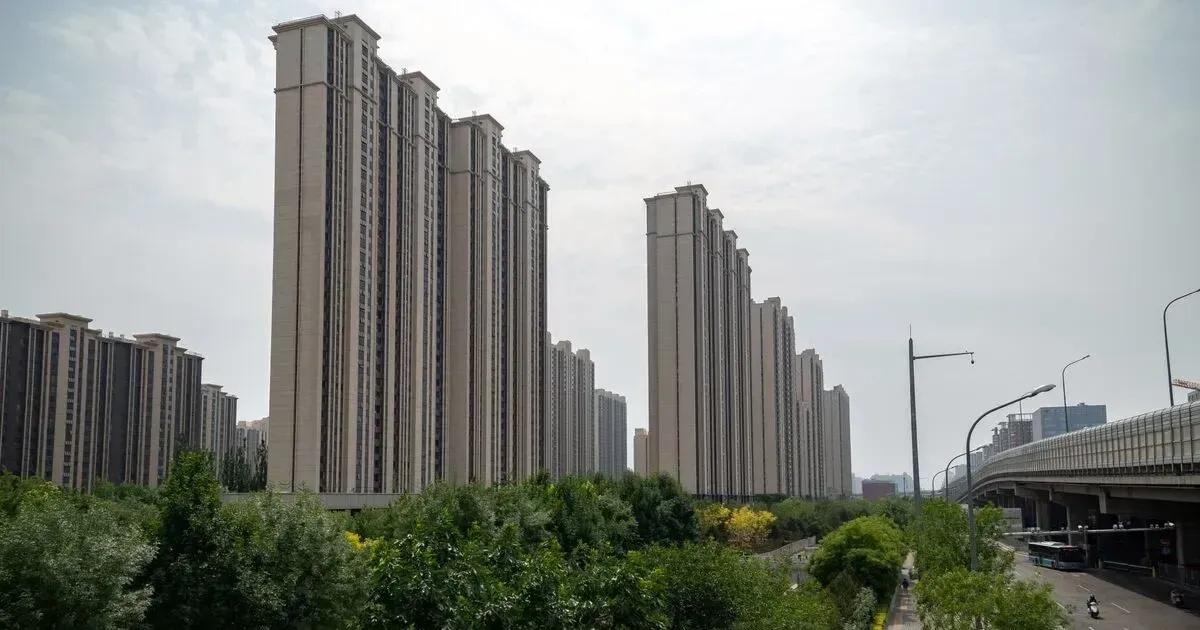
Beijing’s trade penalties tied to Panama ports show how commercial disputes become strategic leverage. The move also warns multinationals that China risk can appear outside mainland operations. Beijing authorities on April 21, 2026, accelerated an overhaul of national security laws that empower the state to seize foreign assets and restrict executive travel. Legislative measures link corporate conduct directly to international conflicts in the Middle East and Central America. China faces a structural crisis that mirrors the collapse of the Japanese asset bubble three decades ago. Property values in several tier-one cities have plummeted by 30% over the last fiscal year.
Property Slump Triggers Defensive Economic Policy
Bloomberg Economics reports that a pair of influential papers now quantifies the depth of this stagnation. Economists argue that the property slump in the mainland has surpassed the initial velocity of the Japanese decline in 1990. $11 trillion in household wealth has evaporated since the market peaked, leading to a large deleveraging cycle. Households have prioritized debt repayment over consumption, a behavior typical of a balance sheet recession. Local governments, which rely on land sales for revenue, have seen their budgets contract by 25% since the beginning of the fiscal year. This fiscal vacuum has forced the central government to take a more interventionist role in trade and domestic industry.
Japan encountered a similar demographic and fiscal trap when its real estate sector imploded. Debt levels across Chinese provinces now exceed sustainable thresholds, creating a drag on central government stimulus efforts. Market analysts observe that the current downturn is more severe due to the speed of price corrections in the commercial sector. Office vacancy rates in Shanghai and Shenzhen reached 20% in the first quarter. Industrial output has slowed as developers struggle to complete existing projects. Banks have increased their provisions for bad loans, anticipating a long period of low growth and deflationary pressure.
Beijing now views trade law as a weapon of national defense rather than a tool for commercial growth.
Beijing Ties Trade Restrictions to Panama Port Conflict
FT Global Economy documents indicate that officials have integrated the Panama Canal port dispute into their broader regulatory framework. Disputes over port access and operations at the western entrance of the canal have led to retaliatory threats against shipping conglomerates. Beijing has warned that companies cooperating with foreign sanctions related to the Panama dispute will face immediate blacklisting. Shipping lines that divert cargo to avoid Chinese-managed terminals could see their mainland operations suspended. State regulators have identified these maritime bottlenecks as critical nodes in their global trade defense strategy. Panama is a test for how the mainland will handle future maritime blockades or shipping restrictions. The ministry's scrutiny of European firms' Iranian trade policies coincides with reports that Iran tightens grip on Hormuz despite Western strikes.
Sanctions stemming from the conflict in Iran have prompted Beijing to build a legal fortress. International energy firms and financial institutions are now caught between Western compliance standards and the mainland's counter-sanction laws. New regulations allow the state to freeze the assets of any entity that enforces foreign sanctions on Iranian oil exports. This shift ensures that the mainland maintains access to energy supplies regardless of global diplomatic pressure. Legally, the burden of proof has shifted to the corporations, which must prove their actions do not harm national interests. The Ministry of Commerce has already initiated three investigations into European insurers over their Iranian trade policies.
“Beijing threatens companies with harsh punishments, including exit bans, to protect against foreign sanctions,” FT Global Economy reported.
Exit Bans and Asset Seizures Target Multinational Firms
Companies operating within the special economic zones face immediate scrutiny under these new rules. Foreign executives have already been served with exit bans that prevent them from leaving the mainland during active investigations. Legal experts note that these bans are often issued without a formal court order, relying instead on administrative directives. This tactic aims to ensure that multinational corporations remain compliant with domestic trade directives during geopolitical crises. Asset seizures are another tool being used to discourage divestment from the local market. Firms attempting to withdraw capital from the mainland must now navigate a complex approval process that can take up to 24 months.
Financial institutions have warned that these measures could lead to a permanent reduction in foreign direct investment. Investment banks have lowered their growth forecasts for the region, citing the risk of regulatory capture and asset freezing. Operations for several U.S.-based consulting firms were disrupted this week by sudden compliance audits. Auditors arrived without notice to review all digital communications related to the Panama port dispute and Iranian shipping routes. These audits frequently lead to the seizure of local servers and the suspension of business licenses. Beijing maintains that these actions are necessary to protect national economic security.
International trade attorneys have advised their clients to revise their emergency protocols for staff in the region.
Comparing Chinese Stagnation to Japan's Lost Decades
Japan provides a grim template for what analysts call Japanification. The total value of residential property in Tokyo fell for 15 consecutive years after the 1991 bubble burst. China's current trajectory suggests a similar period of prolonged stagnation as the population ages and the workforce shrinks. Bloomberg Economics indicates that the demographic profile of the mainland is now less favorable than Japan's was at the start of its crisis. Reversing this trend requires a level of consumption growth that current government policies do not support. Instead, the state has doubled down on industrial subsidies, which have led to overcapacity in sectors like electric vehicles and solar panels.
Market figures show that these subsidies have created friction with trading partners in Europe and North America. Tariffs on Chinese exports have reached decade-high levels in response to what Western governments call unfair competition. Beijing has used its new trade rules to retaliate, focusing on luxury goods and agricultural products. The cycle of trade barriers further complicates the economic recovery of the mainland. Domestic consumers, sensing the rising tension, have increased their personal savings rates to record levels. The lack of a social safety net encourages this hoarding of cash, which further depresses domestic demand. Every policy lever pulled by the central bank has so far failed to spark a sustainable recovery in prices.
Investors are now looking for signs of a structural shift in how the state manages the property crisis. Liquidation orders for major developers have become more common, suggesting that the era of state-backed bailouts is ending. Courts in Hong Kong and the mainland are currently processing over 200 insolvency cases involving real estate firms. The resolution of these cases will determine how much debt is eventually written off and who bears the final cost. Most analysts expect the process to take years, mirroring the slow debt workouts seen in Japan during the 1990s. The prolonged uncertainty acts as a ceiling on stock market performance and investor sentiment.
Panama Dispute Tests China Leverage
Beijing has mistaken isolation for insulation. By doubling down on aggressive trade penalties and exit bans, the state is effectively signaling that it has no plan to fix the fundamental rot in its property market. A cornered superpower is a dangerous economic actor, and the linkage of the Panama port dispute to domestic trade law shows a regime willing to burn global bridges to maintain a facade of control. Foreign executives are no longer just business leaders; they are now potential political hostages in a cold war of sanctions and counter-sanctions. Any multinational corporation still operating in the mainland without a thorough exit strategy is willfully ignoring the clear trajectory of state-sponsored asset seizures.
The comparison to Japan is almost too kind. Japan was still a high-trust society with a stable, if stagnant, political environment throughout its lost decades. Beijing, by contrast, is choosing to externalize its internal failures by picking fights over Iranian oil and Panamanian shipping lanes. The strategic pivot suggests that the leadership has accepted domestic stagnation as a permanent reality and is now prioritizing the survival of the state over the prosperity of its citizens. Wealthy individuals are already moving their capital into gold and offshore havens, a trend that even the most restrictive capital controls have failed to stop. Investors should prepare for a decade of volatile stagnation and frequent regulatory shocks. Decouple or be consumed.