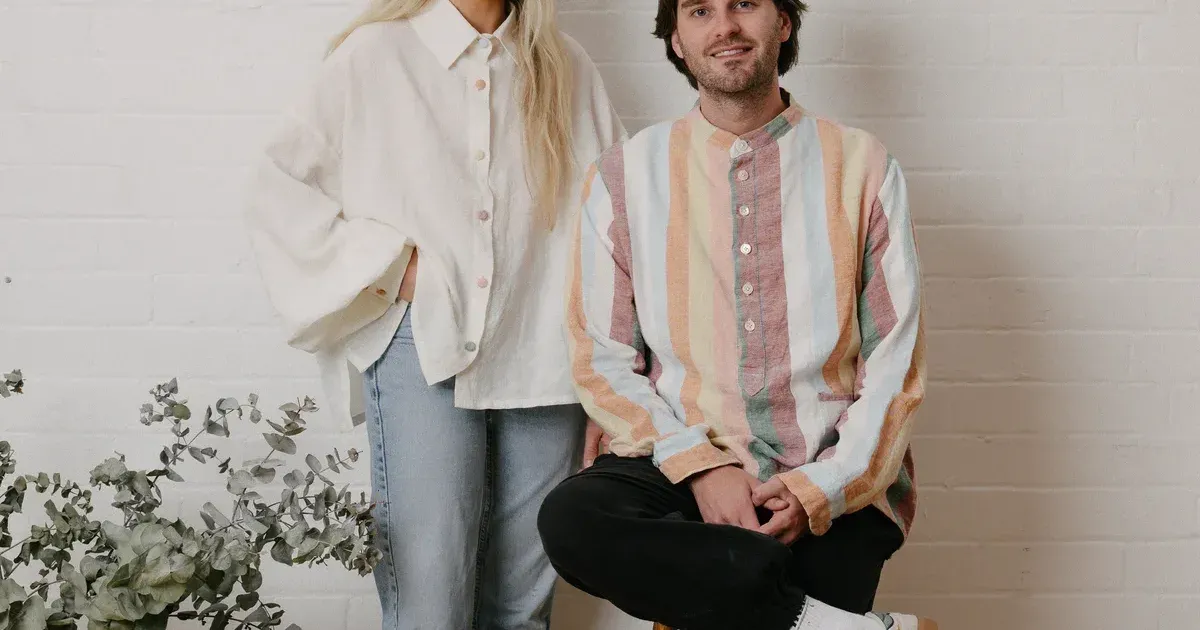
Belfast entrepreneurs reclaimed the city’s historical title of Linenopolis by launching a series of luxury textile initiatives within the city’s creative core. Linen fabric, which once dominated local exports and provided the backbone of the regional economy, now forms the center of a modern fashion identity anchored in the Cathedral Quarter. The cobbled streets reveal a sharp shift in retail priorities as high-end boutiques replace traditional warehouses. The April 3, 2026, launches reintroduced Belfast's textile heritage as a modern fashion asset.
Kindred of Ireland’s boutique is a primary example of this commercial evolution, situated near modern coffee shops and digital-first businesses. Artisans here produce oversized butter yellow blouses and complex jackets made from Donegal mulberry tweed. The garments often feature delicate accents, such as pink linen bows, blending traditional textures with contemporary silhouettes. Sales data from local retailers indicates a sharp rise in demand for these heritage materials among younger, affluent demographics.
Luxury consumers are increasingly rejecting synthetic alternatives in favor of natural fibers with verifiable origins. Historical records show that Northern Ireland once relied on this single industry for the livelihoods of nearly half its people. Revival efforts now focus on small-scale, high-value production rather than the mass manufacturing of the past century. Designers are finding that the tactile nature of flax-based cloth connects with a global audience seeking authenticity in their wardrobes.
Belfast Cathedral Quarter Retail and Modern Design
Storefronts in the Cathedral Quarter reflect a broader urban regeneration project that prioritizes cultural heritage over generic commercialization. Retailers reported a surge in foot traffic on April 3, 2026, as international tourists sought out locally made sustainable goods. Kindred of Ireland has successfully positioned itself at the intersection of history and modern aesthetics. Its collections use linen sourced from regional mills that survived the industry’s long period of stagnation.
Designers within the city emphasize the versatility of the fiber, showcasing it in everything from minimalist homeware to couture fashion. Royalty and celebrity stylists have reportedly commissioned pieces from these local ateliers, further elevating the profile of the Belfast craft scene. The visibility is an important factor in the sustained growth of the local garment sector. Modern technology allows these small businesses to reach international markets through digital platforms while maintaining physical roots in Northern Ireland. Beyond Belfast, global houses like Chanel and Dior are also launching luxury textile initiatives to redefine modern heritage fashion.
Industrial Heritage of the Linenopolis Era
Industrial history defines the very architecture of the city, with enormous red-brick mills still standing as monuments to the nineteenth-century boom. During the peak of production, the industry employed 40% of the working population in the region. Belfast became the global epicenter for linen, earning the nickname Linenopolis due to its unmatched output and technical expertise. The damp, temperate climate provided the perfect conditions for processing flax into fine yarn.
Economic shifts following the World Wars led to a steep decline as cheaper synthetic fabrics like polyester gained market dominance. Most of the major mills closed their doors by the mid-twentieth century, leaving a vacuum in the local labor market. Decades of political conflict further complicated the path to industrial recovery. Current efforts to revive the craft do not seek to replicate the scale of the 1880s but rather to capitalize on the prestige of the Belfast brand name. History persists in the skills passed down through generations of weavers who stayed in the region.
Flax cultivation requires far less water and fewer pesticides compared to cotton, making it a favorite for environmentally conscious brands. Global fashion houses are looking toward Belfast for expertise in high-quality weaving and finishing. The carbon footprint of a locally produced linen shirt is substantially lower than that of mass-produced alternatives shipped from distant manufacturing hubs. Supply chain transparency has become a major selling point for the new wave of Belfast designers.
Local farmers have begun to reintroduce flax crops to the surrounding countryside to support this domestic demand. Small-batch spinning and weaving allow for a level of quality control that was impossible during the era of industrial mass production. Each roll of fabric carries a unique texture and weight, dictated by the specific growing conditions of the season. Boutique owners state that customers value these irregularities as a sign of genuine craftsmanship. The focus on quality over quantity has protected the niche market from broader economic volatility.
Fifty years after the Troubles, the city is using its industrial past to weave a new social fabric. Linen acts as a common denominator, representing a shared history that predates and goes beyond sectarian divisions. Community projects in areas like the Conway Mill use textile education to foster skill development and social cohesion. Heritage is both a living part of the city’s daily commerce and self-image and more than a museum piece. The reclamation of the Linenopolis identity is a deliberate move to project a sophisticated, creative image to the world.
"Linen is returning as a marker of identity," noted a spokesperson for Kindred of Ireland.
Belfast Turns Linen Heritage Into Luxury Demand
Resurrecting an industry dead for a century suggests a desperate search for meaning in a city still haunted by its fractured history. While the aesthetic appeal of a butter yellow linen blouse is undeniable, the economic reality of boutique manufacturing is far from the powerhouse that once sustained 40% of the population. This amounts to a commodification of nostalgia designed for a narrow, affluent elite rather than an industrial revival. High-end boutiques in the Cathedral Quarter are charming, yet they cannot replace the large middle-class employment once provided by the Great Mills of the Victorian era. The risk here is the transformation of Belfast into a curated heritage park where history is sold back to the highest bidder.