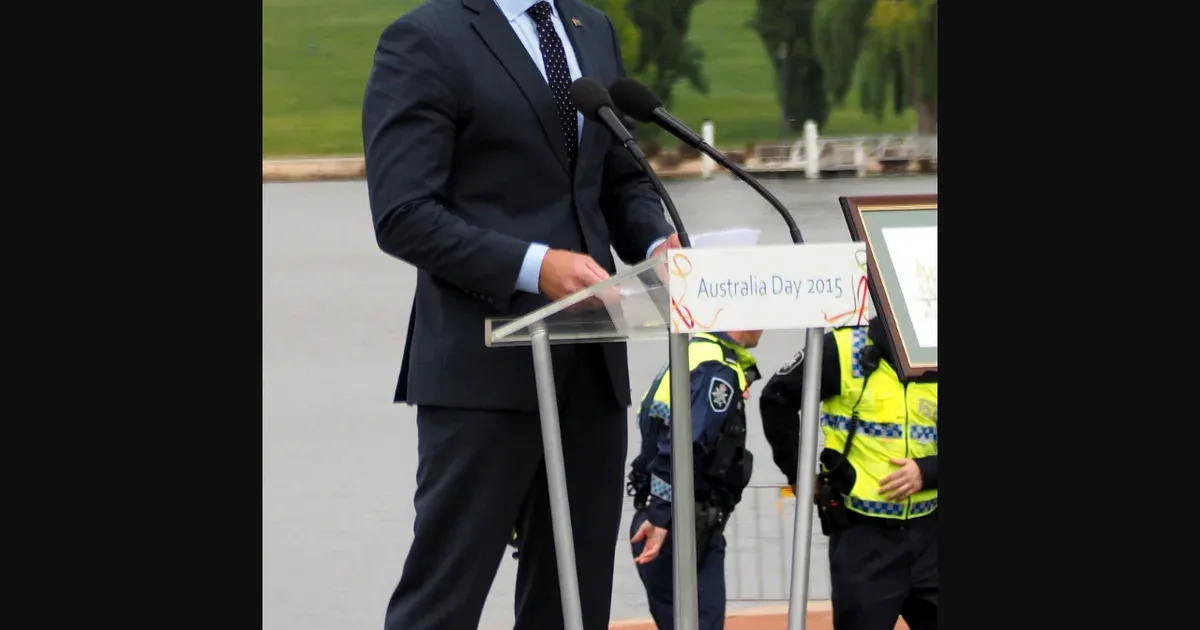
Ben Roberts-Smith is facing criminal charges tied to alleged killings in Afghanistan, placing one of Australia's most decorated soldiers at the center of a rare war crimes prosecution. The case carries legal, military and national-symbol weight because of his public status and Victoria Cross recognition.
The public profile of the defendant makes the process unusually sensitive. The charges were reported on April 7, 2026, after a long investigative path involving civil litigation, military conduct questions and the Australian Federal Police. The criminal process now has to separate battlefield reputation from evidence tested in court.
Ben Roberts-Smith Arrest and Murder Allegations
Evidence presented to the Commonwealth Director of Public Prosecutions suggests a pattern of behavior that violated international law. One specific incident involves the alleged execution of an Afghan man at a compound known as Whiskey 108. Witness statements claim the victim was an unarmed prisoner of war at the time of his death. Another charge relates to a 2012 mission in which a civilian was reportedly kicked off a cliff before being shot. Police records indicate these events were initially suppressed within the military chain of command.
The Victoria Cross awarded to Roberts-Smith in 2011 for his actions at the Battle of Tizak now sits at the center of a national debate. Military protocol dictates that a decoration can be stripped if a recipient is convicted of a serious crime. Supporters of the veteran argue that the fog of war makes split-second decisions difficult to judge years later. Prosecutors contend the evidence shows calculated acts of violence rather than heat-of-battle errors.
A spokesperson for the Australian Federal Police stated that the complexity of the investigation required extensive cooperation with international partners and the Office of the Special Investigator.
Afghanistan Deployment Records and SAS Conduct
Special Air Service Regiment operations in the village of Darwan are a primary focus of the current indictment. Records from 2009 show a series of kinetic engagements where civilian casualties were officially listed as enemy combatants. Subsequent interviews with villagers suggested many of the deceased were farmers with no ties to the Taliban. Forensic teams examined digital files and photographs recovered from private storage devices to confirm these accounts.
Operational logs from the Australian Defence Force show Roberts-Smith was one of the most frequently deployed soldiers during the height of the conflict. He completed six tours of duty in Afghanistan over a decade. His public profile as a corporate executive and media figure increased the scrutiny on his military record. Colleagues within the SAS have provided conflicting accounts of the culture within the regiment during the 2009-2012 period.
Australian Federal Police War Crimes Investigation Details
Officers from the Office of the Special Investigator spent four years gathering physical evidence in the Uruzgan province. Accessing the remote sites required security guarantees from local leaders and coordination with the Afghan government before its collapse. Scientific experts analyzed ballistic data and satellite imagery to reconstruct the scenes of the alleged murders. This technical evidence forms the backbone of the prosecution's brief.
Public interest in the case has reached an all-time high following the veteran's previous attempts to block the disclosure of his military records. Judicial orders had protected much of the investigative material until the formal filing of charges. Recent court filings reveal that more than 100 witnesses have been deposed. Several former SAS members have received immunity from prosecution in exchange for their testimony against Roberts-Smith.
Some veterans describe a toxic warrior culture that rewarded high body counts over adherence to the rules of engagement. Internal reviews conducted by the military in 2016 warned that a small group of elite soldiers had become insulated from traditional oversight. These reports claimed that some operators viewed themselves as above the law. The current charges represent the most serious attempt to address these institutional failures.
Canberra officials have allocated $11 million to the legal process to ensure an exhaustive trial. The cost of the investigation itself has already exceeded initial budget estimates due to the difficulties of collecting evidence in a former conflict zone. Defense lawyers for Roberts-Smith have indicated they will fight every charge. They maintain that the veteran is a victim of a media-led witch hunt.
International observers are monitoring the trial as a test case for how Western democracies handle allegations against their most decorated soldiers. Failure to secure a conviction despite the findings in the civil court would raise questions about the efficacy of military justice. Success would demonstrate that the Australian legal system can hold even its most celebrated heroes accountable. The trial is expected to last at least six months.
Detectives began focusing on Roberts-Smith shortly after the release of the Brereton Report, which identified a culture of lawlessness within elite units. Allegations suggest the five murders occurred across multiple deployments in the Uruzgan province. Each count carries a potential life sentence under the Commonwealth Criminal Code. Investigators spent years interviewing Afghan witnesses and former SAS soldiers to build the case.
The Trial Tests Military Accountability
The case should be judged through evidence, not symbolism. Decorations, media reputation and institutional embarrassment cannot decide whether prosecutors can prove criminal allegations beyond a reasonable doubt. That is why the trial matters for military accountability. It will test whether a state can investigate alleged battlefield crimes without either prejudging the accused or protecting the uniform from scrutiny.