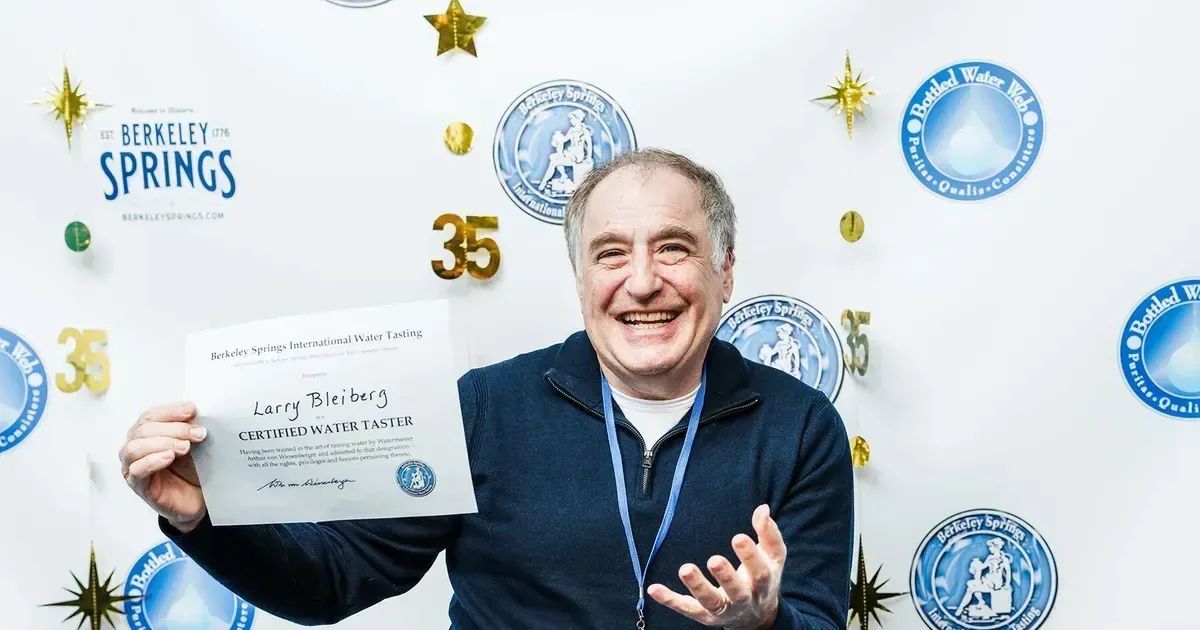
Berkeley Springs, West Virginia, remains a geography defined by its liquid assets. Long before the thirty-fifth annual International Water Tasting commenced this week, the town established its credentials as the first spa destination in the United States. George Washington famously frequented these mineral springs in the eighteenth century, seeking the restorative properties of the earth's discharge. Today, the town auditorium serves as the stage for a different kind of ritual, one that transforms a basic utility into a competitive sport. Experts and novices alike gathered on March 13, 2026, to determine which municipal taps and bottled sources offer the purest experience on the palate.
Twenty-four glasses of municipal tap water sat in a rigid line across the judging table. Each vessel contained a sample from a different global utility, ranging from local American districts to remote outposts in Taiwan and Bosnia. The sensory overload began early. Evaluating sixty-five different waters across four distinct categories requires a level of focus usually reserved for high-stakes wine competitions. Judges must separate municipal tap, non-carbonated bottled water, purified water, and sparkling varieties into a hierarchy of taste. Every sip demands a neutral palate, often refreshed with crackers or a simple rinse between samples.
Kraham linked the judging table to the competition's 1991 origins, when boutique water was still a young consumer trend in the United States.
How a Spa Town Turned Water Into a Contest
Mark Kraham, a veteran judge with twenty-eight years of experience, leaned over to offer a quiet piece of advice to those facing the daunting lineup for the first time. He emphasized the importance of pacing. A judge who rushes through the first dozen glasses risks losing the subtle nuances of the final twenty. Kraham's presence provided a link to the competition's origins in 1991, a time when the concept of boutique water was still a nascent trend in American consumerism. Hydration was never the primary concern for the panel.
Competitive water tasting functions on a sensory level identical to wine or olive oil evaluation. Judges assess clarity, aroma, and mouthfeel before the liquid ever reaches the back of the throat. Chlorine or metallic notes result in immediate point deductions for municipal entries. Professional tasters look for a clean finish, free of any aftertaste that might suggest poorly maintained infrastructure or chemical over-treatment. The standards are rigorous because the stakes for the winners are tangible in the marketplace.
Winning Tap Water Becomes a Civic Brand
British Columbia's Clearbrook Waterworks District remains the most decorated competitor in the event's history. Its consistent success has turned the small Canadian utility into a legend among hydrological experts. When a municipal district wins at Berkeley Springs, the victory often triggers a total overhaul of the local utility's public relations strategy. Towns frequently redesign their logos or launch marketing campaigns centered on their status as the home of the world's best-tasting tap water. This tangible benefit explains why dozens of North American cities pay the entry fee to have their pipes judged against the world. The competition extends beyond government utilities.
Luxury bottled brands from across the globe compete for the non-carbonated and sparkling crowns. Antipodes, a high-end brand from New Zealand, has previously secured top honors, solidifying its position in the premium market. The glass bottles used by these companies often reflect the high price point, but at Berkeley Springs, the packaging is stripped away. Judges receive samples in identical, unmarked glasses. This blind testing ensures that a ten-dollar bottle of artesian water from a remote volcanic island must compete on equal footing with a gallon jug from a domestic purifier.
Purified water represents the fastest-growing category in the contest. Unlike municipal water, which relies on natural filtration and chemical treatment for safety, purified samples undergo reverse osmosis or distillation. These processes remove almost all mineral content, creating a blank canvas that some judges find refreshing and others find sterile. The debate over mineral content versus absolute purity often divides the panel, reflecting a broader split in the global water industry. Some consumers prefer the earthy profile of spring water, while others demand the crisp, laboratory-grade neutrality of purified brands.
Still, the spectacle of the event draws hundreds of spectators who have no professional tie to the industry. Locals and tourists fill the seats of the historic auditorium, watching in near silence as judges swirl and sniff their glasses. The atmosphere mimics a courtroom during a high-profile trial. Spectators wait for the announcement of the winners with an intensity that seems disproportionate to the subject matter. This community engagement culminates in the Water Rush, a frantic tradition where the audience scrambles to collect the remaining sample bottles from the display tables.
International entrants bring a geopolitical flavor to the West Virginia mountains. Samples arrived this year from as far away as Ecuador and Bosnia, shipped in temperature-controlled containers to ensure the integrity of the source. Small towns in the American Midwest often find themselves competing against metropolitan centers in Asia. The data from previous years shows that size rarely correlates with quality. Small, well-managed aquifers in rural districts frequently outperform the massive treatment facilities of major capital cities. Clearbrook's repeated dominance serves as the primary evidence for this trend.
Water quality experts suggest that the geological composition of the source aquifer determines eighty percent of the final score. The remaining twenty percent comes down to the treatment process. If a utility uses too much ozone or chlorine, the judge's nose will detect it immediately. If the pipes in the municipal system are aging, the water might pick up a faint metallic tang that ruins its chances of a podium finish. For many cities, the Berkeley Springs competition serves as an external audit of their entire water delivery system. The economic impact of the event extends beyond the trophies.
Berkeley Springs leverages the competition to maintain its status as a tourism hub. The town's economy relies on its reputation for wellness and natural beauty. By hosting the Academy Awards of Water, the community reinforces its historic identity while staying relevant in a modern economy obsessed with health and hydration. Local hotels and restaurants see a significant spike in revenue during the weekend of the event, as water enthusiasts and industry professionals descend on the valley. It is a rare example of a town successfully monetizing a resource that most people take for granted.
By the time the sixty-fifth glass was drained, the judges had consumed more than two gallons of liquid. The final results reflected the growing diversity of the field, with winners emerging from three different continents. As the crowd surged forward for the Water Rush, the judges slipped away to recover from a day of intense sensory labor. The trophies will soon travel to city halls and corporate boardrooms across the globe, serving as symbols of hydrological excellence for the next twelve months.
Water Awards Expose a Luxury Contradiction
Imagine the hubris required to slap a gold medal on a molecule. While much of the American West enters a permanent state of drought and municipal infrastructure in cities like Jackson or Flint remains a national embarrassment, Berkeley Springs hosts a gala to celebrate the flavor profiles of the privileged. The fetishization of water as a luxury good is a symptom of a deeply fractured society. We have transformed a fundamental human right into a competitive spectacle where the smoothness of a New Zealand aquifer is debated by people who have never known the taste of lead-tainted pipes. The entire enterprise reeks of a bourgeois obsession with purity that ignores the gritty reality of global water scarcity. If we spent half the energy on fixing the crumbling aqueducts of our major cities that we spend on identifying the subtle mineral notes of a sparkling water from Bosnia, we might actually solve a crisis instead of just bottling it. The Academy Awards of Water is not a celebration of nature; it is a marketing circus designed to convince us that the liquid in our taps should be an artisanal experience rather than a basic, reliable service. When the Water Rush begins, it is not a search for hydration, but a desperate grab for status symbols in a world where the well is running dry for everyone else.