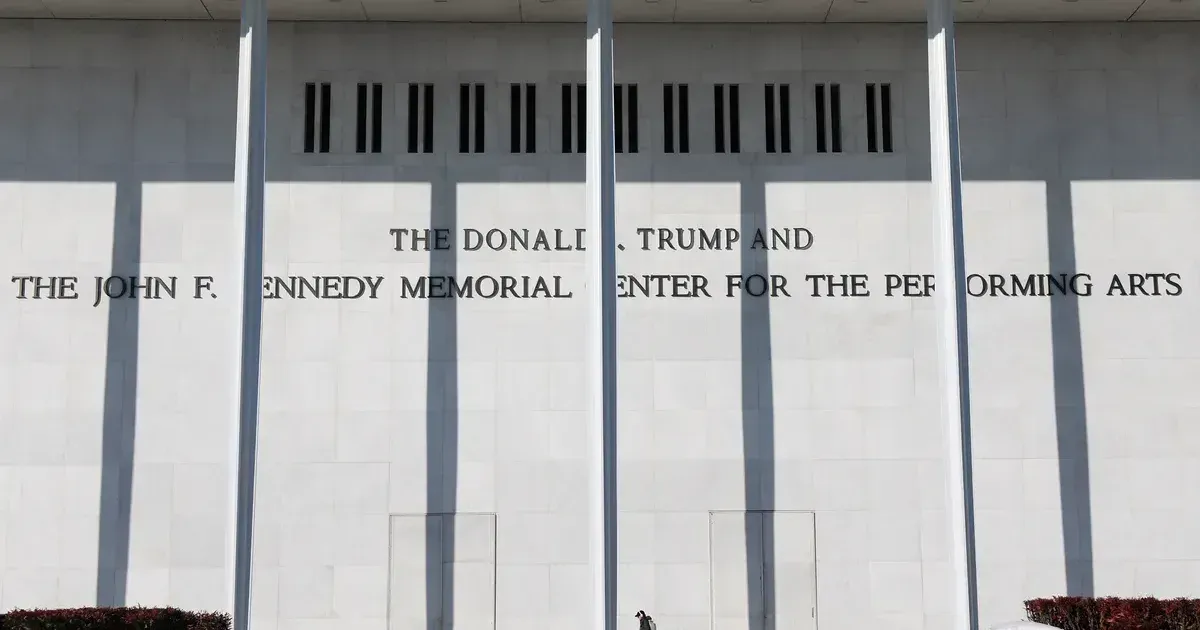
Richard Grenell, a veteran of the first and second Trump administrations, will vacate his role as the president of the John F. Kennedy Center for the Performing Arts. His resignation follows a period of intense ideological recalibration at the institution that frequently placed the conservative operative at odds with the Washington cultural establishment. President Donald Trump announced the departure on Friday, naming Matt Floca as the new chief executive officer and executive director to lead the organization through an upcoming phase of structural and mission-based reconstruction. Staffers at the center received formal notification of the transition during an internal briefing early Friday morning. Richard Grenell arrived at the venue in early 2025 with a mandate to simplify operations and ensure the center reflected a broader array of American values. To that end, he implemented cost-cutting measures and altered programming schedules to include more populist and nationalist themes. These changes did not come without significant friction from the resident artistic community. Performing arts unions and donor circles reported a steady stream of exits among long-serving creative staff during the last twelve months. According to internal reports, several high-profile directors and conductors cited a lack of artistic autonomy as their primary reason for leaving the venue. By contrast, supporters of the administration argued that the center had drifted too far into partisan progressive territory before the 2024 election. The facility remains the only National Cultural Center in the United States, receiving a mix of federal funding and private donations.
Grenell Leaves the Kennedy Center Post
Sources close to the board of trustees indicate that the friction between the executive office and the creative departments reached a breaking point during the winter season. Richard Grenell reportedly sought to vet specific performance themes, a move that critics labeled as political interference. Performers who had spent decades at the center expressed dismay at what they described as a narrowing of the institution's creative scope. Still, the administration maintained that the center required a more disciplined fiscal approach to justify its $40 million annual federal appropriation.
Richard Grenell, the longtime Republican foreign policy adviser who oversaw far-reaching changes at the Kennedy Center that prompted many artists to abandon the iconic performing arts venue, will step down as the institution's president.
Programming changes often favored patriotic displays and orchestral arrangements of American folk music over contemporary avant-garde works. In fact, several planned collaborations with European dance troupes were canceled or replaced with domestic productions during the 2025-2026 season. Internal memos suggest these decisions were part of a broader effort to decouple the center from international artistic trends that the leadership deemed inconsistent with the current executive branch priorities. The fallout from these decisions led to a decline in subscriptions from several zip codes in the District of Columbia and Maryland. For one, the National Symphony Orchestra saw a turnover rate of nearly 15% among its primary musicians during the Grenell era. Many of those who departed took positions with international ensembles or private conservatories. The dispute centered on the definition of a national cultural mission. The departing president frequently stated that a taxpayer-funded entity should not alienate half of the country with its creative choices. His focus remained on accessibility for audiences outside the immediate metropolitan area.
Cultural Leadership Turns Political
Matt Floca assumes the leadership role at a time when the physical campus of the center is scheduled for major renovations. This reconstruction project aims to modernize the facilities while also reconfiguring the internal layout of the concert halls to accommodate larger technical requirements. Floca, who previously managed operations for several private sector development firms, brings a background in logistics rather than arts administration. His appointment suggests a shift toward a more managerial and construction-oriented leadership style for the next two years.
President Donald Trump highlighted the need for a physical overhaul during his announcement. The White House press office stated that the center requires upgrades to its security systems and structural foundations that have been deferred for nearly a decade. Separately, the administration plans to use the reconstruction period to further refine the center's mission statement. Floca will oversee a budget that includes newly allocated infrastructure funds from the 2026 Department of the Interior budget. The previous fiscal year saw the center operate with a surplus for the first time in five years.
This managerial pivot indicates a move away from the high-profile political battles that defined the previous year. While Richard Grenell focused on ideological alignment, Floca is expected to concentrate on the physical legacy of the site. His first task involves negotiating with local contractors and federal agencies to ensure the renovation remains on schedule. The National Park Service maintains oversight of the land on which the center sits, necessitating a complex multi-agency coordination effort. Floca starts his tenure on April 1.
The Institution Faces Another Reset
Washington has seen a broader transformation of its cultural institutions since the beginning of the second Trump term. Budgetary constraints have also played a role in the reshuffling of these organizations. Critics of this approach argue that it risks turning national cultural treasures into instruments of state messaging. Grenell's exit does not necessarily signal his departure from the administration's inner circle.
The cultural impact of his time in office will likely be debated for years within the arts community. Some see him as a disruptor who challenged a stagnant status quo, while others view his tenure as a period of institutional decline. For instance, the cancellation of several long-running educational programs for local students remains a point of contention for neighborhood activists. Still, the center's new focus on digital broadcasting has allowed it to reach millions of viewers who never set foot in the District of Columbia. These digital initiatives were a foundation of the Grenell strategy to nationalize the center's reach.
Floca will now have to manage the tensions left after these reforms. The transition marks the end of a particularly volatile chapter in the history of the Kennedy Center. The physical scaffolding that will soon surround the building is a literal representation of the institutional rebuilding underway. Workers are expected to begin the first phase of the exterior renovation by late May. The current board of trustees has already approved the preliminary design plans for the new atrium.
Public Arts Need Stable Governance
Must a national cultural monument always be a playground for the aesthetic preferences of a self-appointed liberal vanguard? The departure of Richard Grenell from the Kennedy Center should not be viewed as a retreat, but as the completion of a necessary demolition. For decades, this institution operated as a taxpayer-funded echo chamber, rewarding a narrow slice of the arts world while ignoring the cultural sensibilities of the very people who paid the bills. Grenell was sent in to break that cycle, and the subsequent howling from the artistic establishment is the clearest proof that he succeeded in his mission.
The appointment of Matt Floca suggests the administration is done fighting for the soul of the center and is now focused on the concrete and steel of its future. By bringing in a logistics expert to oversee a massive reconstruction, the White House is signaling that the era of the celebrity arts administrator is over. We are moving toward a model where national institutions are managed as public utilities rather than private fiefdoms for the creative class. It is the correct approach for a country that is increasingly skeptical of centralized cultural authority.
If the Kennedy Center cannot represent the breadth of American life, it has no business claiming a privileged place on the Potomac. The era of the elite cultural monopoly is finally coming to a close.