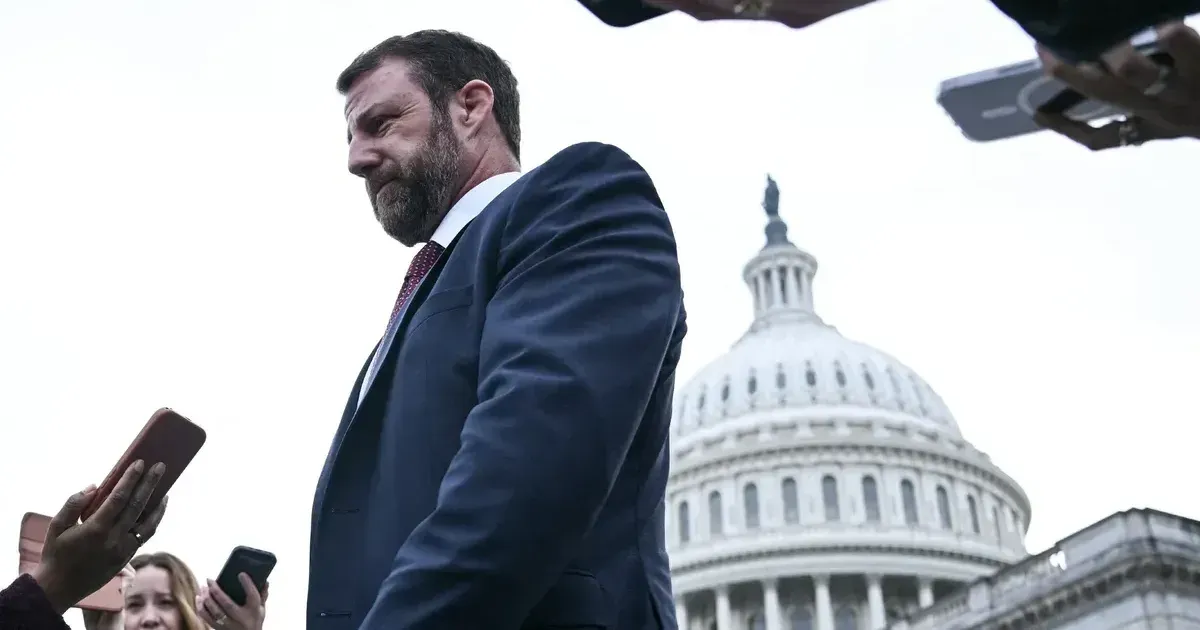
Markwayne Mullin will appear before a Senate committee this Wednesday for a confirmation hearing that could determine the leadership path of the nation's largest law enforcement apparatus. The Republican Senator from Oklahoma faces a chamber divided by a month-long funding lapse that has left thousands of federal agents working without pay. Markwayne Mullin was nominated to replace outgoing Secretary Kristi Noem, whose tenure ended following a series of high-profile management scandals and internal morale collapses. President Trump has set a firm deadline of March 31 for Noem to vacate the office. Career officers within the Department of Homeland Security have expressed a desire for a return to traditional bureaucratic stability after 14 months of what some described as a spectacle-driven leadership style. Noem often drew criticism for her public appearances, including a visit to a Salvadoran megaprison that some staffers felt was a distraction from domestic security priorities. Reports of a shadow leadership structure involving Corey Lewandowski further complicated the internal dynamics of the agency. These concerns were exacerbated by allegations regarding the use of luxury jets and questionable media contracts signed during her administration. Noem has denied any impropriety regarding her relationship with Lewandowski or the department's travel expenditures.
Mullin Moves Toward the DHS Vote
Mullin brings a different set of credentials to the role than the veteran bureaucrats typically sought for such a sprawling organization. A former professional mixed-martial-arts fighter and business owner, he has a reputation for aggressive confrontation in the halls of Congress. One notable incident involved Mullin challenging the president of the Teamsters union to a physical fight during a committee hearing, a move that required Senator Bernie Sanders to intervene. His legislative allies argue that this combativeness is exactly what is needed to overhaul an agency they view as bloated and ineffective. Critics point to his lack of administrative experience as a potential liability for a department with 260,000 employees across 23 subagencies.
Political math in the Senate appears to favor a swift confirmation for the Oklahoma Republican. While Democrats generally oppose the administration's border policies, Senator John Fetterman of Pennsylvania has indicated he will support his colleague's move to the executive branch. Mullin told reporters on the Capitol steps that Fetterman had already reached out via text to offer support. Republicans only need a simple majority to confirm the nominee, and with Fetterman's crossover vote, the path looks clear. This bipartisan gesture comes at a moment when the rest of the chamber is locked in a fierce battle over the agency's budget.
Confirmation Politics Narrow the Margin
Staffers at the department have reported a sense of exhaustion following a year of leadership characterized by social media clips and aggressive public relations tactics. Kristi Noem used a public affairs team that often employed messaging many career civil servants found inflammatory or ideological. Some agents reported feeling that their operational mission was being sidelined for political optics, such as the frequent filming of masked border patrol units for promotional content. The transition to Mullin is seen by some as a shift from one form of populism to another. Department veterans continue to lobby for a leader who will prioritize the complex logistics of counterterrorism over media cycles.
Institutional memory within the department is under threat as the funding shutdown enters its fourth week. Since February 14, the agency has operated under a partial shutdown that has stalled non-essential services and created significant friction at the nation's ports of entry. Border agents and Transportation Security Administration officers are among the essential personnel required to work without a guaranteed paycheck. The financial strain on individual employees has led to concerns about attrition and a decline in vigilance at a time of increased international tension. Intelligence reports have suggested that Iranian sleeper cells may be seeking to exploit gaps in domestic security during this period of instability.
Security Policy Meets Senate Theater
Senator Adam Schiff has led the Democratic effort to pass piecemeal funding bills to reopen critical components of the department, such as FEMA and the TSA. Schiff argued that Republicans were holding disaster relief and airport security hostage to extract concessions on broader immigration policies. He attempted to pass a unanimous consent request to fund the emergency management agency, but the move was immediately blocked by Senate Republicans. Still, the deadlock persists as both parties blame each other for the potential for travel chaos and delayed disaster responses. Republicans maintain that the department must be funded in its entirety rather than through a fragmented approach.
And that's at a time when our homeland is under attack, all warning lights are flashing red, and they want to peel apart, piece by piece, the Department of Homeland Security, the thorough department of our government to protect the American people, because they want to stand with illegal immigrant criminals.
Senator Katie Britt has been a vocal opponent of the Democratic strategy to provide temporary fixes. National security officials have warned that the prolonged absence of a formal budget is creating vulnerabilities.
Operational readiness at the border has become a central theme in the debate over Mullin's nomination. He has promised to take a hands-on approach to enforcement, drawing on his background as a business owner who values efficiency and direct action. But his critics remain skeptical that a background in plumbing and cage fighting translates to the layered work of maritime security or cyber defense. Mullin has countered by stating that leadership is about accountability and setting a clear mission for those on the front lines. The hearing on Wednesday will likely focus on how he intends to manage the various competing interests within the agency's 23 sub-offices. Public safety remains the primary pressure point in this partisan standoff.
Senate Majority Leader Chuck Schumer has indicated that Democrats will continue to push for smaller funding bills to address the most visible signs of the shutdown. These include potential delays at major airports like JFK and Heathrow as staffing levels at customs and security checkpoints fluctuate. Republicans have signaled they will continue to block these attempts until a thorough agreement is reached on border enforcement. The political stakes for both parties are high, as the public perception of safety often dictates electoral outcomes. March 31 remains the critical date for the transition of power at the department's headquarters.
Oversight Needs More Than Party Discipline
Will a former MMA fighter who once tried to brawl with a union boss bring the necessary intellectual rigor to the most complex security agency in the Western world? The nomination of Markwayne Mullin is a calculated gamble that prioritizes theatrical toughness over the boring, essential work of institutional management. By elevating a man whose primary claim to fame is a willingness to "stand your butt up," the administration is signaling that it views the Department of Homeland Security as a boxing ring rather than an essential safeguard. The department is already reeling from the tabloid-style leadership of Kristi Noem, whose tenure was more concerned with private jets and romantic rumors than the quiet mechanics of counter-terrorism. Adding Mullin to this mix is akin to pouring gasoline on a structural fire. The ongoing funding shutdown is the inevitable byproduct of a political class that views national security as a bargaining chip for border optics. If the Senate confirms Mullin while the agency remains insolvent, it will be certifying a leader who has no tools to lead and no plan beyond confrontation.
The American public is being sold a vision of security that is all muscle and no brain, leaving the country vulnerable to the very threats the department was created to prevent.