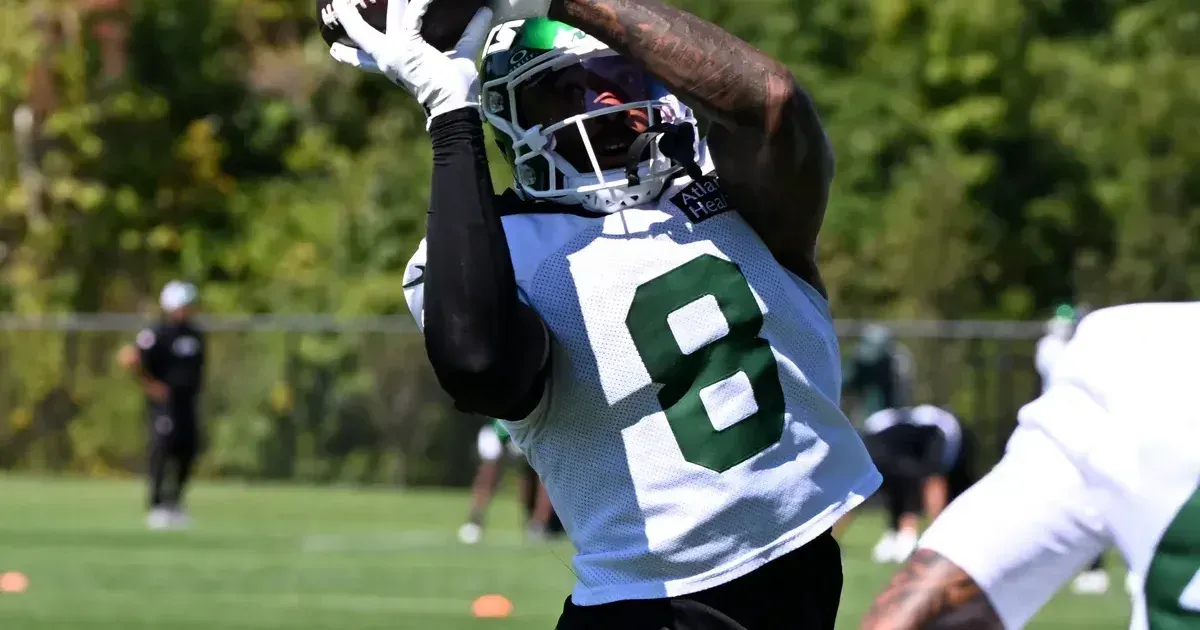
Andre Cisco arrived at the Florham Park training facility on Friday morning to finalize a deal that stabilizes a volatile New York Jets secondary. The agreement provides a one-year window for both the player and the franchise to evaluate a long-term future in a league where safety value remains highly fluid. Sources confirmed that the contract carries a maximum value of $5.25 million, a figure that reflects the cautious approach the front office has adopted during this free agency cycle. Joe Douglas, the general manager tasked with managing a tight salary cap, secured Cisco for what league insiders describe as a bridge deal. The structure of the contract suggests a heavy reliance on performance-based incentives rather than a massive upfront signing bonus. But the financial architecture tells a deeper story of a front office that is hesitant to commit multi-year resources to the defensive backfield. The contract includes $3 million in fully guaranteed base salary. Success in the modern NFL requires these low-risk, high-reward gambles. Cisco returns to a defensive unit that has seen significant turnover during the early days of March. While earlier reports from the New York Post noted the team was looking to add depth, the ESPN NFL confirmation of the $5.25 million ceiling clarifies the team's hierarchy at the position. For instance, the Jets recently let several rotational pieces walk in favor of targeting starters with proven ball-hawking abilities. Cisco fits this mold perfectly, having recorded several interceptions during his previous tenure in the league.
Jets Add Andre Cisco on a Short Deal
Managing a safety room in the current NFL climate requires a balance between veteran leadership and rookie scale contracts. The New York Jets have struggled with this equilibrium in recent years, often overpaying for veteran talent that fails to reach the end of three-year deals. By opting for a one-year agreement with Cisco, the team maintains its flexibility for the 2027 season while ensuring they do not have a glaring hole in the deep middle of their defense. In fact, the team carries only four safeties on the active roster with significant game experience. Coaching staff members have reportedly expressed a desire for more range in the secondary to complement a fierce front seven. Cisco possesses the vertical speed necessary to cover the ground that the Jets' aggressive blitz packages often leave exposed. Still, his durability has been a point of discussion among rival scouts who have followed his career since his days at Syracuse. His health will dictate whether he earns the full $5.25 million available in this deal. Roster dynamics in New York are further complicated by the impending contract extensions for several star defensive linemen. To that end, every dollar saved in the secondary is a dollar that can be redirected toward the trenches. Analysts suggest that the Joe Douglas philosophy focuses on building from the inside out, often leaving the secondary to rely on scheme-fit veterans rather than high-priced superstars. The current roster allocation for defensive backs sits at roughly 12 percent of the total cap.
One-Year Contracts Keep Risk Contained
Financial records indicate that the Jets entered the week with roughly $15 million in effective cap space.
The New York Jets have agreed to a deal with safety Andre Cisco on a 1-year deal worth up to $5.25M, sources told ESPN.
Agents across the league are watching this specific deal as a bellwether for the mid-tier safety market.
In fact, the media scrutiny in New York often magnifies the impact of short-term deals that fail to produce.
Rivalries within the division are often won in the front office during the month of March. The Miami Dolphins and Buffalo Bills have both made moves to shore up their offensive lines, meaning the New York Jets must have a secondary capable of holding up under prolonged pressure. In fact, the AFC East features some of the most prolific passing attacks in the conference, making the safety position more critical than the raw salary numbers might suggest. The Bills recently signed a veteran corner to a deal worth twice Cisco's annual salary. Market trends show that AFC East teams are spending more on perimeter defenders than on interior safeties. This shift has allowed the Jets to find value in players like Cisco who might have commanded $8 million annually in a different market environment. This signing is an exercise in market efficiency rather than a bold statement of intent. The team has already met with three other free agents this week.
And the search for depth does not end with this signing.
Roster Value Comes From Flexible Bets
Why does a franchise with Super Bowl aspirations continue to rent its secondary talent on a year-to-year basis? The signing of Andre Cisco is a classic Joe Douglas maneuver that prioritizes financial flexibility over the cultural continuity that a long-term secondary needs to thrive. By handing out a one-year band-aid, the Jets are effectively admitting they do not have a long-term plan for the safety position, choosing instead to gamble on a player who is already eyeing his next exit strategy. This transactional approach to roster building is exactly why the Jets have spent a decade spinning their wheels in the mud of mediocrity. Real contenders invest in their back four because they understand that communication and chemistry are not built in a single training camp. The $5.25 million price tag is a bargain for a reason, it reflects a league-wide consensus that Cisco is a stop-gap, not a solution. If the Jets want to be taken seriously as a defensive powerhouse, they must stop treating the safety position like a temp agency.
The strategy will likely result in a mid-season breakdown when a lack of cohesive coverage inevitably gifts a divisional rival a game-winning touchdown.