Sameerah Munshi walked out of the West Wing on Tuesday with a resignation letter that could redefine the legal boundaries of the current Middle East conflict. Her departure from the Religious Liberty Commission marks the first high-level defection since the start of hostilities against Tehran. Munshi described the offensive as a violation of international law and a betrayal of the administration's stated principles. Internal documents suggest her concerns were shared by others within the executive branch who fear the lack of a clear exit strategy. Legal experts now suggest her exit may trigger a cascade of similar protests within the administration.
Vance Dissent Complicates the Iran Line
Munshi served as a key adviser on the commission, providing a bridge between the White House and religious organizations across the country. In her resignation letter, she called the U.S. war in Iran illegal and argued it was undertaken without clear constitutional or congressional authorization. Munshi, a former advocate for religious freedom in conflict zones, claimed the administration bypassed the 1973 War Powers Resolution entirely. This legislative act requires the President to notify Congress within 48 hours of committing armed forces to military action. Munshi noted that the current engagement has far exceeded the initial parameters of a retaliatory strike. Critics of the military campaign have pointed to the absence of a formal declaration of war. By contrast, the White House maintains that Article II of the Constitution provides sufficient authority for the President to protect national interests abroad. Munshi disputed this interpretation in her final memo. She argued that the scale of the invasion requires a level of oversight that the executive branch has actively avoided. This constitutional gap has created a rift between the Department of Justice and civilian oversight boards. The internal pressure on the administration is mounting as legal challenges reach federal courts.
The war in Iran is illegal and was undertaken without clear constitutional or congressional authorization.
White House officials have largely dismissed Munshi's claims as those of a disgruntled former employee. But the timing of her resignation complicates the narrative of a unified front in Washington. Several members of the commission reportedly considered joining her in a collective walkout before being dissuaded by senior leadership. Still, the impact of her public statement has resonated throughout the capital. Munshi has already been approached by several Senate committees looking to investigate the decision-making process that led to the first cruise missile launches.
Private Doubts Meet Public Discipline
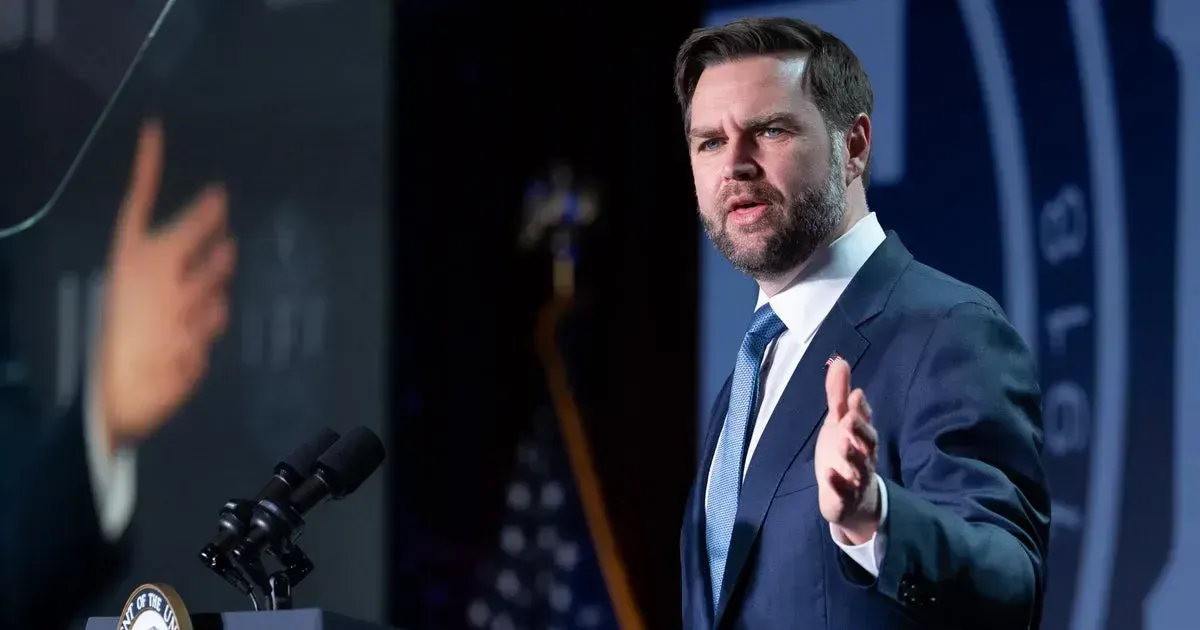
Vice President JD Vance reportedly voiced sharp skepticism during the classified briefings that preceded the invasion. According to a senior administration official, Vance opposed the war in discussions held in the Situation Room throughout late February. He was particularly worried about the viability of a protracted ground campaign against a motivated Iranian military. Vance, who has often championed a more isolationist foreign policy, questioned whether the benefits of regime change outweighed the risks of a regional collapse. His concerns were not just tactical but existential for the political future of the Trump-Vance ticket.
Internal memos indicate Vance frequently pushed for a more limited engagement focusing on naval blockades rather than inland strikes. He reportedly warned that a full-scale war would alienate the populist base that helped secure the 2024 election. In fact, Vance cited the financial burden of the conflict as a primary reason for his hesitation. Intelligence reports shared with the Vice President's office estimated the initial phase of the war would cost upwards of $450 billion. This figure does not account for the long-term occupation or the reconstruction of damaged infrastructure in the Persian Gulf.
Doubts regarding the viability of a ground campaign have permeated the highest levels of the National Security Council. Separately, sources close to the Vice President claim he was troubled by the intelligence regarding Tehran's nuclear capabilities. Vance supposedly argued that the data was too similar to the flawed reports used to justify the 2003 invasion of Iraq. To that end, he requested a second independent review of the strike targets, a move that was blocked by more hawkish members of the cabinet. The tension between the Vice President and the Department of Defense has become an open secret within the Beltway. Vance continues to fulfill his public duties, yet his silence on the war in recent weeks has been conspicuous.
War Policy Tests the Coalition
Congressional leaders have seized on the reports of Vance's skepticism to demand a full accounting of the war's origins. The 1973 War Powers Resolution has become the center of a fierce debate over executive overreach. Many legislators argue that the administration has exploited loopholes in the law to avoid a formal vote on the floor of the House. For instance, the White House has classified the conflict as a kinetic police action rather than a traditional war. The semantic distinction allows the President to move troops without seeking an immediate mandate from the people's representatives.
But the scale of the mobilization suggests otherwise. More than 150,000 U.S. personnel are stationed in and around the Iranian border. Pentagon data shows that the rate of munitions expenditure is higher than at any point during the height of the war in Afghanistan. Still, the administration refuses to seek a formal Authorization for Use of Military Force. The standoff has stalled other legislative priorities, as some senators have vowed to block all judicial appointments until the war's legality is addressed. The Supreme Court may eventually be forced to intervene in this jurisdictional dispute.
Military planners are grappling with the reality of a stalemate in the Iranian highlands. Initial projections of a swift victory have been replaced by a more sober assessment of the enemy's resilience. The Iranian military has successfully used asymmetrical tactics to disrupt supply lines from Kuwait and Iraq. Even so, the Pentagon remains publicly committed to the objective of neutralizing the Islamic Revolutionary Guard Corps. Internal assessments suggest that a total victory would require another 100,000 troops and an indefinite timeline for withdrawal. The data point was reportedly a major factor in Vance's initial opposition.
Financial markets have reacted poorly to the prospect of a long-term engagement. Oil prices have fluctuated wildly as tankers remain trapped in the Strait of Hormuz. For one, the cost of insurance for shipping in the region has tripled in the last thirty days. The economic volatility has put the administration on the defensive, especially as inflation begins to rise in domestic markets. The disconnect between the White House's optimistic rhetoric and the reality on the ground is widening. Munshi's resignation has provided a focal point for this growing discontent among the American public.
Foreign Policy Needs Honest Debate
Is JD Vance a silent dissenter or a complicit partner in a failing regional strategy? The reports of his skepticism paint a picture of a man who understands the catastrophic risks of this war but lacks the political courage to stop it. Washington loves a martyr, but Sameerah Munshi's exit feels more like a warning shot to an administration that has abandoned its populist roots. The war in Iran is not just a military operation; it is an autopsy of the Trump-Vance foreign policy doctrine. We were promised an end to forever wars, yet we find ourselves mired in a conflict that lacks both legal standing and a clear definition of victory. The administration's attempt to bypass Congress is a direct assault on the constitutional order. If the Vice President truly believes this war is a mistake, his continued presence in the Situation Room is an act of political theatre. We are no longer debating the ethics of intervention; what is unfolding is the erosion of legislative oversight in real time. The financial cost alone should be enough to halt this campaign.
Instead, the White House doubles down on a strategy that even its own advisers describe as a path to failure.