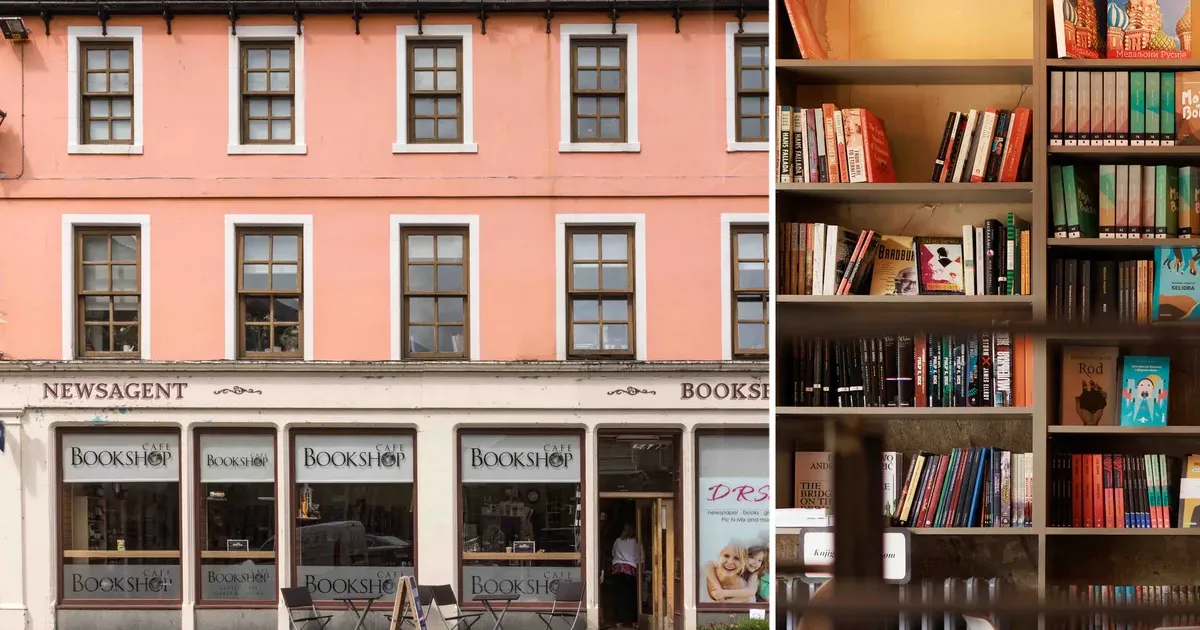
Hay-on-Wye is welcoming a new wave of international travelers seeking refuge in its sprawling collections of used and rare volumes. Richard Booth, a colorful visionary who declared himself the king of this Welsh market town in the 1960s, transformed a dying rural community into the world's first official Book Town. His decision to fill empty shops and even the local castle with secondhand books created a specific economic blueprint that dozens of other villages now replicate globally. On March 29, 2026, the town boasted more than 20 major bookstores for a population of fewer than 2,000 residents.
Literary tourism has evolved from a niche hobby into a sophisticated sector of the global travel economy. Wealthy travelers from London and New York increasingly bypass traditional urban hubs to spend weekends in remote locations defined by paper and ink. These visitors prioritize tactile experiences, seeking the physical presence of rare manuscripts over the convenience of digital reading. This preference has allowed towns with limited industrial prospects to rebuild their entire fiscal identity around the written word. Luxury accommodations now integrate seamlessly with independent retail, offering book-themed suites and author-inspired dining experiences.
Hay-on-Wye Establishes the Global Book Town Framework
Success in the Welsh borders prompted a global expansion of the model, coordinated largely through the International Organisation of Book Towns. This body sets specific criteria for what constitutes an official destination, requiring a concentration of bookstores and literary events that outweigh other commercial activities. Hay-on-Wye remains the gold standard, hosting an annual festival that attracts Nobel laureates and former heads of state. Revenue generated during the ten-day festival supports the town’s infrastructure for the remainder of the calendar year. Local businesses have adapted by offering peripheral services, including specialized bookbinding and bespoke shelving consultations.
Statistical data from the local tourism board indicates that the average visitor to a book town spends 40% more on overnight stays than the typical rural traveler. These tourists are often highly educated and possess serious discretionary income. They view the purchase of a rare first edition as an investment rather than a simple souvenir. So, the local economy shifted its focus toward high-end hospitality and artisanal food production to meet these specific demands. High-speed rail links and improved digital infrastructure now connect these once-isolated outposts to major metropolitan centers.
Hobart Renews the American Rural Main Street
Crossing the Atlantic, the village of Hobart in the Catskill Mountains of New York mirrors the Welsh success story. Don Dales, a local entrepreneur, began buying vacant buildings along Main Street in the late 1990s to house his growing collection of books. His initiative spurred other bibliophiles to open shops catering to diverse interests, from Greek classics to modern science fiction. Hobart now supports eight independent bookstores despite its tiny population. The survival of these shops contradicts the narrative that physical retail is dead, proving instead that curated experiences command a premium.
The book town is a way of bringing together the small units of the book trade to create a critical mass that can attract people from all over the world, according to the International Organisation of Book Towns. Real estate values in Hobart have seen a steady climb as city dwellers look for second homes in culturally rich environments. Local restaurants have integrated the theme, naming cocktails after famous literary figures and hosting poetry readings. The proximity to New York City allows for a steady stream of weekend visitors who prefer the quiet, intellectual atmosphere of the village to the frantic pace of the metropolis. Success here depends on the collaborative spirit of the shop owners, who frequently refer customers to one another to ensure every visitor finds the specific volume they seek.
Wigtown integrates hospitality with literary commerce by letting visitors manage a working bookshop rather than only browse one.
In Scotland, the coastal town of Wigtown took the concept of experiential retail further by introducing The Open Book, an Airbnb that allows guests to run a bookstore during their stay. Participants pay for the privilege of managing the shop, stocking shelves, and interacting with customers. Demand for this experience is so high that the calendar is often booked two years in advance. It is a shift from passive consumption to active participation in the literary lifestyle. Wigtown now identifies as Scotland’s National Book Town, a title that has secured government grants for cultural preservation.
International visitors often travel specifically for this immersive opportunity. The town’s 12 bookstores offer a combined inventory that exceeds 250,000 volumes, covering every conceivable subject. Local authorities report that the influx of book-related capital has saved the high street from the vacancies seen in neighboring agricultural towns. Seasonal festivals and creative writing retreats provide additional revenue streams for local guesthouses. The community has effectively insulated itself against the volatility of the agricultural market by diversifying into specialized tourism.
Financial viability for specialist print retail hubs now depends on collector psychology, hospitality spending and local preservation policy.
Global competitors like Jinbocho in Tokyo provide a different perspective on the book town model within an urban setting. While rural towns use books to draw people in, Jinbocho is a specialized district within a huge metropolis. It contains over 160 bookstores, many of which specialize in rare academic texts or vintage manga. The sheer density of the district creates a magnetic effect for scholars and collectors across Asia. Unlike the rural models, Jinbocho relies on high foot traffic and deep integration with the publishing industry. It functions as both a retail hub and an enormous outdoor archive.
Niche retail success in these locations stems from a deep understanding of collector psychology. The digital age has increased the perceived value of physical artifacts, making rare books a sought-after asset class. Institutional investors have begun to take note of the stability offered by these cultural hubs. While traditional retail struggles, these specialized districts maintain high occupancy rates. The resilience of the book town model suggests that cultural capital is as valuable as traditional financial assets in the modern economy. Local governments continue to offer tax incentives to bookstores to ensure the continued vitality of these districts.
Why Book Towns Still Draw Travelers
Nostalgia is a potent, if volatile, economic engine. The rise of book towns is not merely a celebration of literature but a calculated response to the dehumanization of the digital marketplace. These villages offer a curated reality where the algorithm is replaced by a human shopkeeper, a trade-off for which the modern traveler is willing to pay a heavy premium. While critics might dismiss these destinations as literary Disneylands, the fiscal reality is that they have saved dozens of rural communities from total economic collapse. The true test of this model is its longevity in a world that increasingly values speed over substance.
Survival for these towns depends entirely on maintaining an air of authenticity. Once a book town feels like a manufactured tourist trap, its intellectual appeal evaporates. The most successful locations, like Hay-on-Wye, have managed this balance by keeping the core focus on the books themselves instead of the peripheral merchandising. Wealthy bibliophiles are sensitive to artifice. They seek the dusty, disorganized charm of a real archive. If local planners prioritize luxury boutiques over messy stacks of paper, they risk alienating their most loyal and profitable demographic. The future of the book town is a delicate dance between preservation and commercialization.
Market forces will ultimately decide which towns are genuine sanctuaries and which are merely clever branding exercises. The verdict is clear.