Travel planning around Niagara Falls entered its seasonal transition as a binational tourism corridor generating more than $2.4 billion in annual economic activity. Visitors arrive at the border expecting a singular experience but soon discover two distinct urban philosophies separated by the Niagara River. By March 29, 2026, the contrast between conservation and high-density commercial development had become central to travel planning. Management of these competing visions involves coordination between New York State parks officials and Ontario tourism agencies.
Crossing the Rainbow Bridge provides the most direct perspective on these differences. Passport holders from dozens of countries queue daily to move between the quiet, wooded trails of Goat Island and the neon-lit entertainment district of Clifton Hill. Customs officials process thousands of vehicles every hour during peak spring weekends. Wait times frequently exceed sixty minutes during the midday rush. Travelers often choose their home base based on the specific aesthetic they prefer for viewing the three distinct waterfalls.
Niagara Falls Economic Competition Between Nations
Revenue models define the disparity between the two banks of the river. Ontario's tourism infrastructure relies on a high-volume, high-margin strategy centered around casinos, luxury hotel towers, and themed attractions. This urban cluster ensures that a meaningful portion of the falls-facing skyline remains dominated by private enterprise. Tax receipts from these businesses fund local municipal services and provincial marketing campaigns. Recent data indicates that the Canadian side captures nearly 75 percent of all overnight stays in the region.
New York has historically struggled to match this commercial density. Decades of industrial decline in the city of Niagara Falls, New York, left a landscape of vacant lots and crumbling infrastructure. State-led initiatives now focus on reclaiming the waterfront for recreational use rather than industrial or dense commercial activity. Removing the former Robert Moses State Parkway opened up acres of land for hiking trails and meadow restoration. These ecological investments aim to draw a different demographic of traveler interested in nature and quietude. The American side offers a more intimate connection to the water flow.
Economic development officials in New York recently committed hundreds of millions of dollars to revitalize the downtown core. Small businesses receive grants to open boutiques and restaurants within walking distance of the park entrance. Success in these ventures varies as the seasonal nature of tourism creates long periods of low cash flow. Winter temperatures often drop below freezing, causing a serious dip in visitor numbers between November and March. Most seasonal workers rely on the summer surge to sustain their livelihoods for the entire year.
New York State Park Infrastructure Challenges
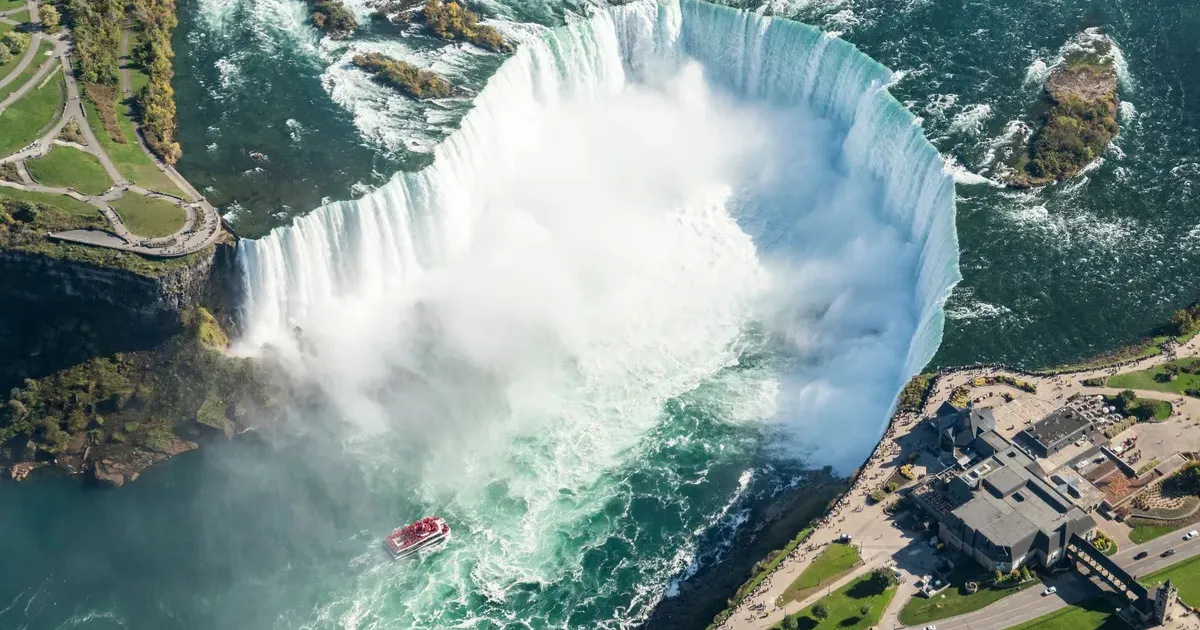
Niagara Falls State Park covers 400 acres of land dedicated to public access and scenic preservation. Maintenance of the viewing platforms requires constant attention due to the corrosive effects of constant mist and spray. Concrete structures and metal railings must be inspected annually for structural integrity. The Maid of the Mist boat tour operates from a sophisticated dry dock facility built into the side of the gorge. This engineering feat allows the iconic blue boats to be lifted out of the water during the winter months to avoid ice damage.
"The sheer volume of water moving over the crestline requires constant monitoring to balance power generation with scenic preservation," stated a representative from the International Joint Commission. Hiking trails on the American side lead visitors to the very edge of the Bridal Veil Falls and the American Falls. The Cave of the Winds experience involves a multi-million dollar reconstruction of wooden walkways every single spring. Ice buildup during the winter destroys the previous year's structures, requiring a total rebuild by park staff. Workers secure the heavy timbers directly into the rock faces of the Niagara Gorge. This labor-intensive process ensures that guests can stand on the Hurricane Deck just feet away from the crashing water. Conservation remains a primary directive for the park's administrative team. Invasive species such as the emerald ash borer and various aquatic weeds threaten the local ecosystem. Biologists monitor the water quality and fish populations within the upper Niagara River to ensure the health of the Great Lakes Basin. Funding for these programs comes from a combination of state taxes and entrance fees from specific attractions. Large-scale reforestation efforts have replaced thousands of dead trees over the last decade. Biodiversity is a metric for the park's long-term health.
Ontario Tourism Strategy and Urban Development
Ontario's side of the river offers the panoramic view that most people associate with the falls. The Horseshoe Falls, the largest of the three, curves deeply into the Canadian side, providing a 180-degree theater of water. Developers capitalized on this geography by building upward. Skyscrapers house thousands of rooms with floor-to-ceiling windows looking directly into the abyss. These properties command premium prices that often exceed 500 dollars per night during the height of the summer season. Availability disappears months in advance for holiday weekends.
Clifton Hill is the primary artery for family entertainment and nightlife. Museums, arcades, and haunted houses line the street, creating a carnival atmosphere that persists late into the night. A large Ferris wheel, known as the Niagara SkyWheel, lifts passengers 175 feet above the city for a view of both the falls and the distant Buffalo skyline. Critics often label this area as a tourist trap, yet it continues to draw millions of visitors annually. The sheer density of people creates a vibrant, if chaotic, environment. Pedestrian traffic frequently spills into the roadways during fireworks displays.
Logistics for the Canadian side involve a sophisticated bus system called WEGO. The shuttle service connects the various hotel districts with the main table rock viewing area. It reduces the need for private vehicles in the congested core. Parking lots on the outskirts of the city offer lower rates for those willing to ride the shuttle. Despite these efforts, traffic gridlock is a common occurrence on the Niagara Parkway. Local police spend meaningful resources managing the flow of cars during the illumination hours. The nightly light show begins at dusk and continues until midnight.
Environmental protection for the Great Lakes basin shapes how both sides balance hydropower, scenery and visitor access. Hydropower generation dictates the actual volume of water that flows over the falls. A treaty signed in 1950 between the United States and Canada regulates water diversion for electricity. During the tourist season, at least 100,000 cubic feet per second must flow over the falls during daylight hours. At night, and during the off-peak winter season, this requirement drops to 50,000 cubic feet per second. The diverted water travels through huge tunnels to power plants located downstream. These facilities provide clean energy to millions of homes in both New York and Ontario.
Erosion continues to change the physical shape of the falls over centuries. Without human intervention, the falls would retreat upstream at a rate of approximately three feet per year. Engineering projects in the mid-twentieth century successfully slowed this rate to just a few inches annually. Deep-water excavations and underwater weirs help distribute the water more evenly across the crestline. It prevents the concentration of force in a single area, which would otherwise accelerate the collapse of the rock shelf. Scientists use laser scanning technology to map the riverbed with millimeter precision.
Pollution management involves the cooperation of dozens of municipal governments along the Niagara River. Industrial runoff and sewage overflows during heavy rain events pose a persistent risk to water quality. Modern filtration plants have sharply reduced the amount of toxins entering the system compared to the mid-twentieth century. However, the legacy of chemical manufacturing in the region still requires active remediation. Monitoring stations provide real-time data on oxygen levels and chemical concentrations. The Niagara River is officially designated as an Area of Concern under the Great Lakes Water Quality Agreement.
What Travelers Should Weigh
Staring into the abyss of the Horseshoe Falls reveals a deeper truth about the commodification of natural wonders. The binational management of Niagara Falls is not a success story of cooperation, but rather a cautionary study in diverging failures. On the Canadian side, we see a devastating surrender to the lowest common denominator of tourism. It is a neon-drenched monument to kitsch where the majesty of the water is treated as a mere backdrop for overpriced casinos and wax museums. The hyper-commercialization effectively strips the site of its inherent dignity, turning a geological marvel into a high-volume revenue extraction machine. The American side suffers from a debilitating lack of vision that mistakes underdevelopment for preservation. While the state park itself is well-maintained, the city of Niagara Falls, New York, remains a hollowed-out husk of its former industrial self. It is a place where tourists spend three hours in the park and then immediately flee because the surrounding urban landscape offers nothing but decay. The refusal to integrate the natural beauty of the falls into a functional, thriving city center is an enormous strategic blunder.
We are left with two unappealing choices: a tacky playground or a desolate park surrounded by a ghost town. Until both nations move past these extremes, the true potential of the region will remain untapped. Will either side ever find the courage to prioritize authentic experience over quick profits or bureaucratic stagnation? Only a total overhaul of the current regional planning models can save Niagara from its own guardians.