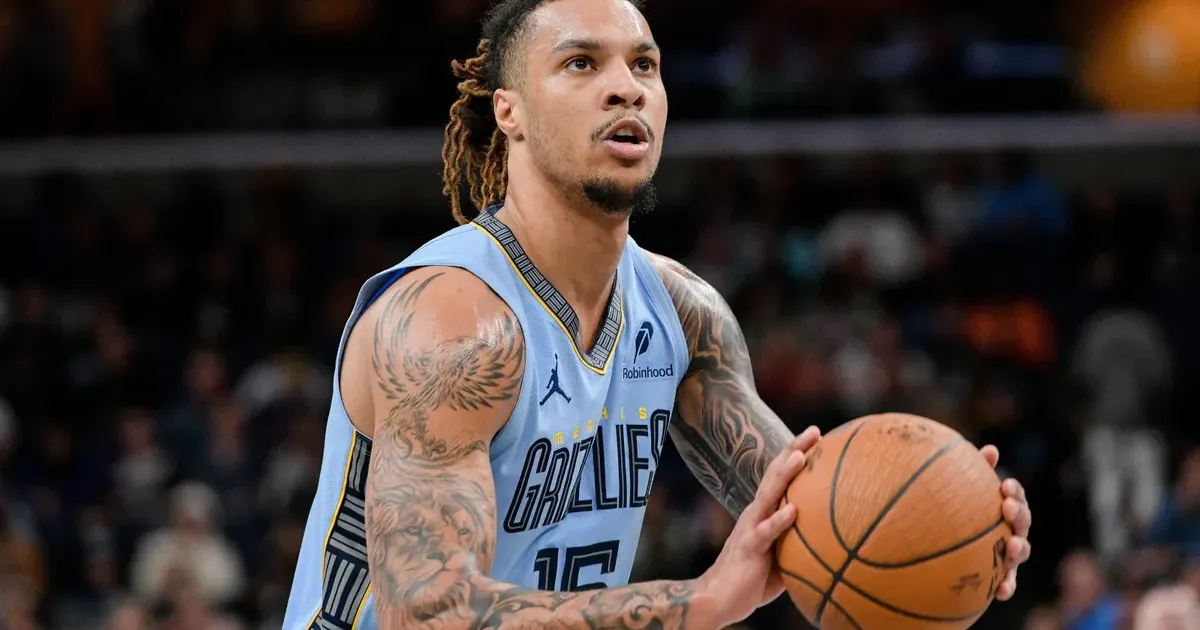
Brandon Clarke's April arrest in Arkansas can no longer be treated as a simple off-court uncertainty for the Memphis Grizzlies. The former first-round pick died weeks later at age 29, leaving the arrest, his injury-hit season and the still-open investigation into his death in the same painful timeline.
Clarke was arrested in Cross County, Arkansas, on April 1, 2026, after authorities listed charges including improper passing, possession of a controlled substance, fleeing while exceeding the speed limit and trafficking a controlled substance. He was released on bond the following day. Later reporting identified the substance at issue as kratom, a plant-derived product that is regulated differently across states and has drawn warnings from health officials.
The Arrest Needs a Narrow Frame
The legal part of the story should stay precise. A booking record is only the start of the legal process, and the first wave of police and jail records rarely answers every question. The responsible frame is the stop, the listed charges, the bond release and the fact that any final legal assessment would depend on court records and evidence.
Precision matters even more now because Clarke is not alive to answer public assumptions. The temptation after a death is to make every earlier incident look like a clue. Some facts may eventually connect. Others may not. Until official findings are complete, the arrest should not be turned into a finished explanation for what happened later.
The Death Investigation Changed the Story
Clarke was found dead at a residence near Los Angeles in May. The Los Angeles County medical examiner's process remained open after the initial examination, with the cause of death deferred while toxicology and other testing continued. AP reporting said drug paraphernalia was found at the scene, but finding it does not by itself establish a cause of death.
The story has to hold that line. The public knows Clarke died, that the investigation was not immediately complete and that his recent arrest involved a controlled-substance allegation. The public does not yet know the final medical conclusion. Filling that gap with certainty would be irresponsible.
Injuries Had Already Narrowed His Basketball Path
Before any legal or investigative issue, Clarke's career had already been squeezed by injuries. The Grizzlies had ruled him out for the rest of the 2025-26 season after continued rehabilitation from a right calf strain, and his broader recent history included major lower-body setbacks. He played only a small part of the season, after once giving Memphis energy, vertical spacing and defensive mobility off the front line.
The basketball context should not be used to explain the legal case or the death investigation. It does explain why the April arrest immediately carried roster implications. Memphis had been waiting to see whether Clarke could return to full speed. Instead, the team, fans and league were left with something much larger than a rotation question.
Kratom Belongs in the Story, Not as a Shortcut
Kratom is part of the public record around the arrest because it was later identified in reporting tied to the Arkansas case. It also belongs in the story because health agencies have warned about risks linked to kratom products, especially concentrated compounds and use with other substances. But risk language is not the same as a finding in Clarke's case.
The medical examiner's final report, not online inference, is what can say whether any substance was present and whether it contributed to death. Until then, the better reporting posture is caution: identify what was reported, identify what remains pending and avoid collapsing a complicated case into one easy cause.
The Grizzlies Are Left With Grief, Not Just Roster Math
The original basketball angle was uncertainty for the Grizzlies. After Clarke's death, the original angle is too small. He had spent his entire NBA career in Memphis, was under contract through the 2026-27 season and had become part of the franchise's recent identity even while injuries limited him. Fans placed memorials outside FedExForum, and the team publicly mourned him.
Sports coverage often reaches for clean categories: arrest, injury, contract, discipline, comeback. Clarke's final months do not fit cleanly inside any of them. The April arrest remains a real legal event. The injury history remains a real basketball context. The death investigation remains unfinished. Treating those pieces with care is not restraint for its own sake; it is what the story demands when a 29-year-old life has ended and the official answers are still incomplete.