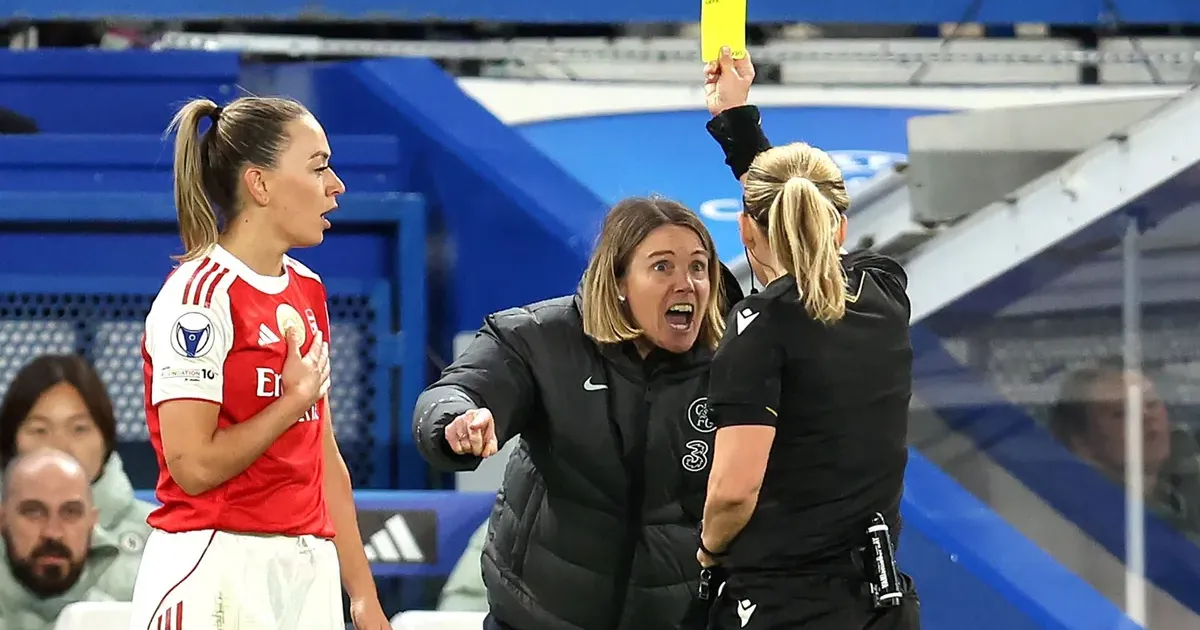
Chelsea won the second leg, Arsenal won the tie, and the final minutes became an argument about what VAR is supposed to catch. Sonia Bompastor was furious after Katie McCabe appeared to pull Alyssa Thompson's hair late in Chelsea's 1-0 Women's Champions League quarter-final win at Stamford Bridge. Arsenal still advanced 3-2 on aggregate, but the controversy stayed attached to the result.
The match already had a tight emotional frame. Arsenal had built a 3-1 first-leg lead. Chelsea needed one more goal after Sjoeke Nusken's late strike to force extra time. Thompson was trying to drive the attack when the McCabe incident came, and Chelsea's bench expected intervention. No review changed the decision. Bompastor's protests then brought two yellow cards and a red.
The Incident Hit at the Worst Possible Moment
Officiating controversies feel larger when they arrive inside a knockout tie's final push. Chelsea were not complaining during a dead passage of play. They were chasing the goal that could have changed the quarter-final. A red card for Arsenal, if given, would not have guaranteed Chelsea a comeback, but it would have altered the last minutes and possibly extra time.
The timing made the hair pull more than a clip. It sat at the center of the match's competitive tension. Chelsea had enough chances to know elimination was not only about the officials, yet the incident gave Bompastor a specific point around which to build her anger.
Bompastor's Dismissal Changed the Optics
The manager's red card added a second layer. Bompastor was punished for dissent while the foul she objected to did not bring the sanction Chelsea wanted. The contrast does not make dissent automatically acceptable. It does explain why the image traveled: a coach sent off for protesting an incident that viewers could replay for themselves.
Bompastor has been direct about officiating standards in the Women's Champions League, including after the first leg. This second-leg flashpoint made the criticism sharper because it was not vague. It was about a visible off-ball act and a review system that seemed absent when the match most needed clarity.
Arsenal's Progression Still Has to Stand
The controversy should not erase Arsenal's work across two legs. Their first-leg advantage was decisive, and they managed the second-leg pressure well enough to survive Chelsea's late surge. A team can benefit from a disputed non-call and still be the side that earned the aggregate result.
The distinction matters because VAR arguments often flatten the match into one moment. Chelsea had their own finishing issues. Arsenal had their own defensive work. The hair-pull decision belongs in the story, but it is not the whole story.
VAR Expectations Have Caught Up With the Competition
The bigger problem is consistency. The Women's Champions League now carries major club investment, serious broadcast attention and players whose careers are judged on these nights. If VAR is available, coaches and players expect it to protect the match from clear off-ball incidents, not only penalty-area decisions.
Partial confidence is damaging. A review system that appears selective can make frustration worse than no technology at all, because everyone believes the evidence exists somewhere. The question becomes why the intervention did not come.
UEFA Cannot Treat This as Noise
The practical issue for UEFA is not whether Chelsea were angry. Teams eliminated from Europe are often angry. The practical issue is whether elite women's matches have review standards that feel as serious as the competition around them. Investment in the product raises the bar for officiating support.
Bompastor's reaction will fade faster than the structural question. Arsenal moved on; Chelsea left with a win that did not save the tie. The VAR debate remains because the tournament is big enough now for missed-review arguments to carry weight. If the system is present, it has to be trusted in the moments when players, coaches and supporters can see the match turning in front of them.