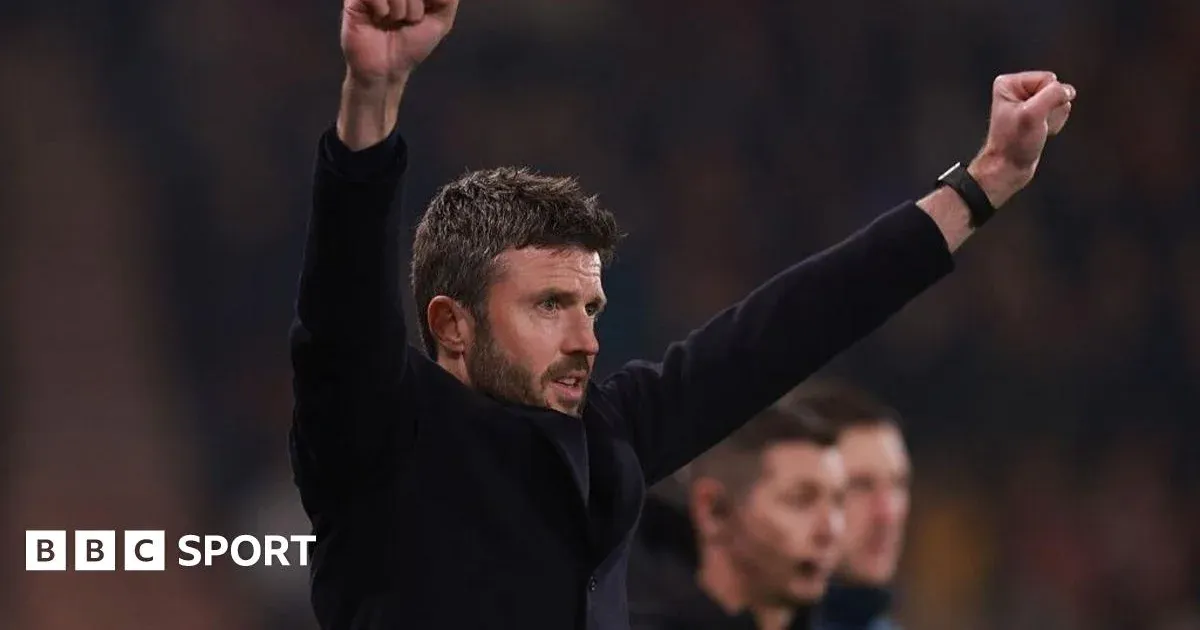
Michael Carrick entered the Allianz Arena leading a Manchester United squad that finally reflects the tactical discipline long demanded by its global fanbase. Success in this Champions League quarter final would validate a transition period that began with skepticism but has evolved into a disciplined pursuit of European silverware. The quarter-final stage opened on April 1, 2026. Arsenal and Chelsea concurrently prepare for a domestic clash on the continental stage that guarantees at least one London representative in the final four. Manchester United must overcome Bayern Munich to join them in a season defined by English resilience. Manchester United has moved within touching distance of a return to the Champions League elite tier through a methodical restructuring of their defensive transitions. Michael Carrick achieved this by stripping away the tactical complexities that hindered previous regimes. He prioritized a compact mid-block. Defensive stability became the foundation for a counterattacking system that utilizes the pace of the forward line. Players who previously looked lost in a high-pressing scheme now operate with clarity in a defined role.
Expectations at Old Trafford shifted dramatically once the interim manager stabilized the locker room. Michael Carrick encouraged an environment where individual talent serves the collective structure. While some analysts suggested a high-profile permanent appointment was necessary, the results on the pitch tell a different story. Manchester United currently sits in a position to secure both a top four domestic finish and a deep European run. The club board has noted the tactical consistency shown over the last twelve fixtures.
Michael Carrick Renews Manchester United Defense
Statistical analysis reveals that Manchester United conceded 40% fewer goals in the second half of the season compared to the first. Michael Carrick introduced a double pivot that protects the center backs. This tactical shift allows the full backs to provide width without exposing the spine of the team. Bayern Munich scouts have reportedly focused on this specific structural change ahead of the first leg. Munich officials recognize that breaking down this organized unit requires not merely individual brilliance from their wingers.
Tactical flexibility allowed the squad to navigate a congested March schedule without meaningful fatigue. Michael Carrick used a rotation policy that kept key midfielders fresh for European nights. Many supporters questioned the lack of major signings in the winter window. Management instead focused on improving the existing roster. The result is a team that works harder off the ball than any United side in the last five years. High intensity running metrics have increased by 15% since January.
Bayern Munich is a powerful obstacle for any club with aspirations of reaching the semi finals. The German giants maintain a perfect home record in European competition this season. Manchester United players arrived in Germany with a clear understanding of the hostile atmosphere awaiting them. Michael Carrick spent the previous training session focusing on dead ball situations. Bayern Munich often exploits lapses in concentration during set pieces. Success in Munich depends on ninety minutes of total focus.
Arsenal and Chelsea Renew London Rivalry
Arsenal hosts Chelsea at the Emirates Stadium in a fixture that carries the weight of decades of local animosity. Both clubs view the Champions League as their primary path to redemption after inconsistent domestic campaigns. Arsenal relies on a fluid attacking system that involves interchanging positions between the front three. Chelsea counteracts this with a physical presence in the midfield designed to disrupt the rhythm of their opponents. The tactical battle between these two London giants will likely be decided by a single mistake. Amidst defensive tactical shifts, the role of Harry Maguire remains a point of focus for both club and country.
Recent form favors Arsenal in the head to head matchups between these two sides. Chelsea, however, has demonstrated a unique ability to perform in knockout scenarios regardless of league position. The London club has won three European trophies in the last decade while Arsenal continues its search for a maiden Champions League title. Pressure on the home side is immense. Supporters expect a dominant performance that reflects the heavy investment made by the Kroenke family over the last three seasons.
Financial implications for the winner are serious. Reaching the semi finals secures an estimated $110 million in additional revenue from broadcasting and matchday income. Chelsea needs this capital to balance its accounts following aggressive spending in previous windows. Arsenal looks to use the funds to strengthen its squad depth. Both managers have publicly stated that European success is the only metric that matters this season. The first leg in London will set the tone for the entire tie.
Bayern Munich Tests Manchester United Resilience
Bayern Munich possesses an attacking arsenal that can dismantle even the most organized defenses. The German side averages three goals per game at the Allianz Arena. Manchester United must find a way to neutralize the threat posed by the overlapping runs of the Bayern full backs. Michael Carrick has experimented with a lopsided formation to counter this specific threat. He wants to force the play into the congested central areas where his defensive midfielders can intervene. Transition speeds remain the primary weapon for the English side.
How has interim boss Michael Carrick done it?
Manchester United players have responded to the quiet authority of their manager. Michael Carrick does not seek the spotlight or engage in media wars with rival coaches. He focuses entirely on the technical aspects of the game. This approach has calmed a squad that previously struggled with the immense pressure of the English press. Players like Marcus Rashford and Bruno Fernandes have thrived under this lack of external drama. The team feels more cohesive than it has in years.
International scouts have descended on Munich to watch the next generation of talent on display. Several Manchester United youngsters have broken into the first team under Michael Carrick. These players bring an energy that compensates for the tactical rigidity sometimes seen in veteran squads. Bayern Munich also boasts a roster filled with young stars. The match is a showcase for the future of European football. Every touch will be scrutinized by millions of viewers worldwide.
European financial stakes have reached record levels, making a semifinal berth a sporting and commercial prize.
Broadcasting rights for the Champions League have reached parity with the highest grossing domestic leagues. The English trio participating in the quarter finals stands to benefit from a large market pool distribution. UEFA reports indicate that the total prize fund for the 2026 tournament has exceeded previous records. This financial windfall allows English clubs to maintain their dominance in the transfer market. Success on the pitch translates directly into economic power off it.
Critics argue that the concentration of wealth in the Premier League creates an unfair advantage in European competition. Arsenal, Chelsea, and Manchester United all rank in the top ten richest clubs globally. Bayern Munich is one of the few continental sides capable of matching the spending power of the English elite. The quarter final round is a collision of the most powerful financial entities in sports. The stakes extend far beyond the ninety minutes of play.
Manchester United travels back to England immediately following the match in Munich. The turnaround for the second leg is exceptionally short. Michael Carrick must manage the physical recovery of his players while preparing a new tactical plan. Success in Europe requires a level of endurance that few teams possess. The road to the final in Munich is paved with difficult nights in hostile stadiums. English teams have historically performed well under these specific conditions.
European Prize Money Raises the Stakes
Is the Premier League simply too rich for the good of European football? The sight of an English trio dominating the latter stages of the Champions League is no longer an anomaly but a structural certainty. Financial power has effectively created a gated community where only those with access to the Premier League television treasury can afford to compete. Arsenal, Chelsea, and Manchester United do not just represent their cities; they represent a commercial force that is slowly suffocating the competitive balance of the continent.